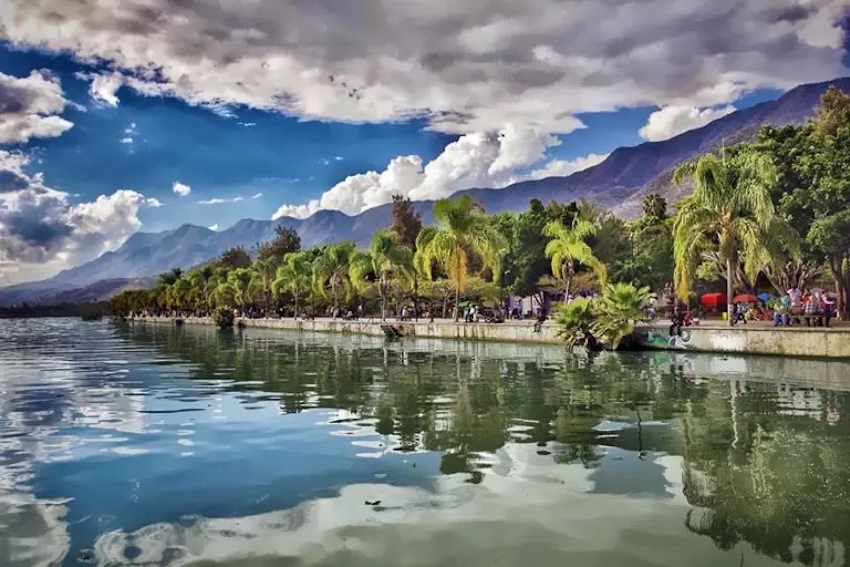
Following a severe drought that saw Lake Chapala lose over two meters of water in 2024, this year’s extraordinary rainy season has brought much needed recovery to Mexico’s largest lake. Lake Chapala is now at just over 70% capacity.
Located between Jalisco and Michoacán, Lake Chapala is the Guadalajara metropolitan area’s largest water supply, providing over 60% of the region’s water.
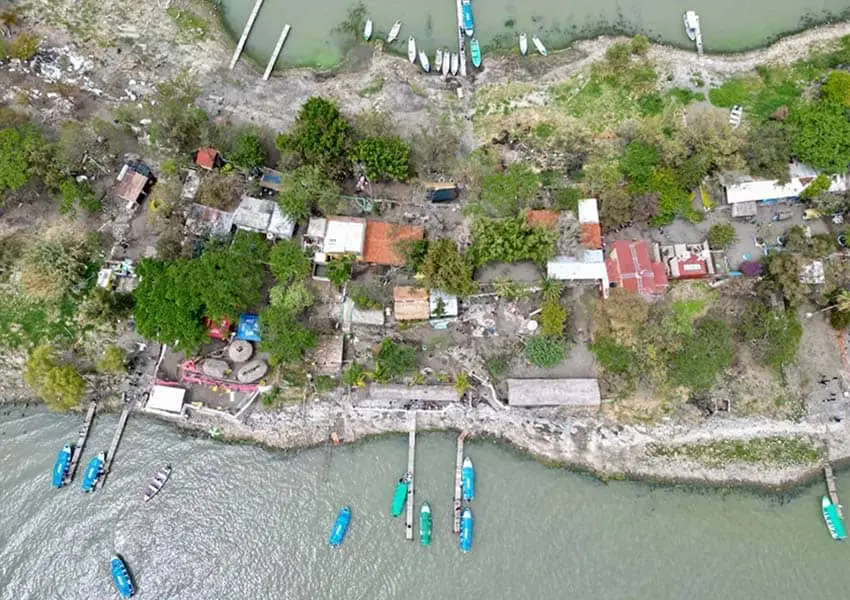
According to data from the National Water Commission (Conagua), the lake’s water levels have increased by 1.54 meters since May 15, when it was at only 49% capacity.
Carlos Ornelas, a professor at the Universidad Panamericana (UP), said that the lake’s recovery will allow for a stable water supply, avoiding shortages like those experienced in 2024 when several neighborhoods in Guadalajara and the surrounding metropolitan area experienced water supply cuts and reductions due to low levels in Lake Chapala.
“With [the lake’s] recovery thanks to rainfall, we will be able to have water during next year’s dry season,” Ornelas noted.
He also anticipated that Lake Chapala could reach 75% of its capacity by October or November, potentially marking one of the best rainy-season recoveries in the last decade, only surpassed by 2018 and 2021.
Ornelas noted that although the lake receives water from its own basin, the primary source of water is the Lerma River.

“At the beginning of the rainy season, the largest contributions come from the lake’s own basin because the dams upstream of the Lerma River take a while to fill and capture the levels necessary to supply the various users,” he said.
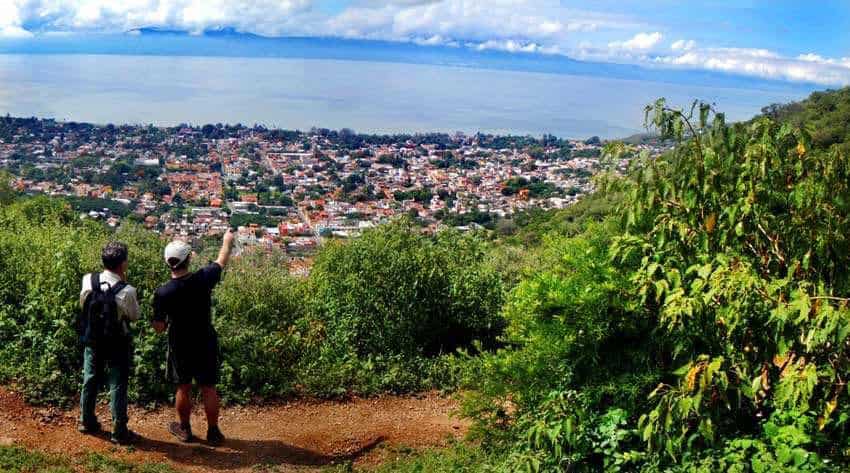
The basin Ornelas refers to is the Lerma-Chapala basin, which originates southwest of the city of Toluca in México state, at the source of the Lerma River. It covers over 52,000 square kilometers and spans across five states and more than 100 municipalities.
Guadalajara’s other water sources also benefit from the rains
Smaller water bodies that supply Guadalajara have also benefited from the rainy season.
The Elías González Calderón dam, in the Zapotlanejo municipality, which provides 14% of Guadalajara’s water, is currently operating at 106% of its capacity, marking the dam’s second-best recovery since 2019.
Meanwhile, El Zapotillo dam, officially inaugurated in August 2024, comes in at a close second, operating at 105.53% of its capacity. Connected to the El Salto-La Red-Calderón aqueduct — itself inaugurated in February 2024 — the El Zapotillo dam is expected to be able to provide up to three additional cubic meters per second to the city.
With reports from El Informador