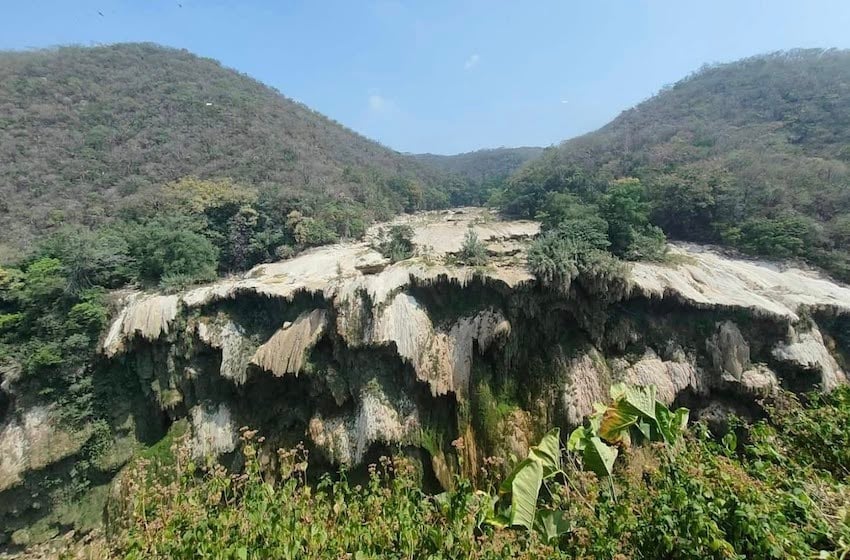
Cascada de Tamul (Tamul Waterfall), one of the most visited tourist sites in the Huasteca Potosina region of east-central Mexico, has run practically dry amid extreme heat and disputed water use.
The situation has alarmed tour operators, government officials and nearby communities in San Luis Potosí and neighboring states.
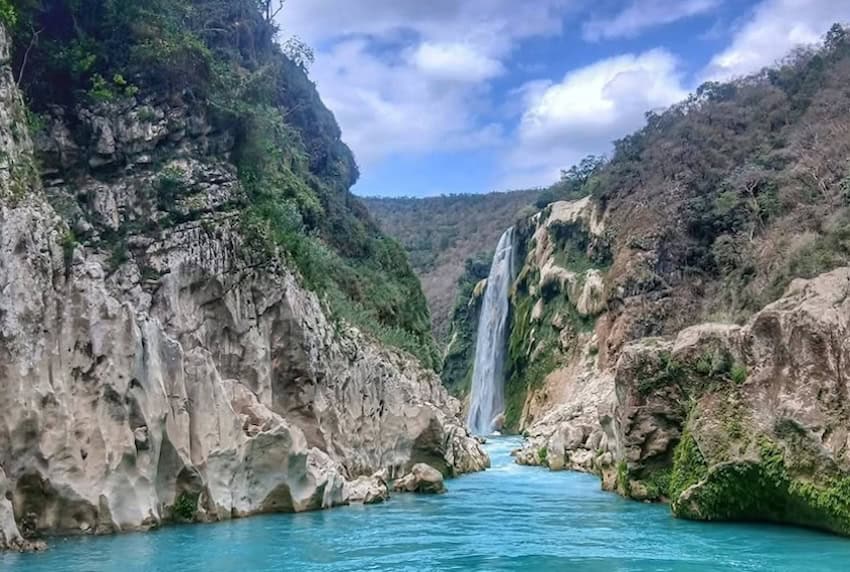
An impressive 105-meter (344-foot) waterfall located atop Santa María Canyon, Cascada de Tamul is one of the state’s top natural attractions and a pillar of the region’s ecotourism industry.
According to reports in the Mexican media, images shared on social media show large sections of exposed rock where visitors are used to seeing several thick ribbons of water pouring over the cliff.
Authorities and business leaders say the crisis worsened in April despite emergency steps implemented on April 5 to halt the extraction of water from the Gallinas River upstream of the falls.
Not long after that temporary halt ended, members of the Gallinas River Basin Committee, led by the National Water Commission (Conagua), agreed to a total suspension of extraction for irrigation. It began on April 27 in an effort to restore the river’s flow before the May 1 Labor Day holiday weekend in Mexico.
Hotelier and committee member Carlos Solares called the decision “unprecedented” and noted that Mexico’s National Water Law “stipulates that no river should be allowed to dry up and that all activities must be suspended.”

However, he also expressed disappointment and confusion about why the cascading waters did not return over the three-day holiday weekend. Rather than reaching the falls location, the river’s flow was absorbed into the rocky riverbed about a kilometer upstream, he said.
“On other occasions, when the agricultural suspension begins, the flow is recovered,” he lamented.
San Luis Potosí Gov. Ricardo Gallardo Cardona said floodgates had been closed in irrigation areas and warned that he would seek sanctions against farmers who may have taken more water than permitted.
“We are going to put pressure on the farmers to let the water flow,” he said.
In addition to the irrigation issues, there has been a heat wave in the Huasteca region, with temperatures climbing above 40 degrees Celsius (about 104 Fahrenheit) on multiple days.
These high temperatures plus a moderate drought in the region are contributing to the river drying up rather than recovering.
Tourism operators say visitor numbers and the destination’s image have suffered, with ripple effects as far as Tamaulipas.
But tourists are arriving even after being warned there is no picturesque waterfall, drawn by river trips, stellar hikes and the gorgeous landscape. Hotel occupancy was still good over the three-day weekend, according to local tourism officials.
With reports from La Jornada, Potosí Noticias and El Universal