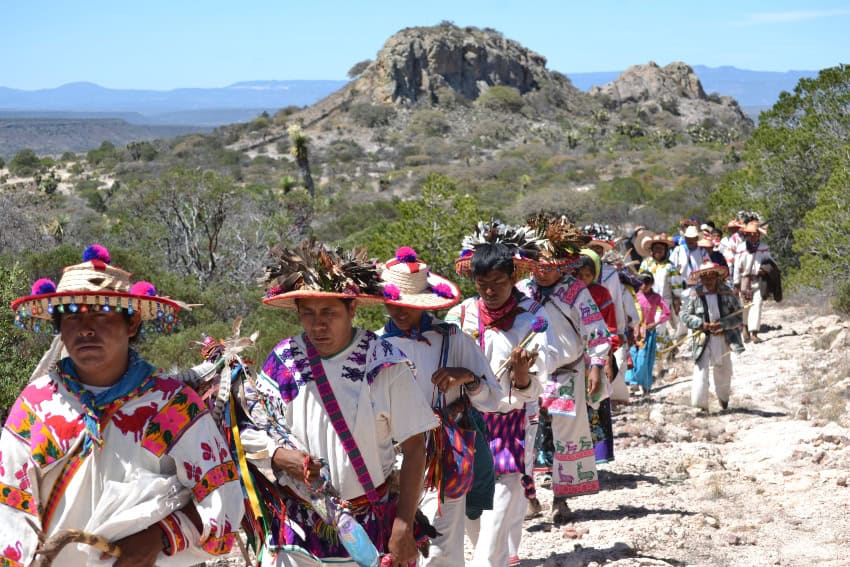
A recent federal court ruling ordering the cancellation of dozens of mining concessions in Wirikuta — one of the most sacred territories of the Wixárika people — marks a significant legal milestone after 15 years of struggle. But Indigenous authorities say the decision falls short, leaving key parts of the territory still vulnerable to mining.
The Consejo Regional Wixárika has now filed an appeal, seeking the cancellation of all remaining concessions and full protection of the sacred landscape.
Mining concessions in Wirikuta
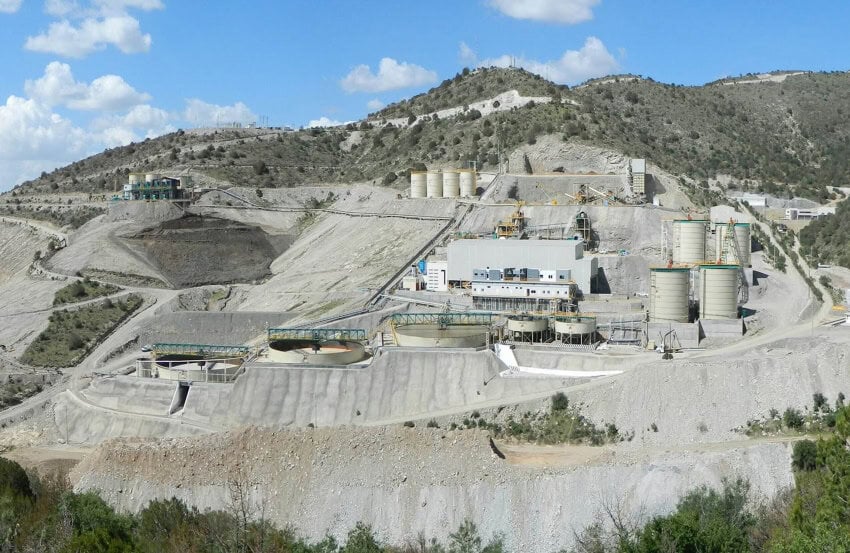
The ruling stems from a long-running legal battle over mining concessions in Wirikuta, culminating in a March decision by the Fourth District Court in San Luis Potosí in the amparo case filed by Wixárika communities in 2011. The court ordered the cancellation of 44 mining concessions located within the boundaries of the state-designated protected natural area, recognized the Wixárika people’s right to self-determination and their “indissoluble” relationship with the territory, and established requirements for prior consultation in future projects.
However, the ruling left intact more than 30 concessions — 20 of them linked to the Canadian transnational First Majestic Silver — a key omission that prompted the Consejo Regional Wixárika to file an appeal.
The decision comes less than a year after Wirikuta and the Wixárika pilgrimage route were inscribed as a UNESCO World Heritage Site, a designation that renewed calls by Indigenous authorities to cancel all mining concessions across the territory.
For Wixárika leaders, the stakes are existential.
“They (Wirikuta lands) are very important to us, and we cannot allow them to be destroyed. Because if they are destroyed … the Wixárika people will vanish,” said Maurilio Ramírez Aguilar, coordinator of the Consejo, in a recent interview.

A sacred geography
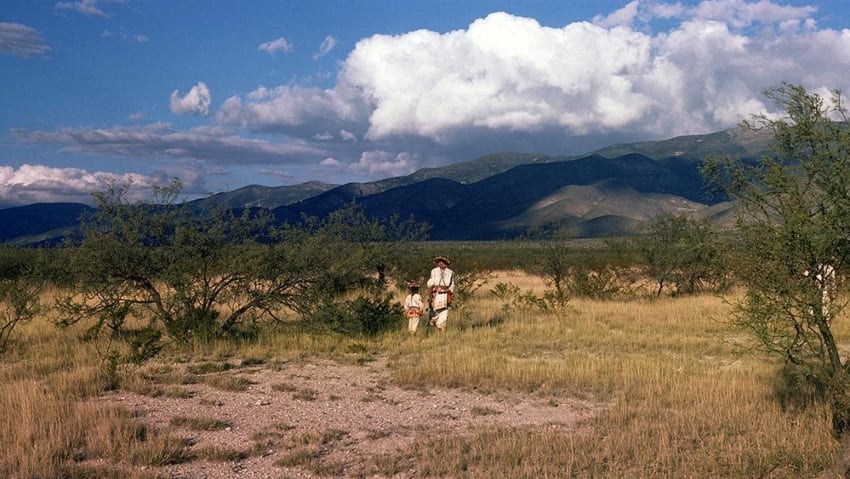
Wirikuta, located in the high desert of San Luis Potosí, is not simply a place, but part of a living spiritual system rooted in pilgrimage, ceremony and ancestral knowledge.
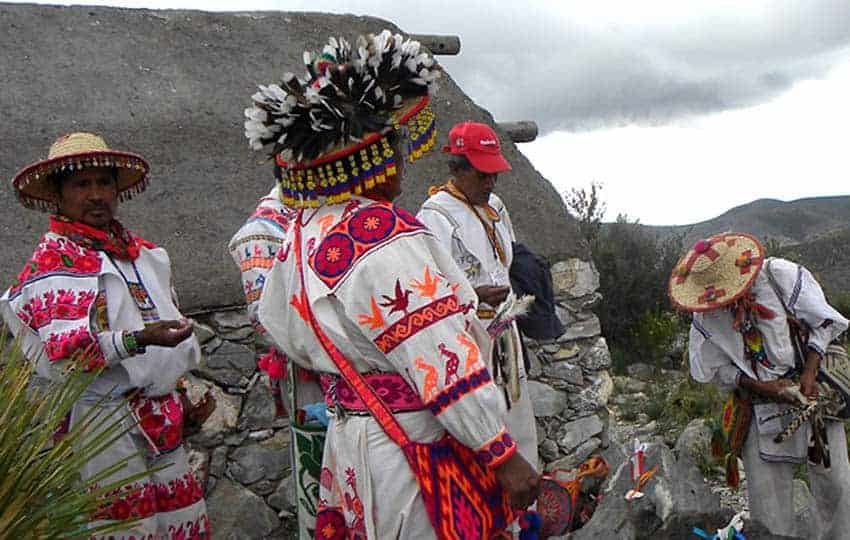
“These are sacred places where the deities have remained … and it is for this reason that the Wixárika people … prepare every year to go to Wirikuta on pilgrimage,” Ramírez Aguilar explained. “They go on foot, leaving behind offerings … candles, arrows, Eyes of God … and wherever there is water … they gather it to bring back that holy water.”
These journeys, carried out across generations, sustain not only cultural traditions but what Wixárika authorities describe as a broader balance between human life and the natural world.
A partial victory after 15 years
The court decision follows more than 15 years of legal and community resistance to mining projects in Wirikuta, including concessions linked to First Majestic Silver.
“There were around 78 mining concessions … and so the Wixárika people decided to file a lawsuit against the Mexican State, demanding their cancellation,” said Sofía Aukwe Mijarez, communications coordinator for the council.
While the ruling cancels more than 40 concessions, it falls short of that demand.
“Our defense has already spanned 15 years … and it is only after 15 years that we are finally obtaining a resolution … and one that is not entirely favorable,” she said.
The legal gap: what remains
At the heart of the appeal is a key limitation in the court’s decision: it applies primarily to concessions located within the officially designated protected natural area.
“Only those located within the protected natural area are being canceled … but Wirikuta is so much more,” Mijarez said.
She noted that areas outside that boundary — including buffer zones and culturally significant sites — remain exposed.
“The 20 pending mining concessions belong to the company First Majestic Silver Corp … and they have not been canceled, which is the primary concern,” she added.
The case also extends beyond a single company.
“We are not fighting against just one. There are more than 17 different mining companies. These are major interests,” she said.
Environmental risks in a fragile ecosystem
Wirikuta lies within the Chihuahuan Desert, one of the most biodiverse desert ecosystems in the world — and one that Wixárika leaders say is highly vulnerable to mining.
“Mining uses a tremendous amount of water … if it were to be carried out, the aquifers would dry up. It is going to contaminate the water, the air, the plants and the animals,” Mijarez said.
But as geographer Tunuari Chávez argues, the deeper conflict in Wirikuta is not only about mining itself, but about a fundamental mismatch between how the law defines territory and how water actually exists.
In his analysis, the most critical dimension of Wirikuta is largely invisible: the groundwater system that sustains life across the region. “Water is not a resource: it is a condition of existence, the basis of dignity,” he wrote.
Water is a condition of existence
That system does not follow the boundaries used in legal rulings. The aquifer that feeds the springs of the Sierra de Catorce — including sacred sites — functions as a connected, underground network shaped by geology, flow and recharge.
Yet the recent court decision evaluates impacts based on surface boundaries, distinguishing between concessions inside and outside a protected area. For Chávez, that approach misses the core risk.
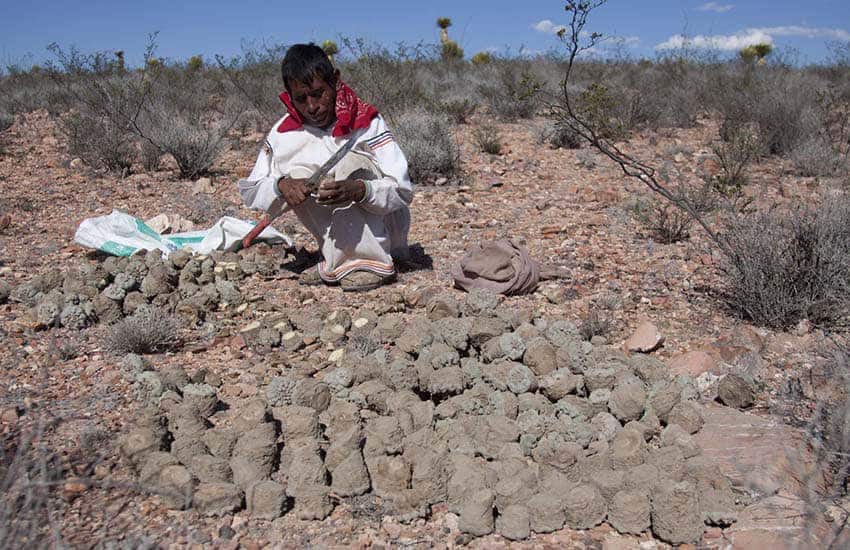
“Groundwater does not respect polygons … an intervention outside a protected area can alter the system that sustains it,” he wrote.
The concern is not theoretical. Mining operations in the region would likely require pumping groundwater from the same level at which the aquifer forms, potentially lowering water tables and affecting springs that sustain both local communities and ceremonial practices.
In an already overexploited system with limited recharge, such impacts could be long-lasting or irreversible.
Beyond land: a question of rights
Although the Wixárika communities are some 500 kilometers to the west of Wirikuta, leaders emphasize that their claim is rooted in ancestral and cultural rights.
“Although we do not live there, we have an ancestral right to that territory — our ancestors have made pilgrimages there since time immemorial, and it is where our culture has been sustained.”
The court ruling includes provisions for consultation with Indigenous communities going forward — a step authorities acknowledge, but one that raises further questions about implementation.
“Mexico does have the laws — very good ones on paper — but in practice, that is where we are struggling,” she said.
Development without destruction
Wixárika leaders say the conflict is not simply about rejecting mining, but about proposing alternatives.
“It is time to demand decent work — work for which such a beautiful ecosystem does not have to pay the price, which does not have to be destroyed in order (for us) to live with dignity,” Mijarez said.
Ramírez Aguilar said proposals for sustainable development have been repeatedly raised with federal authorities, with limited response.
“We have proposed sustainable development projects, but the government has not addressed them,” he said. “We do see that there is a great need … but we have not been granted them.”
A broader crisis in Wixárika territory
The legal battle is unfolding amid a growing security crisis in Wixárika territories, where residents have reported the presence of armed groups linked to the Cártel Jalisco Nueva Generación operating from multiple camps, threatening traditional authorities and generating what community members describe as a climate of fear without a decisive state response.
“There has been a great deal of violence in the Sierra, in Wixárika communities,” said Mijarez. “And as a people, we demand security, we demand justice, because this is a human right — it is the State’s obligation to provide us with security. It is not only about defending the territory, but also about the lives of the people who inhabit these territories.”
Leaders say these conditions add urgency to their demands for protection — both for sacred lands and for the communities that defend them.
“And yes, we have suffered human losses — compañeros have been killed, kidnapped, tortured — all as a result of defending the territory,” said Mijarez.
Tracy L. Barnett is a Guadalajara-based freelance writer and the founder of The Esperanza Project.