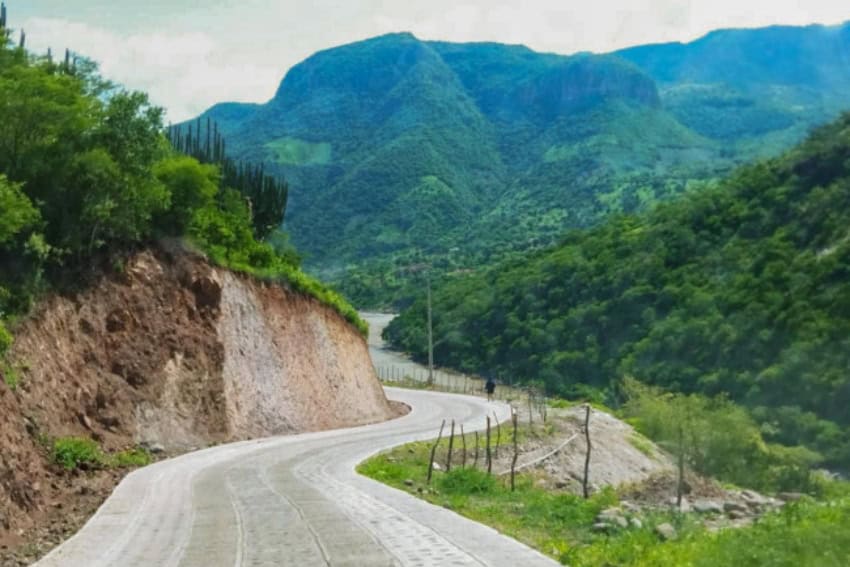
The historically marginalized and isolated Indigenous Wixárika towns of Northern Jalisco, will soon gain improved road connections, thanks to a program by Mexico’s Ministry of Infrastructure, Communications and Transportation (SICT).
The program involves the construction of five roads to link 10 communities across the municipalities of Mezquitic and Tuxpan de Bolaños. It will require an investment of 159 million pesos (US $8.6 million).
Artisanal roads to connect Indigenous Wixárika
The agency explained that this initiative is part of a federal program dubbed the Artisanal Trails Program carried out by the National Institute of Indigenous Peoples (INPI), which seeks to connect Indigenous and highly marginalized communities through the rehabilitation of roads.
The five rural roads in the northern part of the state will total 20.5 kilometers in length. The planned roads will be known as Tezompa-Nueva Colonia, Cerro de la Puerta-Santa Catarina Cuescomatitlán, Cerro del Niño-San Miguel Huaixtita, Cerro del Pescado-Ocota de la Sierra and Bajío de las Gallinas-San Sebastián.
The federal government has named these roads “artisanal roads” as they connect rural and Indigenous communities and will be constructed primarily by the residents who benefit from them, with government resources provided to allow locals to manage the construction themselves. SICT will offer support of machinery for the more challenging sections.
As of August, the Artisanal Trails Program had rehabilitated 432 kilometers across 135 artisanal roads in 11 states. The program plan is to complete a total of 2,232 kilometers of artisanal trails across Mexico, representing an investment of 15.5 billion pesos (US $843 million) between 2025 and 2030.
Who are the Wixárika?
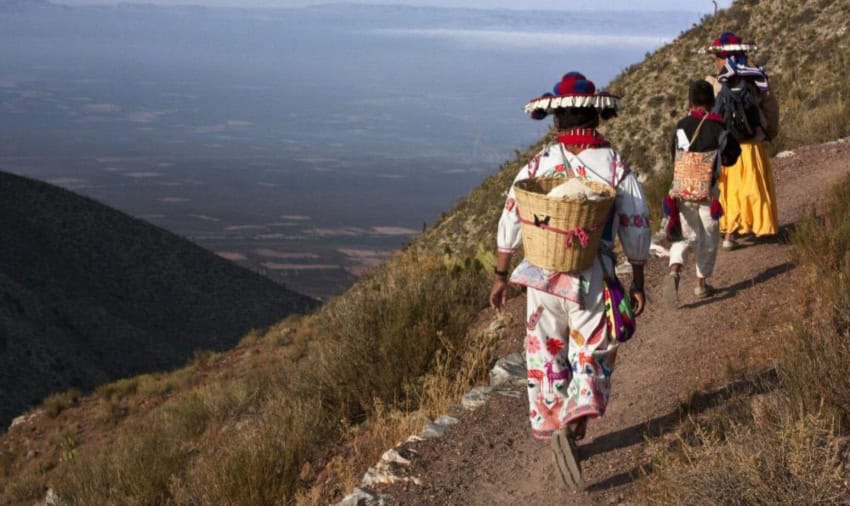
The Wixárika is an Indigenous community that lives in Northern Jalisco and in areas of the states of Nayarit, Durango, Zacatecas and San Luis Potosí. According to the Jalisco government, the highest density of the Wixárika community resides in its state, in the municipalities of Mezquitic, Bolaños and Huejuquilla.

The Wixárika recently made headlines worldwide after a route through 20 sites that they consider sacred was recently added to UNESCO’s World Heritage List, becoming the first such recognition for a living Indigenous tradition in Latin America. The route, dubbed by UNESCO as The Wixárika Route through the Sacred Sites to Wirikuta, extends from west to northwest for more than 500 kilometers between the states of Jalisco, Nayarit, Durango, Zacatecas and San Luis Potosí.

The Wixárika people have managed to preserve their traditions largely due to the location of their communities: For centuries during Spanish colonization, they lived in inaccessible mountainous areas, which significantly contributed to the preservation of their culture.
With reports from Milenio, La Jornada, and El Informador
Gabriela Solis is a Mexican lawyer turned full-time writer. She was born and raised in Guadalajara and covers business, culture, lifestyle and travel for Mexico News Daily. You can follow her lifestyle blog Dunas y Palmeras.