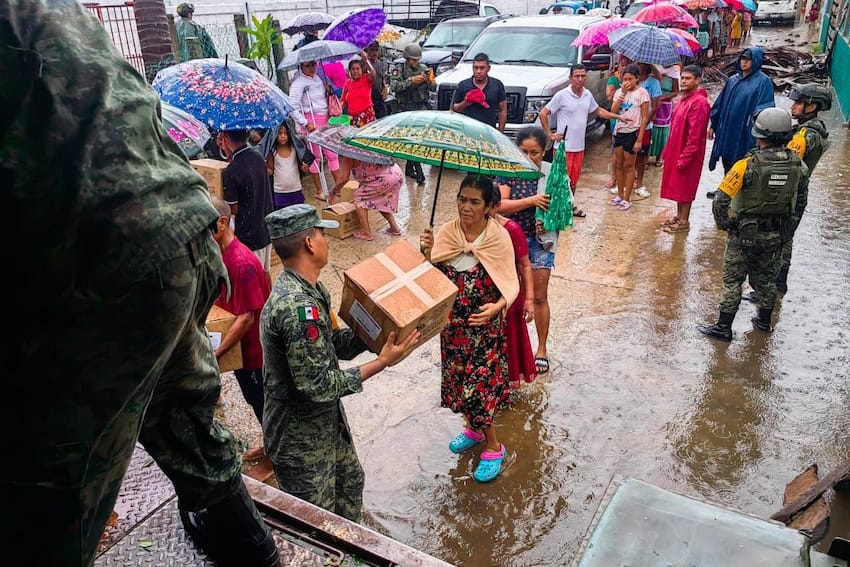
Climate change is often framed as an environmental story — melting glaciers, rising seas, intensifying storms. Increasingly, however, it is also being viewed through a security lens. In Mexico and around the world, defense planners and policy experts are examining how climate pressures interact with political instability, economic fragility and resource scarcity.
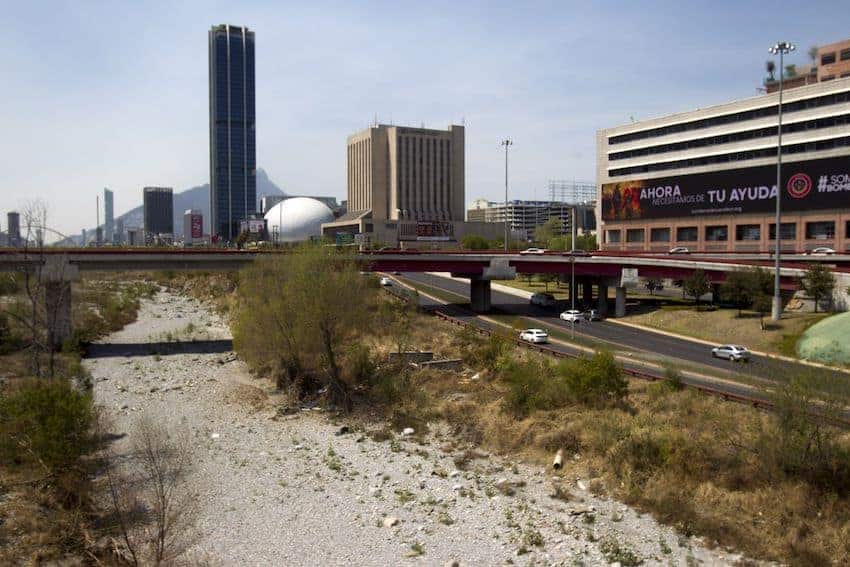
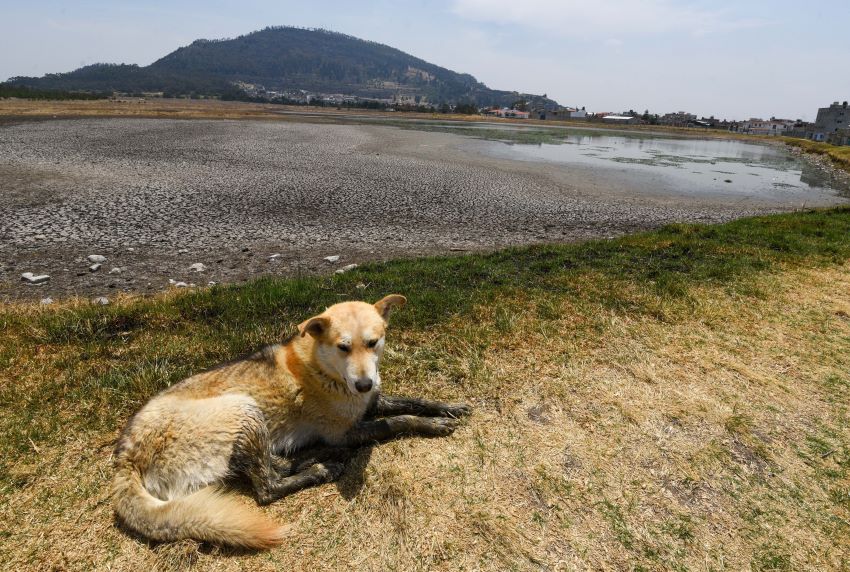
The core idea is not that climate change directly causes conflict. Rather, it can magnify existing tensions. In Mexico, prolonged drought has strained already limited water supplies in northern states like Chihuahua and Sonora. Failed harvests undermine rural economies across the agricultural heartland. Severe storms along the Pacific and Gulf coasts can overwhelm infrastructure and erode public trust in governments struggling to respond. When layered onto pre-existing grievances — poverty, weak governance, regional rivalries — environmental stress can heighten the risk of unrest, displacement and instability.
This dynamic is often described as a “threat multiplier,” a term security expert Sherri Goodman helped bring into the mainstream to capture how climate impacts exacerbate underlying vulnerabilities rather than act alone.
Water scarcity provides a clear example. In regions where agriculture depends on predictable rainfall, prolonged drought can devastate livelihoods. Mexico’s northwest has faced acute water shortages in recent years, contributing to tensions over allocation between farming communities and cities. As incomes collapse, migration may increase — sometimes within national borders, sometimes across them to the United States. Receiving areas experience additional pressure on housing, employment and social services, which in turn can fuel political friction.
Rising sea levels pose another set of challenges. Mexico’s extensive coastlines — home to major ports, resort economies and fishing communities — face growing exposure to flooding and storm surges. Cities like Veracruz and Manzanillo, critical nodes in Mexico’s trade network, are vulnerable to damage that can ripple far beyond local communities, disrupting supply chains and economic stability.
Security institutions are taking notice. Military planners now assess how extreme heat may affect troop readiness, how storms could impair coastal installations or how humanitarian crises triggered by climate events might require rapid deployment of resources. In Mexico, the armed forces have played an increasingly visible role in disaster response, from hurricane relief to flood evacuations. Climate risk assessments are being incorporated into long-term strategic planning in multiple countries.
Importantly, the security framing does not replace environmental or economic perspectives; it adds another dimension. By examining how climate stress interacts with governance, demographics and development, policymakers aim to anticipate where pressures may converge — and how preventive measures might reduce the likelihood of crisis.

Adaptation and resilience planning are central to that effort. Investments in stronger infrastructure, improved forecasting, diversified water supplies and regional cooperation can help buffer societies against shocks. For Mexico, international collaboration is especially critical given shared river basins with the United States, cross-border migration dynamics and deeply integrated supply chains.
The conversation has evolved significantly over the past two decades. What was once considered a peripheral concern in defense circles is now embedded in many strategic assessments. The question is less whether climate change matters for security, and more how governments and institutions can prepare for its cascading effects.
As communities worldwide — and across Mexico — confront intensifying weather extremes and long-term environmental shifts, the intersection of climate and stability is likely to remain a defining issue of the 21st century.
Sherri Goodman will speak in San Miguel de Allende on March 10, 2026, on “Threat Multiplier: Climate and Global Security in the 21st Century,” the final presentation of the season in the i3: ideas that inform & inspire series.
Goodman previously served as the first deputy undersecretary of defense for environmental security in the United States, where she helped integrate environmental considerations into military planning and policy. She currently serves as secretary general of the International Military Council on Climate and Security and is the author of “Threat Multiplier: Climate, Military Leadership, and the Fight for Global Security.” Tickets and information are available at i3SMA.org.