In 2022, Monterrey experienced its worst modern-day water crisis. A perfect storm of drought, demand and aging infrastructure caused dams to dry up — Cerro Prieto, which long supplied the Monterrey metro area with water, dropped below 1% capacity by July. Millions lost access to tap water and protests erupted. State and federal authorities enforced security measures, including six-hour rations of water use per day. Some neighborhoods saw no service for days at a time, forcing residents to collect water — often non-potable — from tanker trucks.
For a group of students in their third year at Escuela Secundaria Técnica No. 117 “Guillermo González Camarena,” water cuts were a daily reality that disrupted their home life, education and daily routines. But rather than simply endure the crisis, these teenagers decided to find a solution.
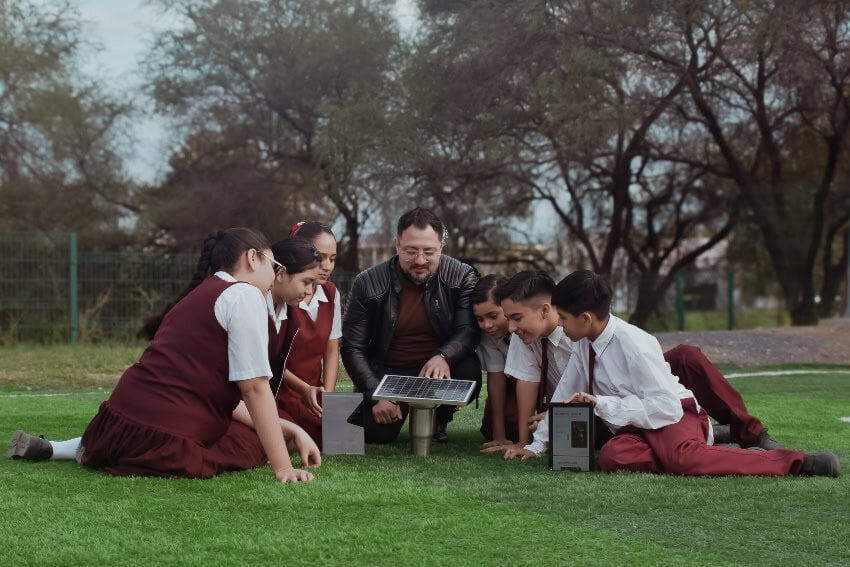
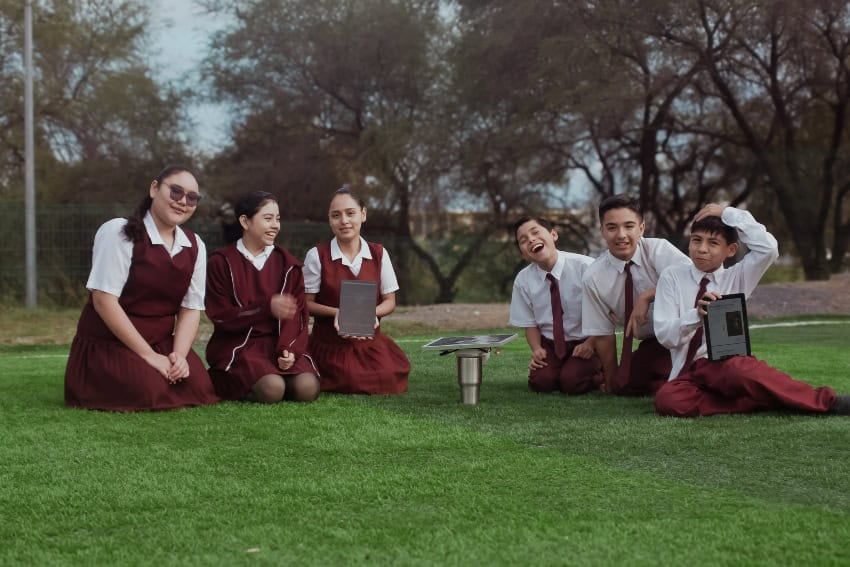
Now, their innovative response has earned them recognition as one of just 33 global finalists for the 2026 Zayed Sustainability Prize. The students are competing against projects from 173 countries for up to $150,000 in funding with their self-made hydrostations — modular machines that literally pull drinking water out of thin air.
From water crisis to community innovation
The students’ journey from victim to innovator reflects what their teacher, Professor Rogelio Monreal Moreno, calls a transformation “from worry to action, and from action to consciousness.” During the peak of the crisis, these students made a decision that would change their entire approach to learning.
“Finding the problem was the easiest part,” one student explained. The challenge was creating a solution that would work independently of existing infrastructure.
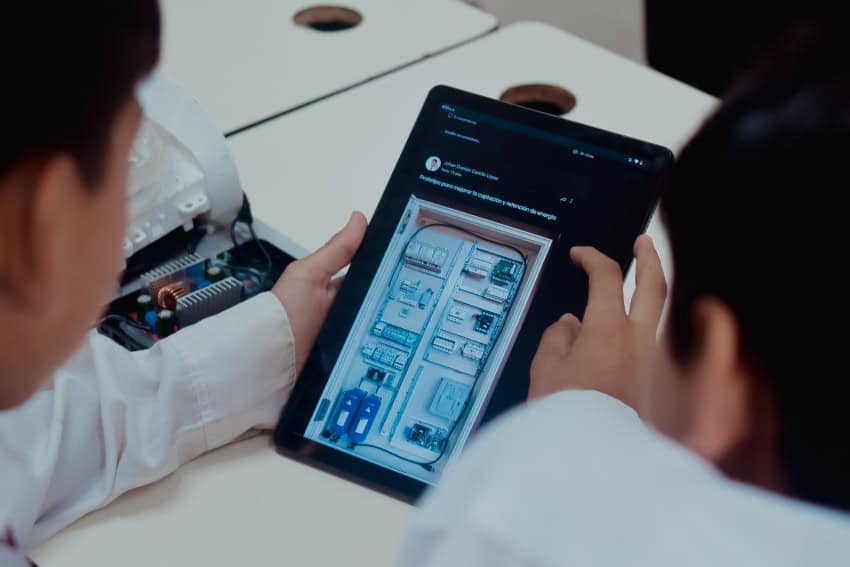
By combining solar power with Peltier technology, the students were able to extract moisture from humid air, a process that produces clean water continuously, without drilling, chemicals or dependence on external suppliers. The teens designed and assembled the hydrostations themselves, generating water to feed school gardens, drinking fountains and small planters called “BioCápsulas” in which they grow produce.
The project extends far beyond water production. The students have created what they call “AD COGNIS,” a complete educational ecosystem that transforms their school into a living laboratory of science and sustainability. Through the “ECOmunidad” digital platform, students track data, share progress and participate in environmental challenges. The “ECOnocedor” program develops leadership skills, STEM capabilities (science, technology, engineering and mathematics) as well as community service.

“More than learning content, students have learned to see themselves as capable of sustaining something real,” Monreal Moreno explained. “This project took them out of the role of ‘completing an assignment’ and put them in the role of understanding a problem in their environment and acting on it.”
Competing on the global stage
The Zayed Sustainability Prize, established in 2008, recognizes innovative solutions that improve access to healthcare, food, energy, water and climate resilience. Previous winners have impacted over 400 million people worldwide. This year’s competition is particularly fierce, with entries increasing by 30% over last year.
The Mexican students face formidable competition in the Global High Schools category. They’re up against initiatives like Kenya’s solar-powered vaccine refrigeration serving over 1 million people, South Korea’s disease-free potato production benefiting 15 million people, and Rwanda’s smart water ATMs serving over 500,000 people.
What distinguishes the Mexican project is its comprehensive educational approach that goes beyond just technology. While many finalist projects address water access, these students have created both the technical solution and an entire framework for environmental education and leadership development.
Student voices and family pride
For the students involved, the recognition brings both excitement and responsibility. “My parents are happy and proud,” shared one participant, capturing the community support behind the project. Another reflected on the broader significance: “Getting to this prize is a great inspiration for many young people.”
The project has surprised fellow classmates and engaged students in fields ranging from graphic design to photography — all contributing to prototype development and project documentation. Monreal Moreno observed students transitioning from asking “what if it doesn’t work?” to declaring “let’s make it better.”
No inventions come without challenges, and water scarcity wasn’t the only obstacle they faced. The students encountered multiple hurdles in developing their solution. For one student, the hardest part was the development of the idea. “It takes a lot of creativity to figure out how to make it better, and it takes a high level of research.” Another student noted that while the project has proved successful locally, the group is still “missing a way to industrialize it,” scaling their solution beyond their school.
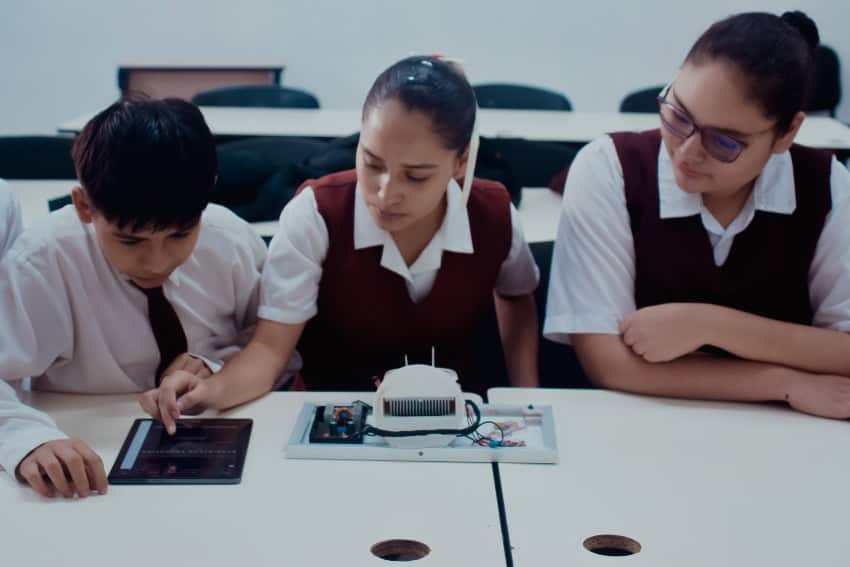
The educational impact extends beyond technical skills. Students have developed teamwork, communication and organizational abilities, but most importantly, what Monreal Moreno describes as “authentic self-confidence, the kind that emerges when their work makes sense and serves others.”
Looking to Abu Dhabi and beyond
The winners will be announced at the Zayed Sustainability Prize ceremony on Jan. 13, 2026, during Abu Dhabi Sustainability Week. At the time of writing, the students were working to raise funds for the international trip, in itself an exercise in learning project management and employing community engagement.
Regardless of the competition outcome, the project already represents something bigger: a model for how technical education can address real-world problems while developing the next generation of environmental leaders. The students plan to expand their network to other schools, sharing open-source manuals and promoting environmental self-sufficiency.
Their initiative demonstrates that innovative sustainability solutions can emerge from anywhere, and especially from young people with the creativity and determination to transform challenges into opportunities. In a region that faced “day zero” for its water supply, these students have created not just a technological solution, but a new way of thinking about education, community resilience and youth leadership.
As student Victoria explained, “The project inspires us because we’re learning by doing something very useful.” Her words capture what makes this initiative so remarkable — students addressing real problems while transforming their own education in the process, proving that the most powerful solutions often flow from genuine understanding and determination.
Bethany Platanella is a travel planner and lifestyle writer based in Mexico City. She lives for the dopamine hit that comes directly after booking a plane ticket, exploring local markets, practicing yoga and munching on fresh tortillas. Sign up to receive her Sunday Love Letters to your inbox, peruse her blog or follow her on Instagram.