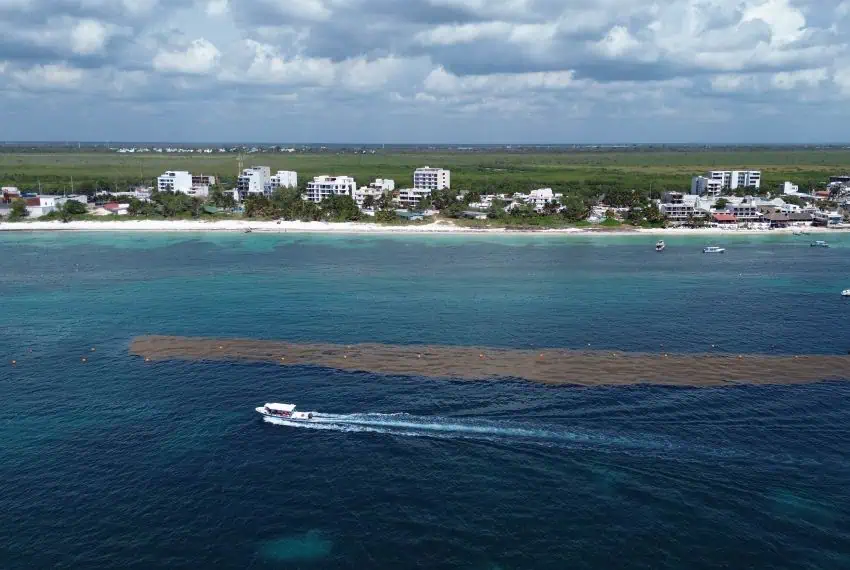
With sargassum season officially underway, authorities along Mexico’s Riviera Maya are bracing for a record-breaking influx of the messy seaweed this summer.
Sargassum blooms have been coming ashore earlier than normal this year, and Esteban Amaro, director of the Quintana Roo Sargassum Monitoring System, said the forecast for 2025 is worrisome.

“We are expecting more intense and more frequent arrivals along the entire coast,” he said.
Amaro said satellite images indicate the accumulation of sargassum this summer will be greater than the region has seen in three years.
“Last year, we collected more than 40,000 metric tons, and we will easily surpass that figure this year,” he said.
The brown seaweed known as sargassum is naturally beneficial to marine ecosystems in the open ocean, but becomes harmful to marine life, plants, coral and human health when large quantities reach the coast. As it decomposes, sargassum gives off a foul smell similar to rotten eggs.
Sargassum accumulation along the Riviera Maya typically peaks during the summer months from April or May to August, but can persist into November. Last year, Quintana Roo did not declare sargassum season over until Nov. 14.

Increasing quantities of the seaweed have been washing ashore since 2011, posing a challenge to authorities as they work to keep the beaches clean and safe for tourism, a primary source of income in the region.
In late March, officials along Mexico’s Caribbean coast reported an increase in sargassum compared to last year.
The popular tourist destination of Tulum collected 50% more seaweed in January and February compared to the same period last year, according to the Federal Maritime Terrestrial Zone (Zofemat).
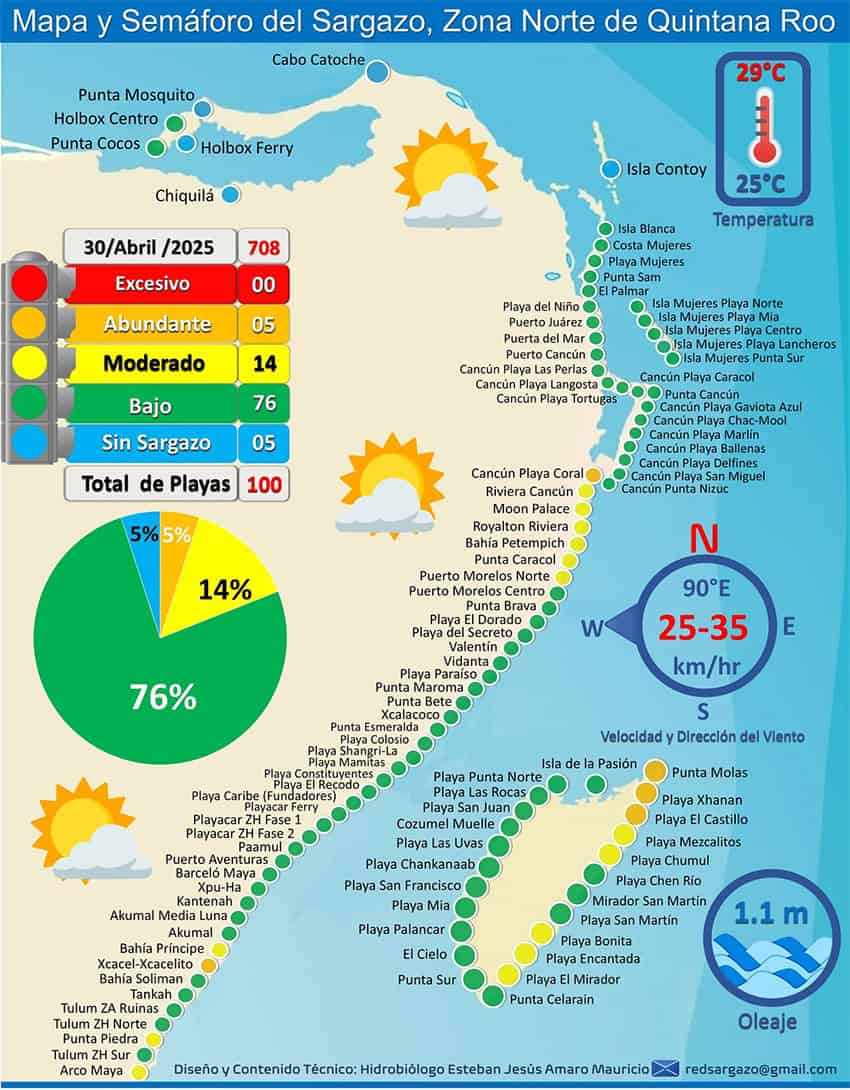
The state’s Ecology and Environment Ministry said that, as of mid-April, a total of 10,236 metric tons of sargassum had been collected in the coastal areas of Playa del Carmen, Othón P. Blanco and Puerto Morelos.
Quintana Roo Gov. Mara Lezama recognized the official start of sargassum season on April 15, outlining her administration’s containment plans and saying that keeping beaches clean is a shared responsibility.
The first phase, or containment phase, saw approximately 9,500 meters of barriers installed off the state’s coasts at strategic locations to contain the algae and redirect it to collection points
Amaro said that while the barriers are a critical part of protecting Mexico’s beaches, the possibility that climatic conditions prompt a massive influx of sargassum blooms requires authorities to redouble their efforts.
The Navy Ministry also implemented a monitoring phase designed to locate floating masses of sargassum that could impact beaches, assigning 11 coastal sargassum harvesting vessels and 22 smaller vessels to the task.
With reports from 24 horas de Quintana Roo and Riviera Maya News