Mexico. Where Pueblos Mágicos unfold across mountainous landscapes. Where city sprawls stretch 25 miles from east to west. Where rainbow-colored fisherman villages dot coastlines, Cortés-era haciendas ring ancient Maya ruins, and spiky agave plants scratch the Jaliscan sky. In a country that practically explodes with culture, how is it that Cancún became the first most-visited beach destination in Mexico, and the second-most visited destination in the country overall?
In short, it was built that way.
A resort born from computer calculations
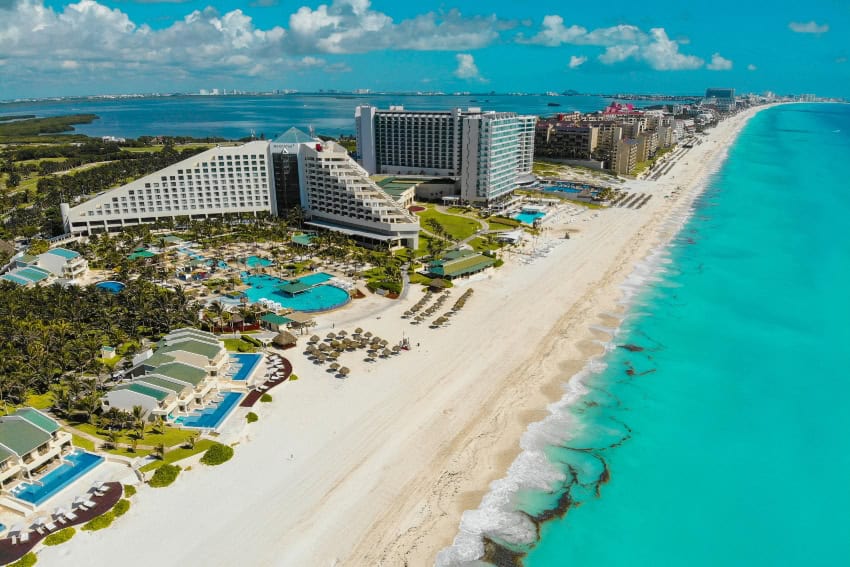
Cancún’s history is remarkably short. Unlike Mérida or Puebla, it didn’t spring from an ancient village. In fact, the city didn’t exist until the federal government and Banco de México decided to develop it in 1969. A development team targeted an existing sandbar off the tip of the Yucatán peninsula — then home to only a few small settlements, jungle and mangroves — using advanced computer technology and geographic research. They evaluated specific criteria, including climate, beach quality, hurricane risk, workforce and distance to the U.S. market, determining that this would be the perfect place to create a vacation hub.
The goal was ambitious: build a desirable, accessible destination that would rival other Caribbean spots and Miami while generating millions of tourist dollars. The economic dream of creating a flashy beach resort flanked by turquoise Caribbean waters and lush jungle would come to fruition — no matter the cost.
INFRATUR and the land grab
The timing was strategic. In the late 1960s, Acapulco was the crown jewel of Mexico’s coastline and a favorite getaway for Mexican and Hollywood elites. However, it was nearing the end of its golden age when overcrowding and pollution began to dull its glamour. The country desperately needed an alternative destination to replace the Pacific paradise while also attracting northern neighbors.
Banco de México established INFRATUR, a tourism-infrastructure trust designed to finance large-scale tourism projects. The trust moved swiftly, quietly purchasing over 12,000 hectares of coastline to lease in parcels to investors and hotel developers. The area would be divided between the tourist zone, the lagoon system, conservation land and urban area.
Not everyone welcomed this blueprint. As whispers about the project reached local landowners and speculators, a scramble erupted to capture land or inflate its value before the bank claimed it. It didn’t matter. Construction began in 1970 anyway, backed by federal funds and financing from lenders like the Inter-American Development Bank. Within a few years, the project consumed around one-fifth of Mexico’s federal tourism investment, a clear signal of its political focus.
Breaking ground in paradise
The sandbar was priority number one, but it could only be accessed by boat – hardly feasible for transporting the abundance of materials and manpower needed. Engineers solved this by building a road from Puerto Juárez, along with a provisional airstrip. Large-scale dredging removed mangroves and opened access between the lagoon system and the sea.
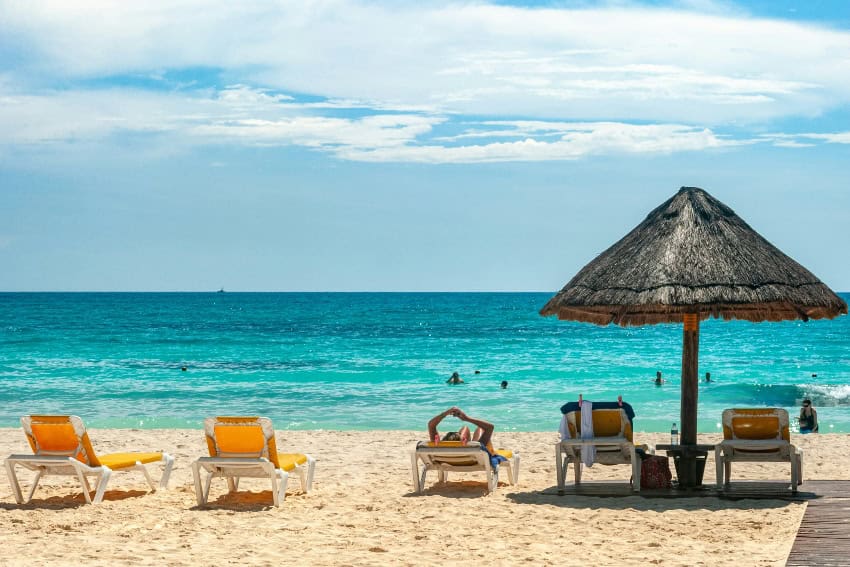
The project evolved in 1974 when the newest iteration of the fund, FONATUR (Fondo Nacional de Fomento al Turismo), took control and introduced a three-phase strategy: Phase 1 focused on the hotel zone; Phase 2 emphasized the mainland urban area for employees; Phase 3 involved the international airport and infrastructure to establish Cancún as a major destination.
FONATUR wielded unprecedented control, acting as landlord, developer and gatekeeper over all movement within the emerging city. This power allowed the fund to manipulate land distribution through negotiated deals and exclusive invitations. Consequently, a relatively small circle of large hotel chains, Mexican business groups and foreign partners secured the best-served, highest-value sites along the hotel zone.
The price of paradise
This selective development strategy came with significant costs, both social and environmental. The cherry-picking of investors sparked unrest among the expanding population of workers and informal settlers who found themselves excluded from the best areas, even as they built — and eventually staffed — the new resort destination. Many ended up in rapidly expanding inland neighborhoods with precarious housing and limited access to drinking water, drainage and even public transport, far from the polished image in Cancun’s advertisements.
Environmental consequences proved equally severe. Researchers documented how Cancún’s tourism boom led to pollution and erosion affecting Nichupté Lagoon, beaches and coastal ecosystems, necessitating almost-constant artificial beach replenishment. Damage to the surrounding aquifer resulted in contaminated waters and increased flood risk that disproportionately affected low-income neighborhoods. The dramatic loss of mangrove cover left the city vulnerable to dangerous storm surge and coastal flooding.
From first lobbies to spring break legends
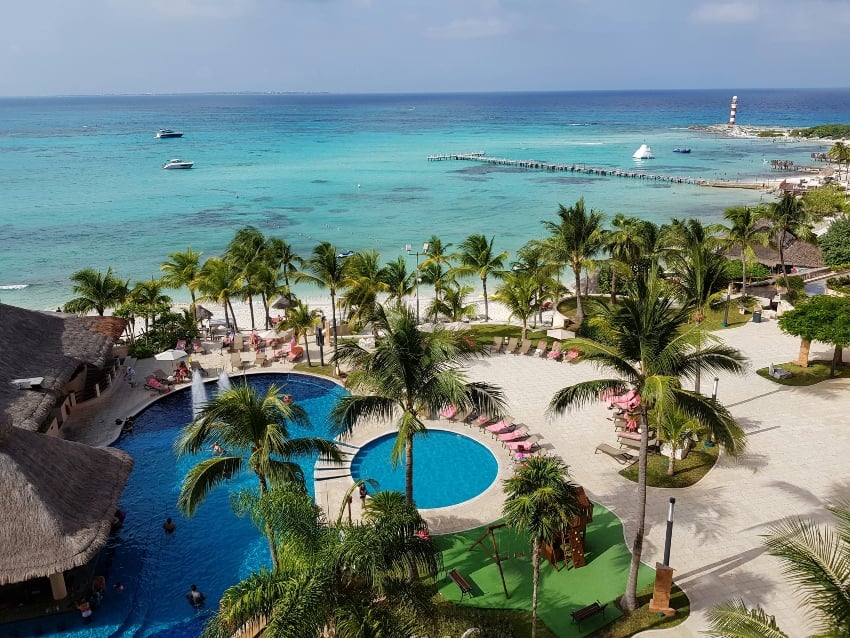
Despite these growing pains, the resort took shape. When construction finally moved from survey stakes to actual hotels, the first wave of properties felt almost like a private club in the jungle. Government backing helped finance early hotel-zone projects, including high-profile names like the Hyatt Cancún Caribe and the Camino Real, alongside one of the earliest properties on the strip, the then-modest Playa Blanca (now living its provocative era as Temptation Cancun Resort).
This intimate resort experiment didn’t last long. By the 1980s and 1990s, Cancún had exploded into a full-blown spectacle: neon-lit discos, mega-clubs with laser shows and all-night parties that crowned it as a spring break capital. Venues like Coco Bongo mixed Vegas-style shows with thumping dance floors, turning a night out into the kind of over-the-top performance tourists bragged about for years.
The shadow city
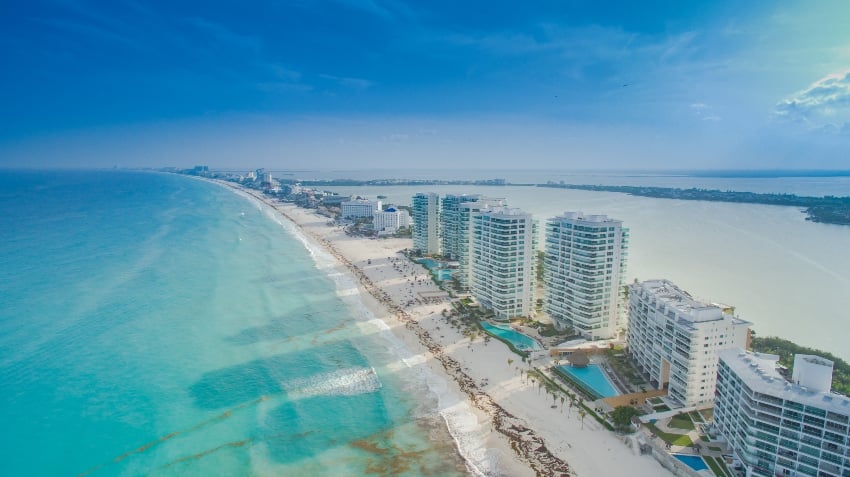
While the hotel zone partied, Cancún, the city, grew in its shadow, essentially serving as a mainland hub for workers and services. INFRATUR and later FONATUR planned a gridded urban core and early residential areas to house government employees and tourism workers. However, migration quickly outpaced planning, and by the 1980s, thousands of people from other parts of Mexico had already arrived looking to capitalize on extensive job opportunities.
The municipality of Benito Juárez became one of the country’s fastest-growing urban areas and now houses nearly one million residents. This accelerated growth consistently outstripped infrastructure development, creating persistent issues with traffic, garbage collection and drainage that continue to plague the city today.
The modern challenge
Today, Cancún’s wild-child reputation endures, but in moderation, and Quintana Roo now boasts more than 130,000 hotel rooms. Current initiatives include new governance structures and major infrastructure projects like the Nichupté vehicular bridge — an 8-11 kilometer elevated road directly linking downtown Cancún to the hotel zone.
While promoted as essential for managing visitor loads and providing hurricane evacuation routes, environmental groups and court challenges question whether a massive bridge through a protected lagoon can ever be truly low-impact. It represents yet another battleground where the costs of “connecting” Cancún’s next growth phase are fiercely debated.
From computer calculations on a sandbar to a sprawling resort empire, Cancún stands as both triumph and cautionary tale — a testament to what can be built when governments dream big, and a reminder that paradise always comes with a price.
Bethany Platanella is a travel planner and lifestyle writer based in Mexico City. She lives for the dopamine hit that comes directly after booking a plane ticket, exploring local markets, practicing yoga and munching on fresh tortillas. Sign up to receive her Sunday Love Letters to your inbox, peruse her blog or follow her on Instagram.