It should come as a surprise to no one that my recent trip to Mérida left me enamored. The Yucatán capital has been recognized as Mexico’s safest city since 2015 and the world’s best small city by Condé Nast in its Traveler Readers’ Choice Awards.
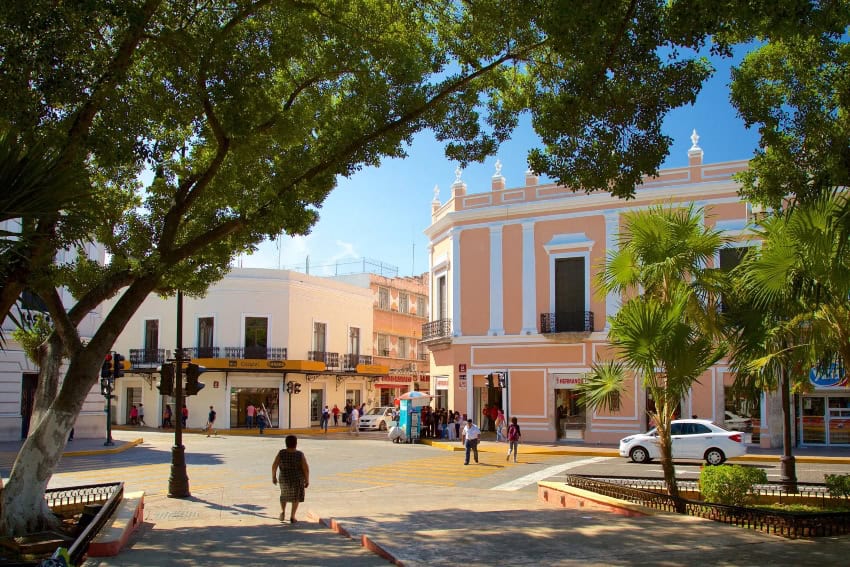
This charming hub blends the region’s rich Maya heritage with elegant colonial architecture, accented by bright colors and geometric patterns, soaring ceilings and pillared courtyards. The sun-drenched streets and the plazas are artfully landscaped. As my iPhone’s collection of photos grew, I wondered aloud and often: Why is Mérida so darn cute?
The city’s combination of European and Maya styles
The city of Mérida was created in 1542, when the Spanish initiated its construction over the ancient Maya city of T’hó. The location was ideal to establish a colonial stronghold, with its established trade routes and freshwater accessibility, as well as its reasonable distance from the coast. Preexisting infrastructure provided workers with building materials, such as the repurposed stones you can see today in Catedral de San Ildefonso and Casa de Montejo.
Over the years, Mérida served as New Spain’s administrative seat in the Yucatán. For this reason, it was sometimes the site of Indigenous uprisings.
Once the 20th century rolled around, Mérida’s economy exploded, thanks to the henequén trade, further developing the capital. Henequén, a plant native to the Yucatán Peninsula, produces a famously sturdy fiber of the same name that’s used in rope, sacks and fabrics. It is still essential today in the agriculture and shipping industries.
The product was largely exported to the United States for twine in the second decade of the 1900s, averaging a regional income of US $24 million per year. Much of that wealth surge was redirected into beautifying the city. Today, Mérida’s unique look marries European elegance and Maya design.
Here are the details that make it so cute.

Its colonial-era architecture
If you’ve entered any of the museum mansions, you’ve probably noticed ceilings that soar up to 6 meters (20 feet) high. These airy abodes served two purposes: showcasing a family’s societal status and adapting to the regional climate. Yucatán summers can be stifling. Before air conditioning was standard, high ceilings were used to trap the heat, keeping interiors cool and improving airflow.
Additionally, thick walls, central courtyards and large doors and windows were also constructed within these colonial villas to facilitate cross-breezes and provide shade and maintain a pleasant indoor temperature.
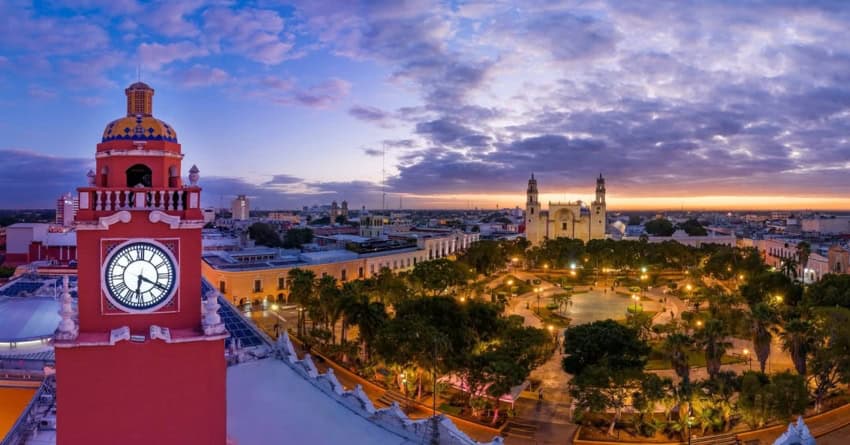
Most of Mérida’s neighborhoods are marked by their own leafy square, reminiscent of both Mayan markets and Europe’s outdoor central plazas. Each is lined with a church, some with government offices. All are meticulously landscaped with trees and flower beds. You’ll also notice sets of “lover’s chairs,” romantic double-seated benches said to have been commissioned by a protective father so his daughter and suitor could converse with some physical distance built in.
The crown jewel of Merida’s squares, Plaza Grande, is framed by the cathedral, Casa de Montejo, and the government palace. Archaeological excavations have revealed Maya structures and colonial paving stones beneath, making the main square a living testament to the city’s multilayered history.
The henequén boom era: Turning local fiber into fortunes
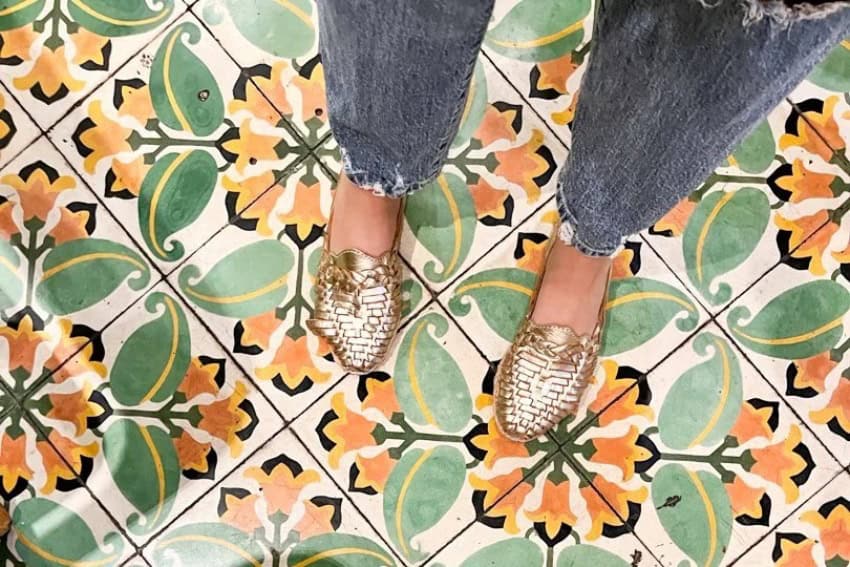
Colorful and geometric, these cement squares are called pasta for the paste they’re made from. Originally a tradition brought over to the Yucatán from Barcelona starting in the mid-1800s, pasta tiles were extremely durable, lasting a century or more, and were revered as a symbol of status and wealth.
During the 20th-century economic boom, 60 small factories were built here to satisfy an ever-increasing demand, where skilled artisans made each tile by hand. A single worker, known as a ladrillero, could make between 80 and 130 tiles per day, pouring colored cement into an iron mold, pressing them into shape, then leaving them to dry for a week.
Most tiles were crafted in floral or geometric patterns, though it was rare to see identical motifs as neighbors competed to install the most unique designs.
Perhaps the grandest display of henequén wealth in Mérida was Paseo de Montejo. Built between 1888 and 1904 and inspired by Parisian boulevards, this tree-lined avenue was designed by city authorities and wealthy aristocrats to display their newfound prosperity.
Named after the Spanish conquistador who founded Mérida, the boulevard features wide sidewalks, landscaped plazas and roundabouts called glorietas. The historic center is another example of European-style urban planning, where a distinctive grid layout features sidewalks dotted with lampposts and wrought-iron balconies imported from Europe.
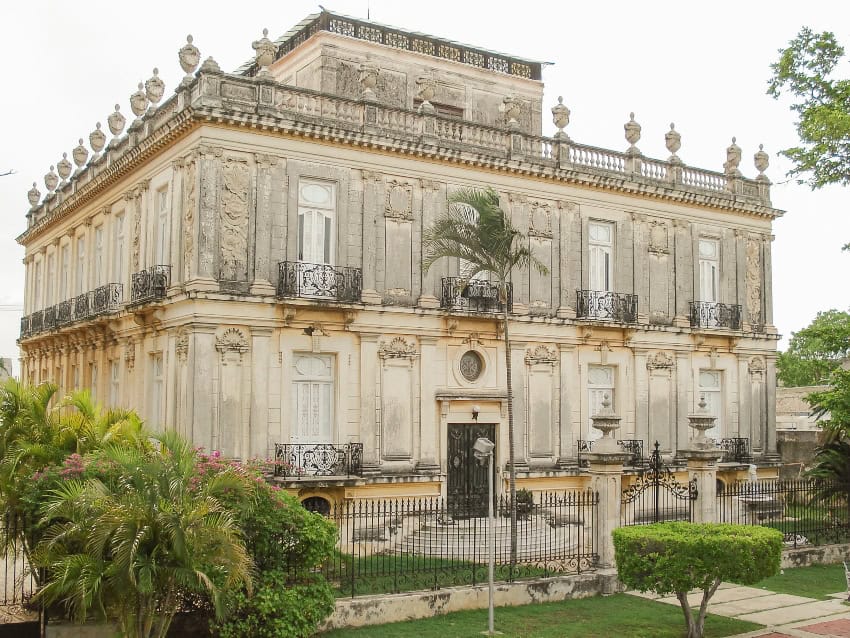
Barons who capitalized on the henequén trade commissioned grand casonas that emulated Beaux-Arts, French and Italianate architecture, such as manicured gardens, porticos, Carrera marble floors and pasta tiles. Many of these old mansions can be found today on Paseo de Montejo, where they’ve been converted into museums, restaurants and hotels.
One such mansion-turned-museum, Quinta Montes Molina, retained many of its original accents — stained glass from Tiffany’s and Limoges china — including, so they say, the owner’s spirit: Local legend claims Avelino Montes Linaje, who bought the mansion from a Cuban businessman during the Mexican Revolution, continues to wander the halls.
Embracing Indigenous identity
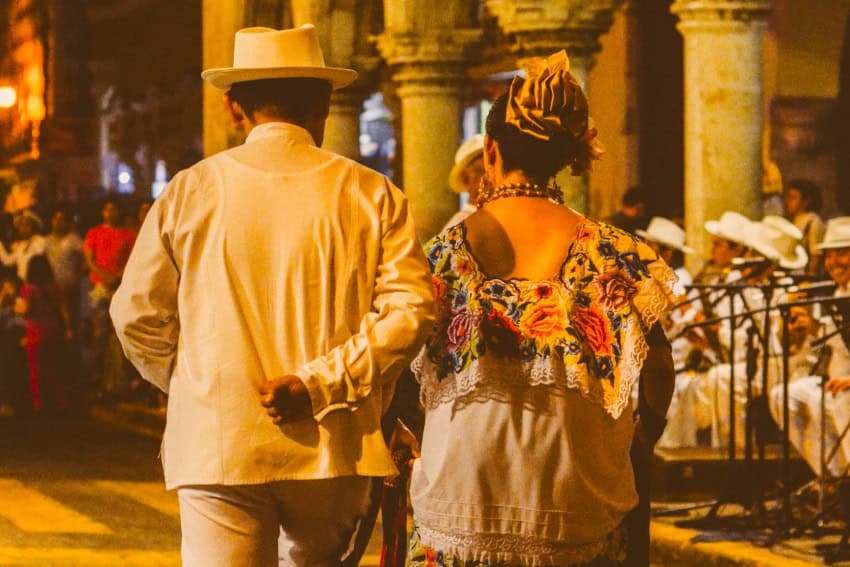
After the Mexican Revolution, Mérida embraced its Indigenous identity by incorporating architectural details inspired by Uxmal and Chichen Itzá. Starting in 1915, architects began integrating Maya elements into new construction — think serpent motifs, corbeled archways, geometric fretwork and traditional mask features. This style came to be known in Mexico as Neomaya.
Rendón Peniche Sanatorium, which currently houses UNAM’s Peninsular Center for Humanities and Social Sciences, is a great example of Neomaya — also known as Maya Revival— architecture. Maya-related decorative elements were also making a comeback, and many houses were outfitted with hammocks for sleeping in the traditional Yucatán style.
It’s a living canvas
Much of Mérida’s charm lies in the weathered paint layers on many of its colonial facades. The tropical sun, seasonal rains and humidity cause exterior paint to fade and flake while newer coats are applied over older layers. The result is numerous textured walls where blue, pink, ochre and turquoise overlap, with slabs of plaster and brick revealed beneath.
Historic restoration projects are tasked with intentionally preserving this “palimpsest” quality, highlighting the city’s ability to continuously adapt and showcasing its timeworn character.
Speaking of layered paint, the colors themselves cover a spectrum of hues, from soft pastels like teal, rose and yellow to intense shades of azure blue and brilliant magenta. Vibrant colors reflect the region’s tropical climate and Caribbean influence, often inspired by the Yucatán sea, sky and bright-red flamboyán trees. Historically, specific colors were used for their spiritual significance rooted in Maya beliefs and Catholic traditions, such as blue representing safety and red conveying vitality.
Mérida’s colorful buildings also serve a practical purpose: Unlike white or stone facades, colors help to diffuse the strong Yucatán sunlight and diminish the glare, enhancing the city’s vibrant street life.
So why is Mérida so cute? It’s the perfect storm of history, culture and climate creating something entirely unique. Maya foundations, Spanish colonialism, henequén wealth and tropical weathering have all left their mark, yet somehow Mérida has blended these influences into its own distinct character. The result is a city that wears it beautifully, charming every visitor who discovers its colorful streets.
Bethany Platanella is a travel planner and lifestyle writer based in Mexico City. She lives for the dopamine hit that comes directly after booking a plane ticket, exploring local markets, practicing yoga and munching on fresh tortillas. Sign up to receive her Sunday Love Letters to your inbox, peruse her blog or follow her on Instagram.