After two years without the town’s signature event, Huamantla, Tlaxcala, celebrated the Virgin of Charity festival once again on August 14 and 15 and broke a Guinness record in the process.
A celebration that some believe dates back to the indigenous veneration of Xochiquetzalli, the goddess of flowers and fertility, the festival is a tapestry of color now dedicated to the Catholic Virgin of Charity.
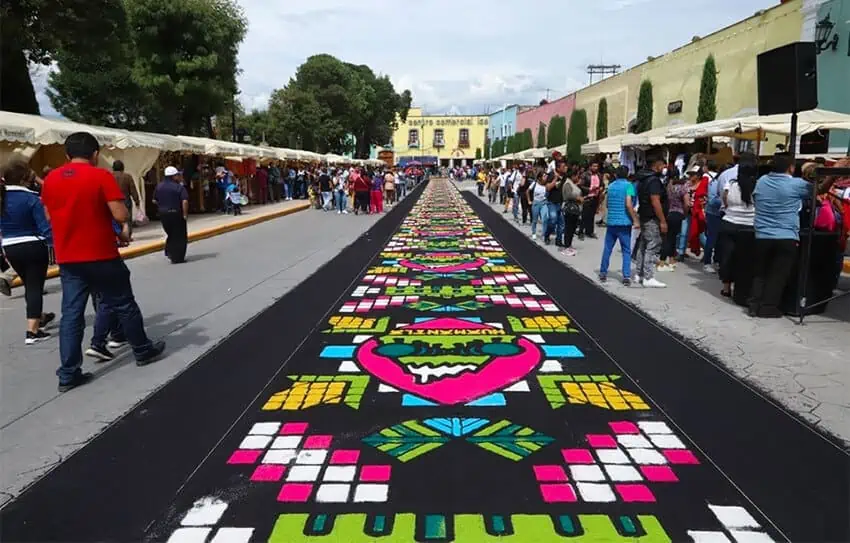
Artisans in the city spend all night (and in some cases days or weeks) creating intricate designs with colored sawdust, seeds, flower petals, and sand that carpet the city’s streets in anticipation of the miles-long procession that begins at the end of midnight Mass on August 14. The festival is called La Noche que Nadie Duerme or the Night When No One Sleeps because residents and visitors are up all night following the statue of the virgin carried above these colorful designs in a procession that takes over nine hours to complete.
The parade stops at various temples throughout the city, until the virgin is returned to her sanctuary in the early hours of the morning. This year the city broke the Guinness World Record for the world’s longest sawdust carpet, nearly 4 kilometers long and created by 240 artisans with 80 tonnes of colored sawdust. The record was previously held by Guatemala city with a carpet just over 2 kilometers long.
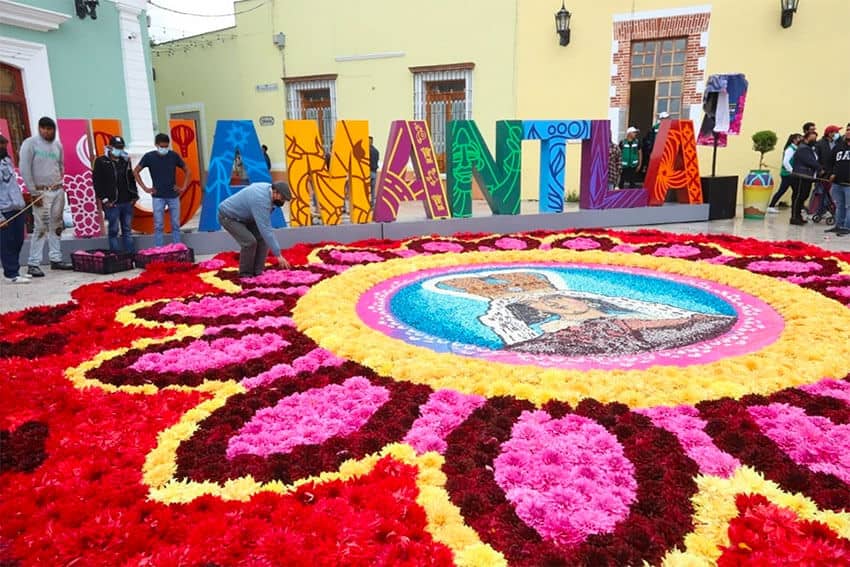
Visitors come from around the country and the world to witness the massive work of collective art in Tlaxcala. The designs incorporate flowers, religious motifs, geometric shapes, and some intricate images of the virgin herself. Some of the most complex designs are created in the atrium of the Basilica of Our Lady of Charity where the statue of the virgin resides for most of the year. These designs often take months to create.
Much like mandalias, the artistic creations disappear under the feet of devotees walking in the procession. Families in Huamantla have been creating this art for generations, and the work has become a deep tradition in this part of Tlaxcala.
The return of the festival after two years of a pandemic-induced cancelation is not only lifting the spirits of locals but also helping the local economy, in particular those who depend on the tourism it brings and growers of dahlias, flowers which are used for decorations during the festival. Last year the growers lost millions of pesos due to the cancelation of the event.

With reports from El Universal and El Sol de México, SDP Noticias