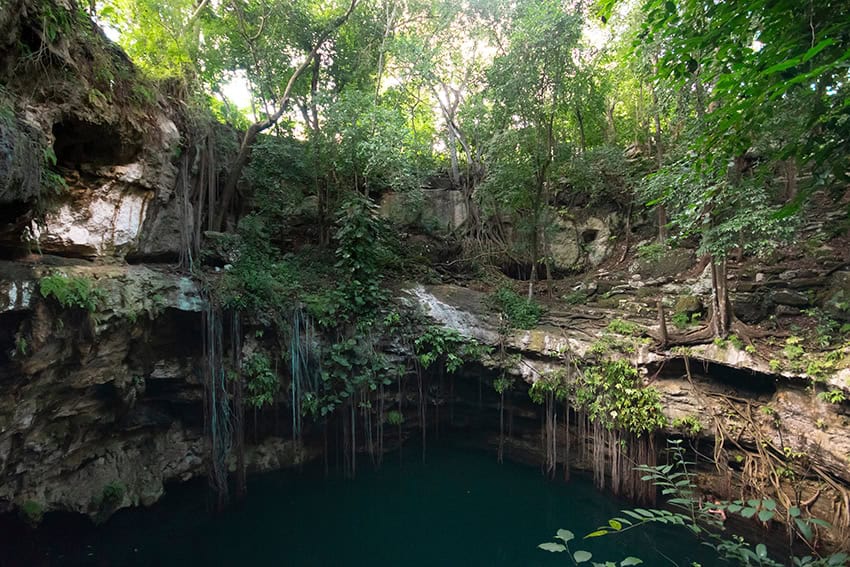
The Yucatán state government has teamed up with the World Wildlife Fund and an international alliance of institutions to amass funding of more than US $20 million to protect its jungles, mangroves and underground water systems.
Governor Joaquín Díaz Mena on Wednesday launched the Herencia Maya (Maya Heritage) project, saying it will guarantee long-term financial resources for the conservation of 11 protected state nature reserves.
The historic project — combining the resources of government, NGOs and private donors —aims to help protect more than 581,000 hectares of natural areas across the state.
For example, Governor Díaz Mena said Herencia Maya will guarantee financing — through an investment of more than US $12 million over the next five years — to care for and preserve 52,000 hectares of mangroves along 273 kilometers of coastline.
The project will allow for the development of marine species and curb environmental degradation and deforestation, while also restoring mangroves and water flows, much of which has been degraded by the construction of roads and housing developments.
“The most important thing is the human impact, especially environmentally, that this represents,” Díaz Mena said. “More than 114,000 people live in these protected natural areas and more than 1.3 million people benefit from our ecosystems and the conservation of water.”

The preservation of coastal lagoons also protects the population against hurricanes.
Standing alongside the governor, WWF México director María José Villanueva, said the Herencia Maya program falls under the aegis of the Enduring Earth Initiative, part of the WWF’s Project Finance for Permanence (PFP) program.
Villanueva described Herencia Maya as “a long-term strategy in a region that is home to 55% of Mexico’s mangroves and one of the most extensive underground river systems in the world.”
An initial fund of US $5.5 million is already available for areas identified as critical, and the state government will contribute an equivalent amount.
Nine state natural reserves will benefit from the fund: Dzilam; El Palmar; Ciénagas y Manglares de la Costa Norte; Puuc; Anillo de Cenotes; Kabah; Lagunas de Yalahau; Ich Kool Balamtún; and San Juan Bautista Tabi and Anexa Sacnicté.
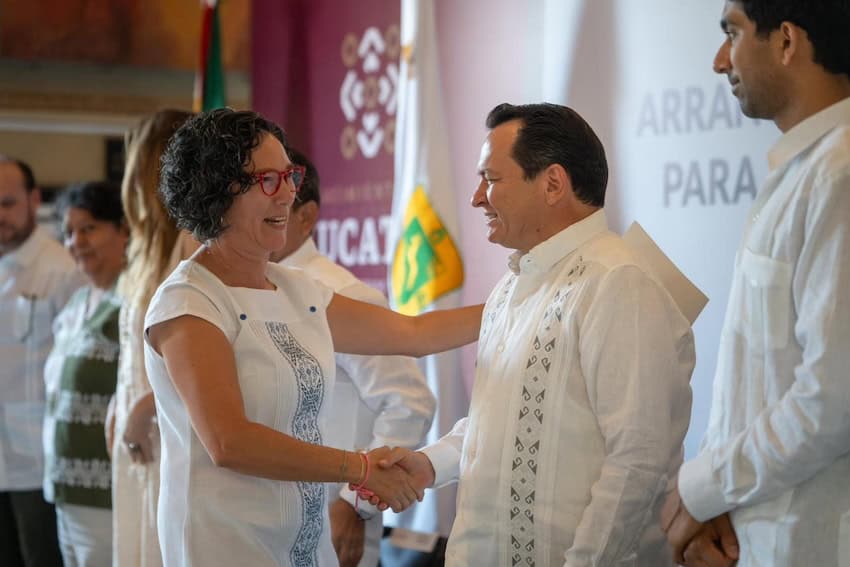
María José Villanueva, Mexico director of the World Wildlife Fund, and Yucatán Gov. Joaquín Díaz Mena have joined forces to help fund a project near and dear to both of them — the protection of the state’s natural resources. (WWF/Facebook)
Additionally, the Cuxtal Ecological Reserve, managed by the Mérida City Council, and the private El Zapotal reserve will receive financing.
The PFP initiatives are designed for the long term, the WWF says, and seek to transform people’s ability to conserve and steward nature according to their own visions and values.
Once a project gets the green light, funds are released to governments and communities over the life of the project as key milestones are achieved. As such, results ensure reliable funding and donors know funds will only be spent if the goals they support are achieved.
The project is described as the first of its kind worldwide, as it incorporates subnational financing through public resources and private donations.
Among the participating institutions are: Bepensa, The Coca-Cola Foundation, Enduring Earth, Marshall Field, the Global Environment Facility, HP Inc., Margaret A. Cargill Philanthropies, Natural Spaces and Sustainable Development and The Nature Conservancy.
The federal Environment Ministry and the National Commission of Natural Protected Areas are also part of the alliance.
With reports from La Jornada, Reporte Indigo and Diario de Yucatán