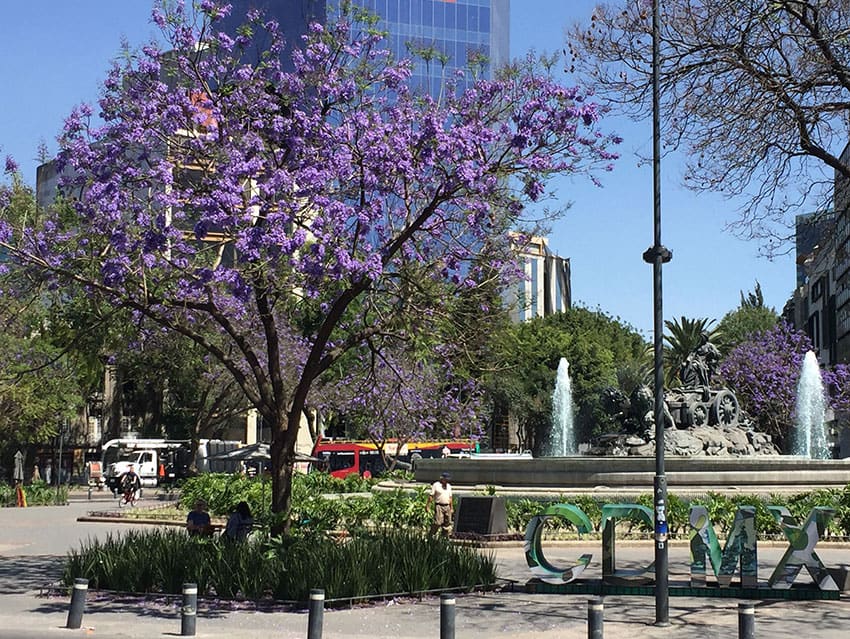
Purple is the color of spring in Mexico, thanks to the jacaranda tree.
Every spring, millions of residents in Mexico City and beyond are charmed by the purple canopies of this beloved tree. Although it has become a staple of the season for nearly a century, did you know it isn’t native to Mexico?
In fact, it is originally from South America.
1. The jacaranda tree arrived from Brazil
Jacarandas are native to a region known as Gran Chaco that spans Argentina, Bolivia, Brazil and Paraguay. They were brought to Mexico by Japanese immigrant Tatsugoro Matsumoto in the 1930s.
Matsumoro, who worked as a gardener in the Chapultepec Castle — the former presidential residence — advised President Pascual Ortiz Rubio to plant jacarandas instead of cherry trees, as they would better adapt to the city’s climate.
Clearly, he was right!
2. Its purple flower blossoms during the spring
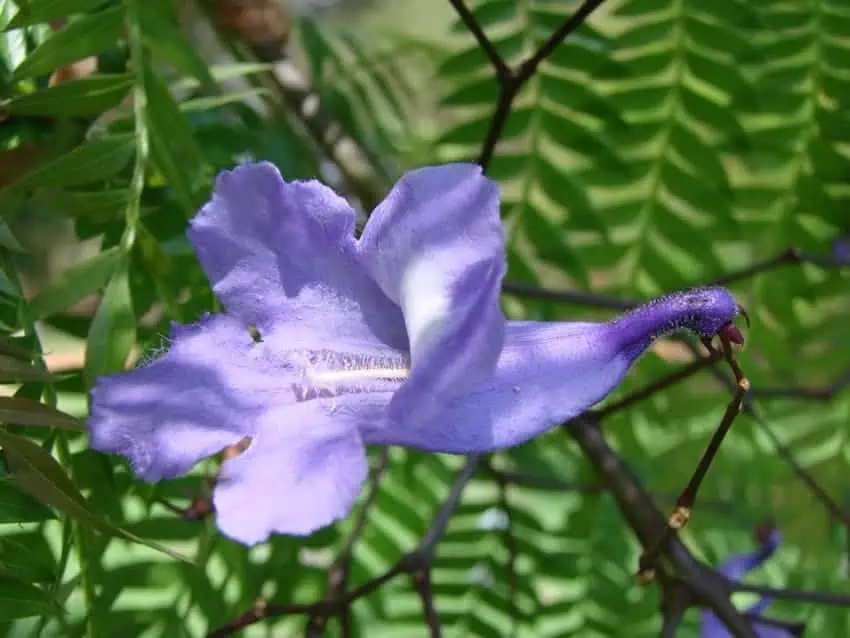
Blossoming from February through March, the jacaranda grows an abundance of lilac and violet flowers in bunches that completely cover the tree. Due to their vibrant purple color, they have become ornamental trees all across Mexico City (and most states in the country).

The New York Times described the jacaranda blossoming season as “an explosion of purple flowers.” When the flowers fall, “the sky blooms on the ground,” wrote Alberto Ruy Sánchez in his book “Dicen las Jacarandas” (“What the Jacarandas Say”).
3. There are more found in wealthy neighborhoods
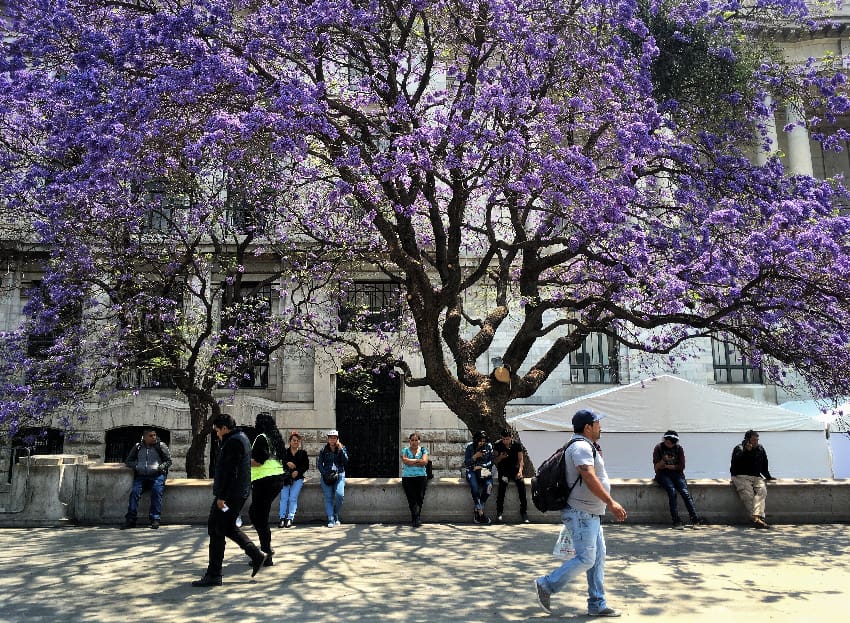
According to an analysis by the newspaper Expansión, although the jacaranda tree can be found in most areas of Mexico City, they’re particularly prominent in the wealthiest neighborhoods.
Based on data from real estate websites like Propiedades.com and VivaAnuncios.com, the study argues that the abundance of jacarandas in these areas raises the price of neighborhoods, including the exclusive areas of Polanco, Juárez, Del Valle, Condesa, and Cuahutémoc.
4. They grow quickly
Jacarandas can vary from 6 to 25 meters and grow at an average of 1.5 meters per year. It only takes jacarandas about three to five years to become an “adult tree” and to start blossoming flowers.
5. Its name has different meanings and symbolisms
The original name is pronounced “jacarandá,” with the stress on the last syllable. It comes from the Guaraní language spoken in Brazil and Paraguay, and some experts consider it to mean “fragrant” (which is odd because the jacaranda flower doesn’t have a scent) or “strong wood.”
Since the jacaranda blossoms in spring, it is associated with rebirth and the “magic” of the season.
In the Amazon, the jacaranda is associated with the goddess of the moon and is also considered a sign of good fortune. According to legend, if a jacaranda flower falls on your head, it will bring you good luck.
So, next time you’re standing under a jacaranda tree, don’t move and you might end up a lucky fellow!
With reports from The New York Times, Bioparque Brasil, Expansión and Reforma