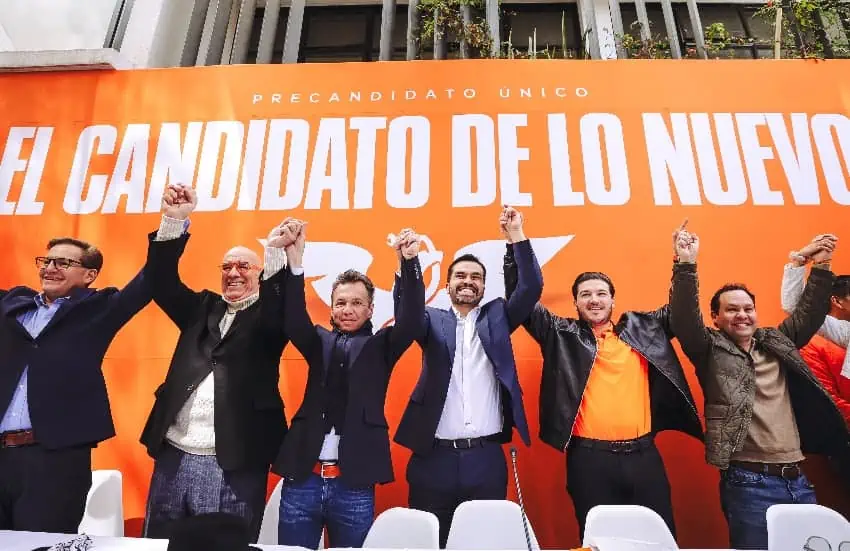
Jorge Álvarez Máynez, a 38-year-old federal deputy, will enter the 2024 presidential race as the candidate for the Citizens Movement (MC) party.
Nuevo León Governor Samuel García — who took leave as governor to represent MC at the presidential election but pulled out of the race amid political turmoil in his home state — announced Tuesday that he was passing the “baton” to Álvarez, who he said was a “very good candidate” and “the most orange of all us.”
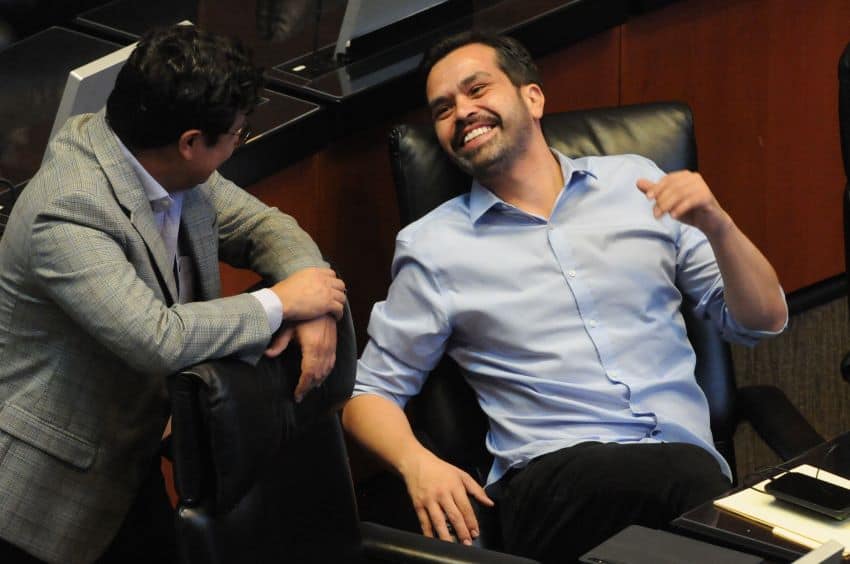
Orange is the political color of MC, a center-left party that is currently in power in Nuevo León and Jalisco.
Senator Dante Delgado, the party’s founder and national leader, said in a statement that a proposal to have Álvarez as the MC “pre-candidate” was presented at a party meeting on Tuesday.
He said that the official registration of the lawmaker as the MC “pre-candidate” — a designation presidential hopefuls are required to use until the official campaign period starts in March — would take place in Mexico City at midday on Wednesday.
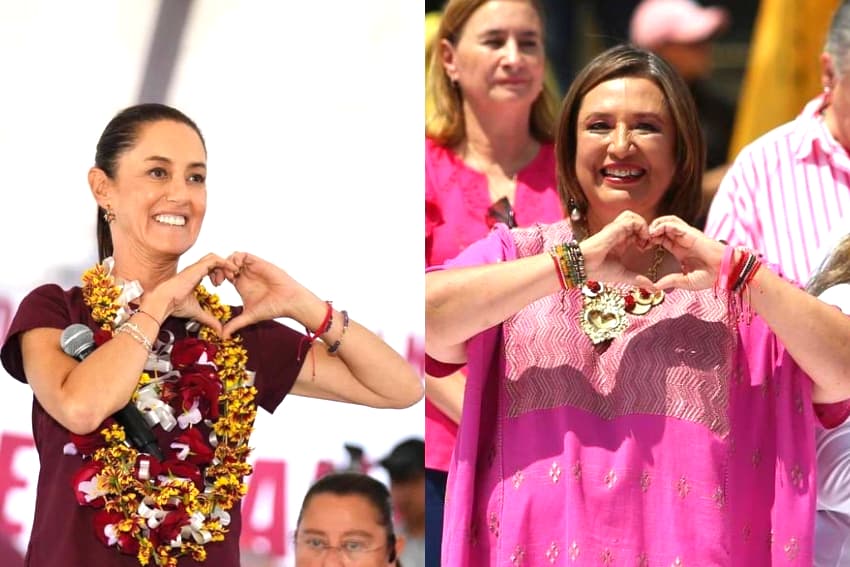
It appears that Álvarez, MC’s leader in the Chamber of Deputies, will be the sole pre-candidate for the party, ensuring that his name will be on June 2 presidential election ballots along with those of ruling Morena party candidate Claudia Sheinbaum, the clear frontrunner, and Xóchitl Gálvez, who will represent the three-party opposition bloc Strength and Heart for Mexico.
Appearing alongside García and the governor’s wife Mariana Rodríguez in a video posted to social media, Álvarez said it was a “great honor” to receive the candidacy “baton” and declared that Mexico needs a “different option, a third alternative to the old politics.”

“… We can achieve this new Mexico that Samuel, in Nuevo León, has shown is possible, that has been shown is possible in Jalisco,” said the Zacatecas native who previously served as a deputy and municipal councilor in that state.
García said that the announcement of Álvarez as the MC candidate is “excellent news for Nuevo León, for Mexico and especially for young people who are the majority in this country.”
Referring to Institutional Revolutionary Party (PRI) and National Action Party (PAN) politicians, the governor asserted that “the dreamers from the old … [regime] believed we were going to be left without a candidate, … that millions of young people would be left without a fresh and forward-looking option.”
“Well, they’re wrong because Samuel was the pre-candidate but there are millions of us in this team, in this community that wants something new,” García said.
Álvarez asserted that the PRI — which was most recently in power between 2012 and 2018 when Enrique Peña Nieto was president, and which backed his candidacy at the 2010 state election in Zacatecas — and the PAN, which was in office between 2006 and 2012 with Felipe Calderón as president, are “more fried than the eggs with machaca we had for breakfast.”
That García announced Álvarez as the MC presidential hopeful is indicative of both the central role the governor plays in the party, and the reach he and his wife have on social media.
The 36-year-old Monterrey native and Rodríguez, who is aiming to become mayor of the Nuevo León capital, collectively have 5.5 million followers on Instagram — their favorite social media platform — alone.

García’s victory in the 2021 gubernatorial election in Nuevo León was largely attributed to the online campaigning of his social media influencer wife. Rodríguez, who is significantly more popular on social media than her husband, and García are now set to use their social media clout in support of Álvarez’s bid to become Mexico’s next president.
However, his chances of becoming president currently appear to be very slim if not non-existent, with polls showing that Sheinbaum is the clear favorite.
The results of a poll published in December showed that the former Mexico City mayor had 61.4% support among respondents who nominated a preference among presidential candidates, well ahead of Gálvez on 30.9% and an at-the-time undecided MC candidate on 7.7%.
On Wednesday morning, President López Obrador said he was pleased that MC now has a candidate and stressed that Álvarez “has every right to participate” in the upcoming presidential election.
“It’s legal, all Mexicans have the right to participate [in elections],” he added.
Citlalli Hernández, Morena’s secretary general, also acknowledged the announcement that Álvarez would represent MC on June 2.
“No one denies that they’re good at social media marketing, but we also recognize that they’re a joke,” she wrote on the X social media platform, referring to García and Rodríguez.
“And I thought there wouldn’t be any presidential candidate from the @PRI_Nacional in this election,” added Hernández, who ended her post with a speak-no-evil monkey emoji.
The PRI — whose name is considered a byword for corruption by many Mexicans — ruled Mexico for most of the 20th century, but its influence in federal politics is now greatly diminished, and the party currently governs just two of Mexico’s 32 federal entities after Morena prevailed in the 2023 gubernatorial election in México state.
Mexico News Daily