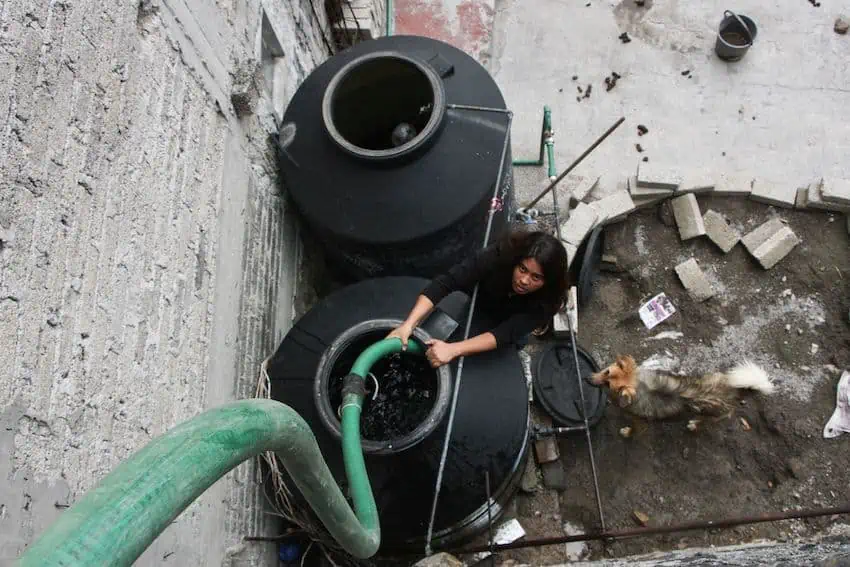
Experts from Mexico’s UNAM Water Network and other water-security agencies have warned that the aquifer sustaining the Valley of México, the primary water source for over 23.6 million residents in Mexico City and its surrounds, will be depleted within 40 years.
The dire prognosis came with an urgent call for immediate action and a substantial investment of 97 billion pesos (US $5.7 billion) over the next 15 years to avert a water crisis of unprecedented proportions.
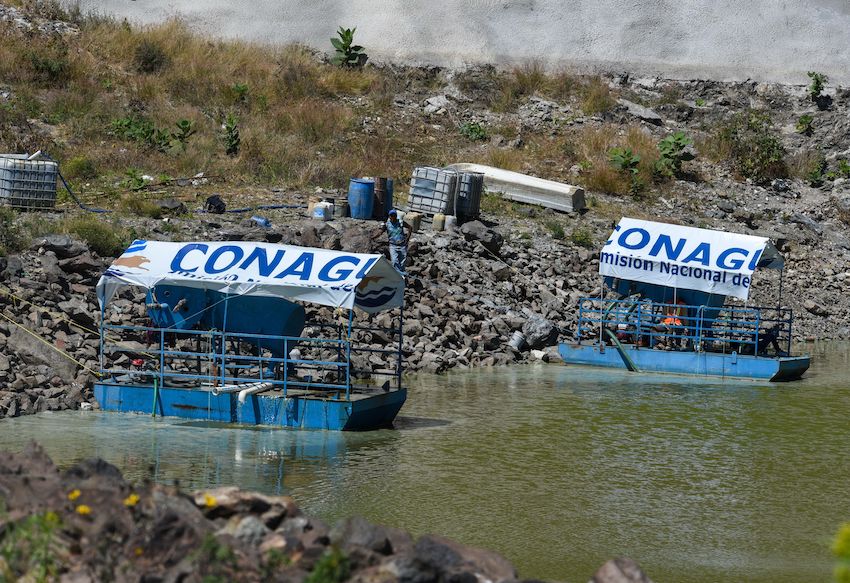
Presented this week, the report “Water Perspectives in the Valley of Mexico: Guidelines Towards Water Security” underscored the criticality of addressing the impending exhaustion of the Mexico City aquifer, which is part of a system of aquifers.
Its release came on the heels of another recent report, from the Mexican Institute for Competitiveness (IMCO), that said “severe, extreme and exceptional droughts” were affecting more than 1,600 municipalities around the nation.
“Specific actions are required for the next 15 years, for which 97 billion pesos are required to reverse the symptoms of water insecurity in the Valley of México,” said Marisa Mazari Hiriart, coordinator of the National Autonomous University of Mexico (UNAM) Seminar on Society, Environment, and Institutions.
She said there needs to be a “transformation towards sustainable water management. If this does not happen, the train is going to take us all together.”
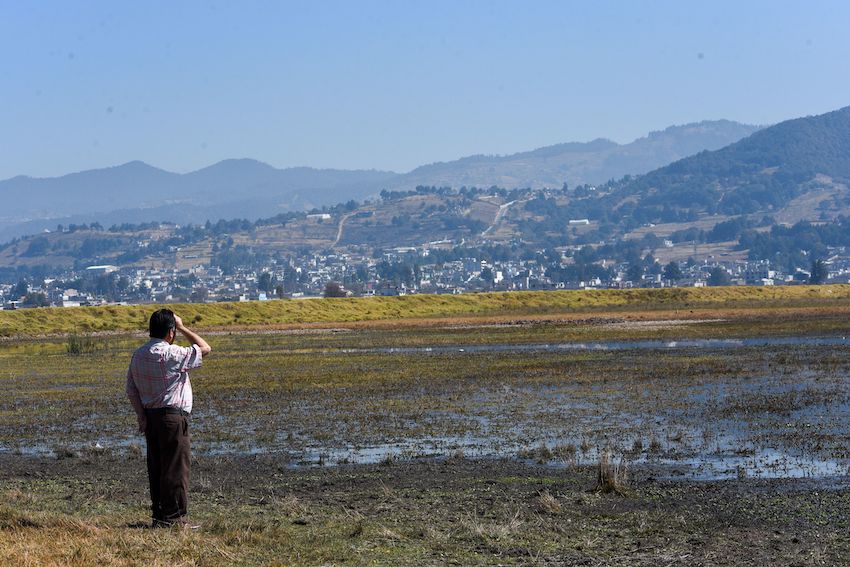
Fernando González Villarreal, technical coordinator of the UNAM Water Network, also emphasized the need for a paradigm shift in water management.

The first general director of the National Water Commission (Conagua), González Villarreal said the current extraction of water exceeds natural recharge rates by 2.5 times.
“Our aquifer, the treasure that we have in the subsoil of this valley, we have enormous storage that, according to our calculations, we have for 40 years if we continue at the rate of overexploitation that we have today; then we would exhaust it in 40 years. But this aquifer has stored water for 30,000 years.”
Adding to the problem is that an aquifer with a low water table can more easily experience erosion, surface fractures and the downward flow of pollution into the aquifer.

González Villarreal called for a new governance scheme for basin management, and said that without adequate financing and a revamped management strategy, achieving water security in the Valley of Mexico is an insurmountable challenge.
The proposed 15-year investment aligns with a comprehensive plan outlined in the Agreement for Water Security in the Valley of México. The plan was crafted by experts from the UNAM Water Network, the Regional Center for Water Security (under UNESCO’s auspices), Agua Capital and the Mexico City Water Fund. The plan comprises 14 proposals aimed at ensuring water security by 2040.
Additionally, the experts proposed diversifying water sources by doing feasibility studies on other aquifers, such as the Mezquital Valley Aquifer.
However, a recent plan floated by President Andrés Manuel López Obrador to provide the capital’s residents with water from the Mezquital Valley aquifer, which is partially closed, was not met with open arms by locals.
With reports from Milenio and El Economista