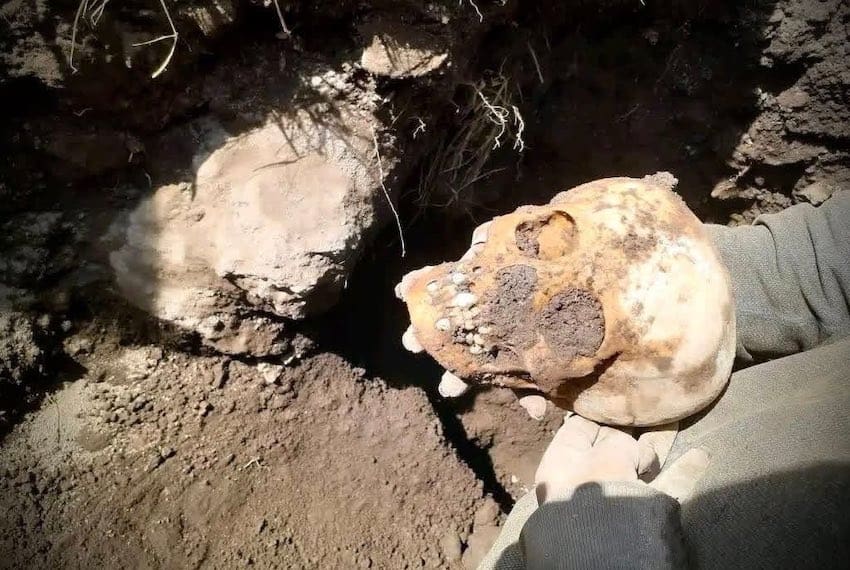
Archaeologists and nearby residents have been intensifying calls for intervention at an archaeological zone in México state where they say looting and destruction have continued unabated.
The site, Los Tlateles, consists of about 150 mounds (tlalteles) built on the former Lake Chalco — but it has never been declared a protected archaeological zone.
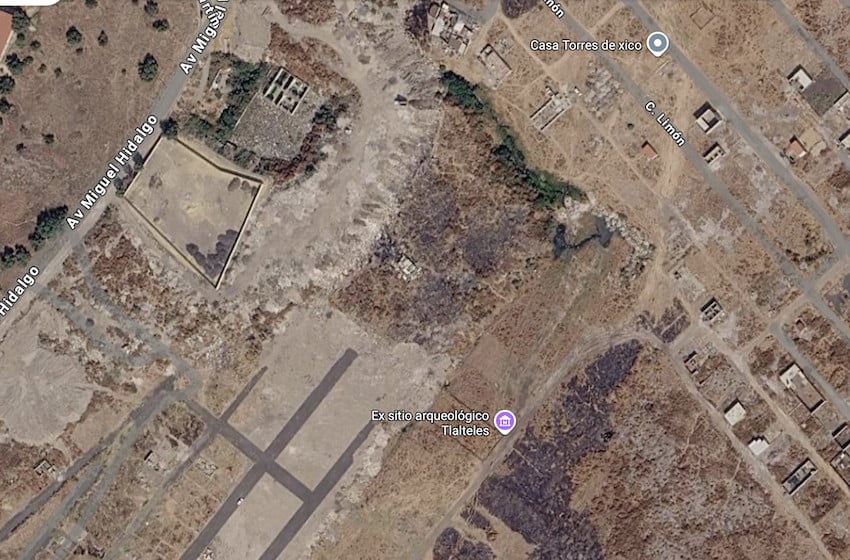
Nor is it a tourist site or a preserve that people can visit, according to the National Institute of Anthropology and History (INAH).
Moreover, members of the local community have filed amparos (legal injunctions) against INAH that prohibit archaeologists from accessing the site.
With that as the backdrop, the labor union representing INAH academics, researchers and archaeologists condemned the looting in a statement last week on social media, according to the newspaper Excélsior.
Archaeologist and independent researcher Ricardo Arredondo estimated that approximately 70% of pre-Columbian pieces sold on some online sites — such as Facebook Marketplace and Mercado Libre — come from Los Tlateles.
Ceramics, bones and sculptures are stolen on a near-daily basis, according to the citizen group Frente Común Tlalteles, which stated on Facebook that “the authorities’ inaction has caused irreparable damage.”

Meanwhile, the INAH union’s Commission for the Protection and Legislation of Archaeological, Historical and Paleontological Heritage specifically called out Salvador Pulido, INAH’s director of archaeological salvage, and Nahúm Noguera, INAH México state center director.
Those two men, the commission contends, are responsible “for all the damage and looting caused to the archaeological heritage, since they have failed to act in accordance with current legislation and, in some cases, have authorized works to the detriment of archaeological and historical monuments.”
According to La Voladora Noticias, the news arm of a radio station in México state, history and archaeology influencer Señor Blue (real name Yaotzin Nell Mejía) has documented irregular excavations in videos.
These reportedly show bone fragments, pottery and skulls with stone inlays in teeth, possibly indicating high-ranking burials.
The site once covered more than 200 hectares but has been reduced to between 10 and 20 hectares due to illegal land sales and settlement, Excélsior reported. Arredondo said the site’s occupation spanned from 2050 BC to 1521 AD and was a precursor to chinampa systems (artificial islands built in shallow lakes, with canals running in between) later used in the Aztec capital Tenochtitlán, precursor to Mexico City.
Though INAH has posted a legal-defense text, as of Monday, it had not issued any public statement on the recent accusations.
The undated post argues that Los Tlateles is being severely damaged by unauthorized development and looting on ejido (communally held) land, and that court injunctions, vandalism and internal legal shortcomings have hamstrung INAH’s ability to enter, protect and legally defend the site.
With reports from El Informador, Excélsior and La Voladora Noticias