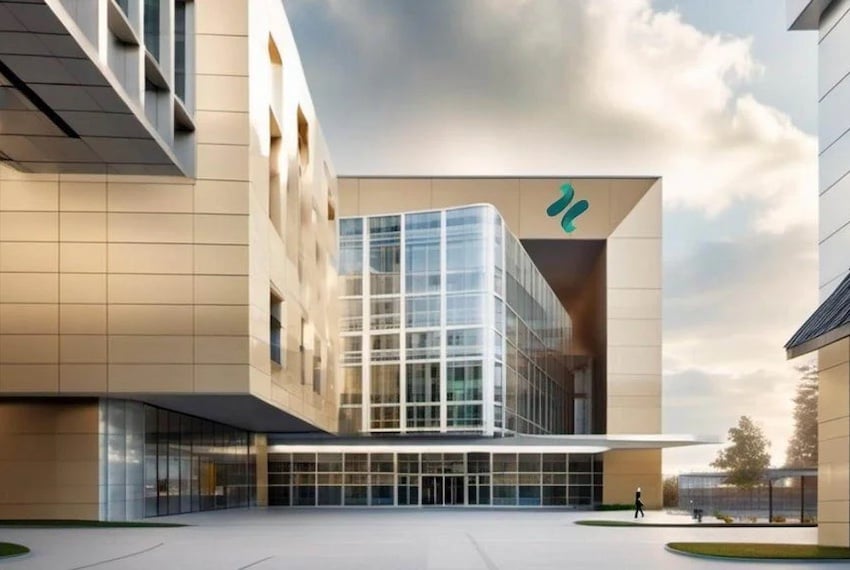
Querétaro is poised to become a new hub for medical tourism and highly specialized hospital services once the 2.5 billion-peso (US $145 million) St. Austin Medical District opens for business in September 2027.
Said to be 35% completed, the new healthcare infrastructure project will compete with leading hospital and medical tourism destinations in the North American private health market, such as Houston, Rochester (home of the Mayo Clinic), Tijuana and Mexico City.
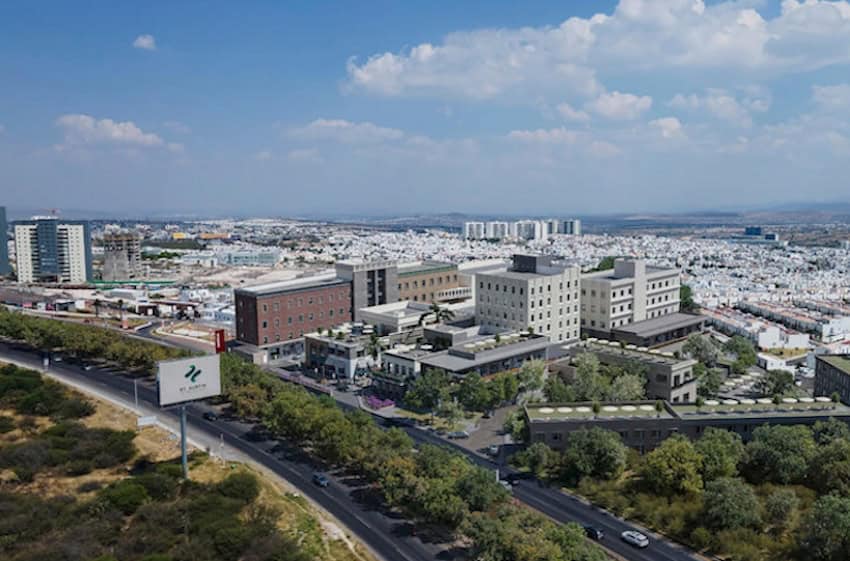
The complex is being built along the Fray Junípero Serra corridor in Querétaro city, one of the fastest-growing urban and financial areas in the state, and is being developed by Solidity Group Investments and Pómpano Desarrollos.
On its website, the St. Austin project is described as “a medical ecosystem created to support professional growth,” adding that “[o]ur purpose is to integrate two developments with medical spaces, specialty areas and strategic commercial premises that strengthen the healthcare ecosystem in Querétaro.”
The project includes a two-story hospital of more than 4,500 square meters, six operating rooms, an imaging area, clinical laboratories and more than 50 rooms for medical care.
The complex will also include a 2,000 square-meter medical specialty center, 180 consulting rooms, dental, metabolic and physical rehabilitation clinics, as well as a research center focused on regenerative medicine.
Additionally, the development will include 54 commercial premises, a hotel and more than 600 underground parking spaces.

“Each component — offices, medical areas, complementary services and commercial spaces — has been designed to offer functionality, accessibility, and an environment that fosters professional performance,” the St. Austin website says.
The center will be internationalized with the help of an alliance with the Global Care system, along with medical networks and hospital agreements in the United States and Latin America. This will open channels of collaboration in specialties, patient referral and clinical training.
“The project will integrate Querétaro into a health ecosystem with international connectivity, in a context where medical tourism and the mobility of high-profile patients grow year after year,” Daniel Rifel, CEO of Solidity Group Investments, told Forbes México.
Rifel said Querétaro was selected because of the city’s economic growth driven by nearshoring, industrial stability generated by the aerospace and automotive sectors in the state, and the security conditions and tourist appeal for Mexican nationals and American and Canadian visitors.
“The [economic] stability … demonstrates that there is legal certainty and favorable conditions for investment across multiple administrations,” Rifel said.
With reports from Forbes México, Palabras Claras and Líder Empresarial