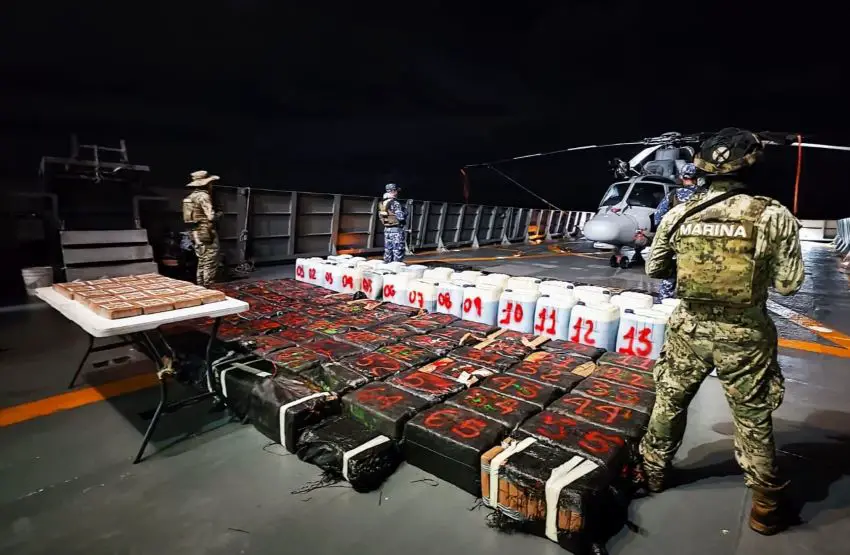
The Mexican Navy seized more than 8.3 tonnes of unspecified drugs, its largest-ever maritime drug bust, it announced Friday.
During a routine patrol, a Navy helicopter crew spotted a boat with three motors and an eight-man crew. When the suspects noticed the helicopter, they began tossing packages into the ocean.
Within minutes, a Navy ship was on the scene to make the arrests. Additional Navy ships were summoned. Over several hours, Navy personnel identified and seized five other boats approaching Lázaro Cárdenas from the south.
The operation — carried out just south of the port city of Lázaro Cárdenas in the Pacific coast state of Michoacán — netted a haul of illicit drugs valued at more than US $100 million, according to a press release issued by the federal government.
The largest quantity of drugs ever seized at sea in Mexico
The authorities arrested 23 people, seized six vessels and confiscated 8,700 liters of fuel, likely destined for the black market. The drugs were distributed among the boats, one of which was a submarine The use of such a vessel suggests a complex drug trafficking operation, according to the German news agency Deutsche Welle.
“This represents the largest quantity of drugs seized in a maritime operation; it is without precedent in the history of the institution,” the Naval Ministry said in a statement.
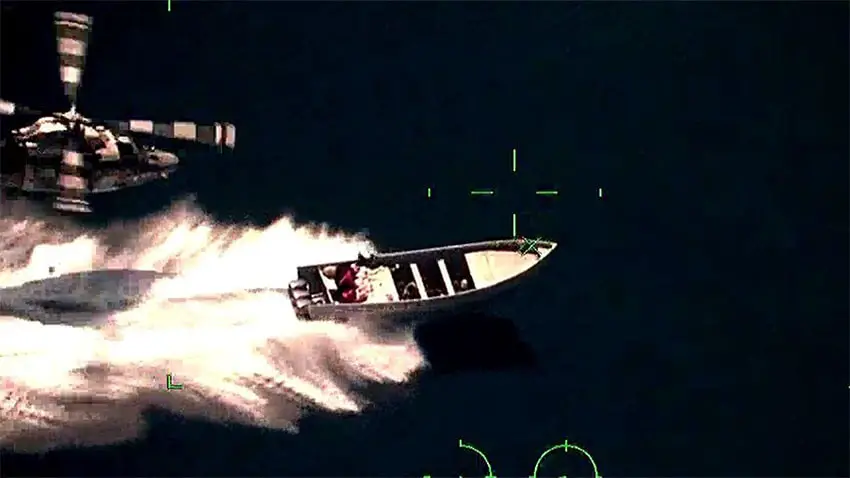
The largest drug bust made during the previous administration occurred in late August, when the Navy seized 5.6 tonnes of suspected cocaine and arrested 15 people after a high-speed chase off the coast of Colima, north of Michoacán.

The port of Lázaro Cárdenas — believed to be under the control of the Jalisco New Generation Cartel (CJNG), one of Mexico’s most powerful and violent criminal groups — has been a major conduit for drug traffickers as well as for precursor chemicals used to produce methamphetamine.
“Precursor chemicals are the lifeblood of the [CJNG’s] deadly drug trafficking operation,” U.S. Attorney General Merrick B. Garland said in May upon the extradition of Francisco Pulido Coracero, allegedly a broker in the precursor chemical racket.
Including this latest haul, the government has seized 11.7 tonnes of drugs since the new administration took office on Oct. 1.
Although the most recent bust is substantial, the largest in Mexico’s history remains the seizure of 23 tonnes of cocaine in the port of Manzanillo, Colima, in November 2007.
With reports from El Debate and Deutsche Welle