Wednesday, January 21, 2026

13 homicide suspects arrested in Cajeme, Sonora

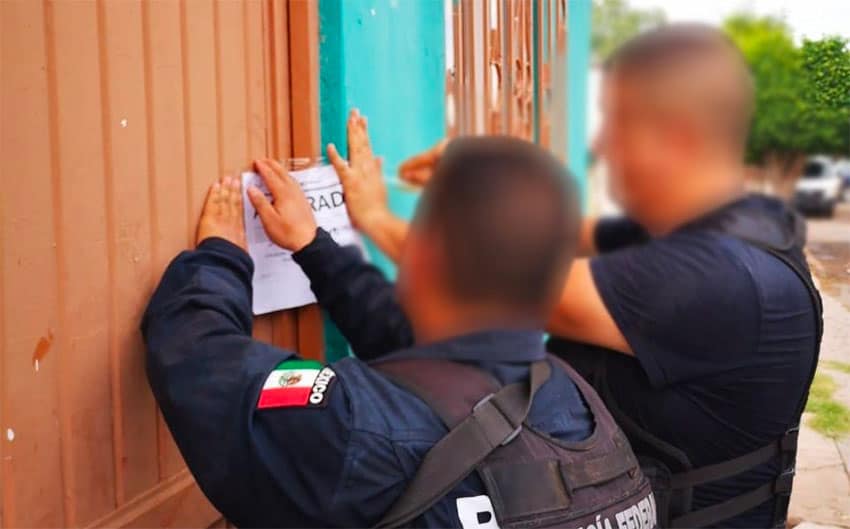
Federal Police detained 13 homicide suspects in Sonora who are believed to be a part of a criminal organization operating in the municipality of Cajeme.

Among other crimes, the suspects are thought to have been responsible for the death of a 3-year-old boy and his father in Ciudad Obregón on June 27.

With information gleaned from the investigation into the murder, police were able to identify the location of a residence the suspects were using as a safe house.

After obtaining a warrant, police stormed the house and arrested the suspects, who were handed over to local authorities for processing. Police also seized a firearm, a motorcycle, a van and seven cellphones.

Information from the July 12 arrests of Edgardo Sánchez and Brayan Valentín, who are thought to have been members of the same gang, also contributed to the capture.

Cajeme is on the list of the 50 most violent municipalities with a murder rate of 62.9 per 100,000 people. There were 147 homicides between January and June, and at least 65 of those occurred in the latter month.

Source: Milenio (sp), La Jornada (sp)

Have something to say? Paid Subscribers get all access to make & read comments.
IED device laying on the ground

In 1 year, Michoacán authorities deactivated more than 1,600 improvised explosive devices

0
The number of improvised explosive devices (IEDs) located, seized and deactivated by state authorities in Michoacán more than doubled last year, indicating that criminal groups' use of the makeshift bombs is becoming more prevalent.
Head of IMPI Santiago Nieto Castillo sitting at a desk

Mexico leads LatAm in AI patents after IP office reports record year

0
According to the Mexican Institute of Intellectual Property (IMPI), last year it granted 972 patents to Mexican individuals, the highest figure in 30 years.
a bird

Climate change: Migratory birds are starting to abandon the state of Jalisco

0
A number of once-common species — such as the American grebe and the roseate spoonbill — simply aren't coming back anymore, due to the drying wetlands and rising temperatures in western Mexico.
BETA Version - Powered by Perplexity