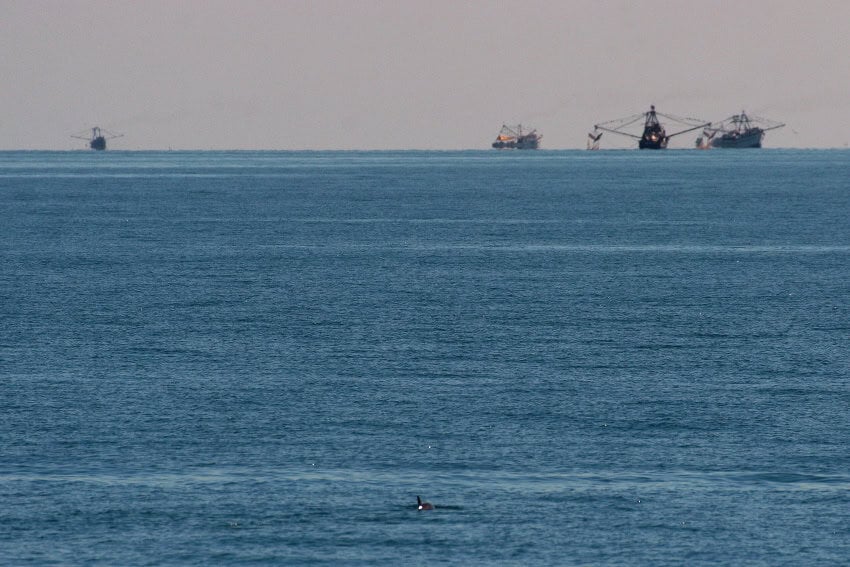
“The spectacular Sea of Cortez is among the biologically richest 1% of all marine ecosystems. It is also home to one-third of all marine mammal species, as well as one of the world’s few known endemic porpoises, increasingly threatened with extinction.”
Those sentences were written on behalf of Conservation International in a 1991 issue of Baja Explorer, with the endangered porpoise in question being the vaquita, the world’s smallest cetacean — a family that includes whales, dolphins and porpoises. In the 35 years since that warning, vaquita numbers have declined by over 99%, dropping from between 600 and 700 individuals to around 10 or fewer. The threat of extinction is looming, despite glimmers of hope.
At high risk for extinction
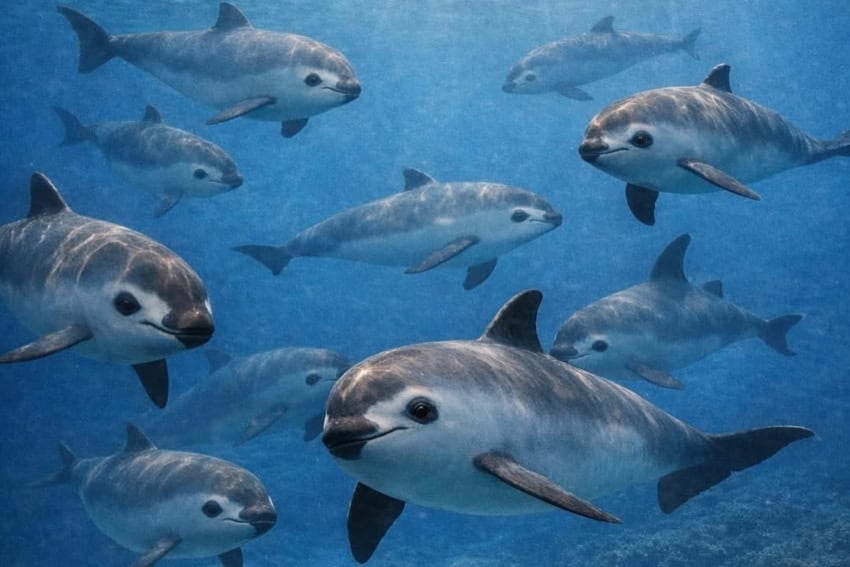
If you know anything at all about the vaquita species, it’s almost certainly in the context of this sad fact, which is reflective of a larger reality — 158 fish, 146 amphibian, 80 bird, 69 mammal and 24 reptile species are conservatively estimated to have gone extinct since 1900.
In the case of the vaquita, its high profile status as the most endangered marine mammal in the world — the unenviable distinction it has held since 2007 — has brought attention and attempted aid, from the abortive attempt at a captive breeding program using U.S. Navy dolphins to the dangerous duty done by Sea Shepherd boats in defending the last stronghold of the vaquita in the northern waters of the Gulf of California, the vaquita’s only habitat.
But no one over the last half century has been able to stave off the precipitous decline — not when the vaquita was listed as vulnerable in 1978, or when the species’ status was upgraded to endangered in 1990, or critically endangered in 1996.
Declining since discovery
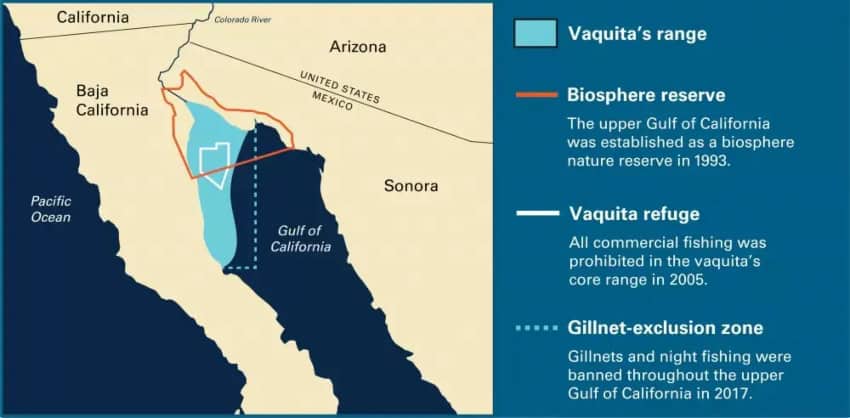
The vaquita’s first step towards possible extinction was taken about three million years ago, when members of its ancestral species were thought to have crossed the equator and become “trapped” in the upper reaches of the Gulf of California. The evolutionary offspring, vaquitas — small porpoises that are only about five feet long and 100 to 120 pounds (females are slightly larger than males) — don’t migrate. So ever since, they’ve been prey to the vicissitudes of nature in the 4,000 km² aquatic habitat they call home; an area that has shrunken in recent years to the 1,800 km² vaquita refuge, with most activity seen in the 225 km² area known as the “zero tolerance zone.”
Sometimes called “pandas of the sea” due to the black masks around their eyes, vaquitas weren’t officially discovered until 1950. That was the year a Scripps Institution of Oceanography student named Kenneth S. Norris found the first documented vaquita skull near Punta San Felipe. Norris and William M. McFarland published the first scientific paper on the newly dubbed Phocoena sinus in 1958. However, the first systematic survey of vaquitas in the wild wasn’t undertaken until 1979.

By then, vaquitas were already in steep decline due to gillnetting by fishermen in San Felipe. Not because they were valued as a catch, but because totoaba they hunted very much were.
Gillnetting and the shared decline of the totoaba
San Felipe has been a fishing town since its founding in 1916, and even when tourism began in the 1950s, fishing remained part of the allure, both as an activity and as a source for area restaurants. Along with Ensenada, San Felipe is considered one of the first purveyors of the modern fish taco.
Even more acclaimed for its shrimp, San Felipe is also traditionally known for its delicious food fish, totoaba, which, like the vaquita, is considered endemic to the Gulf of California. By the 1940s, local fishermen were primarily using gillnets to catch it, a method so efficient that by the 1970s, the totoaba was listed as endangered and declared off-limits for fishing by Mexican authorities.
But by that point, it wasn’t just totoaba numbers that had plummeted; vaquita numbers had also crashed. Prone to entanglement in gillnets of any kind, the vaquita became bycatch, and, since even at its most robust, the vaquita population was only a few thousand, existential peril followed, with numbers continuing to fall even after totoaba fishing was made illegal.
‘Cocaine of the seas’
Not just because other fish were also being caught via gillnet by San Felipe fishermen, but because a thriving black market trade in totoaba soon developed, with the exorbitant prices being paid for its swim bladder in China leading to totoaba being dubbed the “cocaine of the seas.”
Fish maw, or swim bladder, is a traditional speciality in Chinese cuisine prized for its health benefits, and when the large local species traditionally used became overfished in the early 2000s, totoaba became the new favorite source, with its bladders selling for between US $20,000 and $80,000 a kilo.
Inevitably, given the illicit nature of the trade and the amounts of money at stake, Mexican cartels soon became involved and there were incidents of violence. The most well-publicized of these happened in December 2020, when San Felipe panga fishermen attacked the Sea Shepherd ship Farley Mowat, with one panga ramming the ship, and others throwing rocks, lead weights and Molotov cocktails. A local fisherman was killed during the collision.
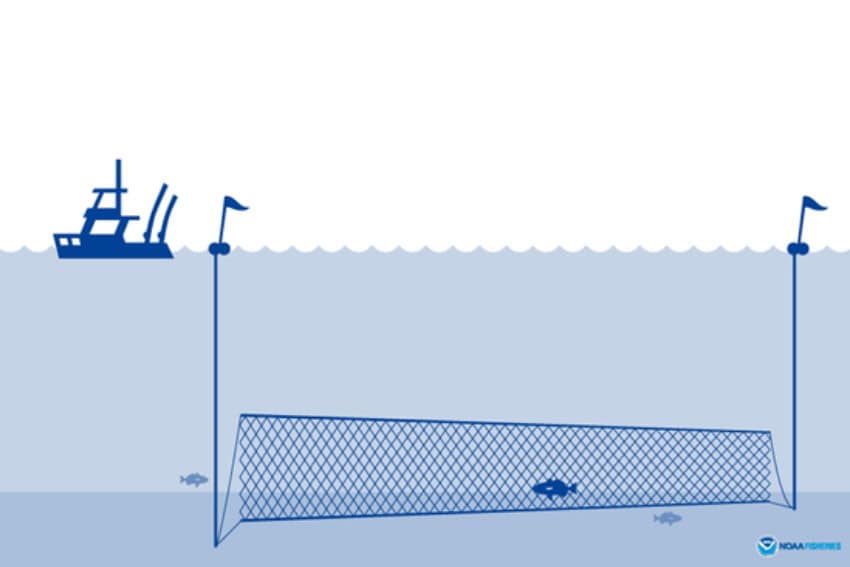
Why attack the Sea Shepherd organization, whose mission is to protect and conserve wildlife? Because it was removing gillnets in the vaquita refuge, gillnets which were meant to catch totoaba for the illegal trade in its bladders.
Attempts to protect the vaquita
Thanks to aquaculture and fish farm-raised totoaba regularly being released into the Gulf of California, the species is recovering and will survive. The vaquita, on the other hand, may not survive, despite the best efforts of several conservation organizations and the laws passed to protect it.
In 1993, for example, Mexico announced the creation of the Upper Gulf Biosphere Reserve, and in 2005, it designated the vaquita refuge, with specific fishing restrictions attached to both. President Enrique Peña Nieto visited San Felipe in 2015 to declare a two-year emergency ban on gillnetting, and in 2017, that ban was made permanent throughout the vaquita’s habitat. A “zero tolerance area” was subsequently designated for the vaquita.
In 2017, there was also an attempt, with the instigation of VaquitaCPR and the blessing of the Mexican government, to use U.S. Navy dolphins to herd some remaining vaquita into sea pens, where they could be cared for and potentially bred to enhance their numbers. This plan ended in tragedy when a female vaquita died due to the stress of the rescue effort.
What happens next
Of course, making laws and enforcing them are two different things, and as noted regarding the illegal totoaba trade, gillnetting has never been severely curtailed except in the “zero tolerance area” when patrolled by Sea Shepherd ships, with support from the Mexican Navy.
Now the government is considering rollbacks that would shrink the gillnet ban in the vaquita’s habitat by 85%, which some are characterizing as a death knell for the vaquita. But since gillnet bans have been laxly enforced even when they’ve been in effect, the death knell has already been sounding.
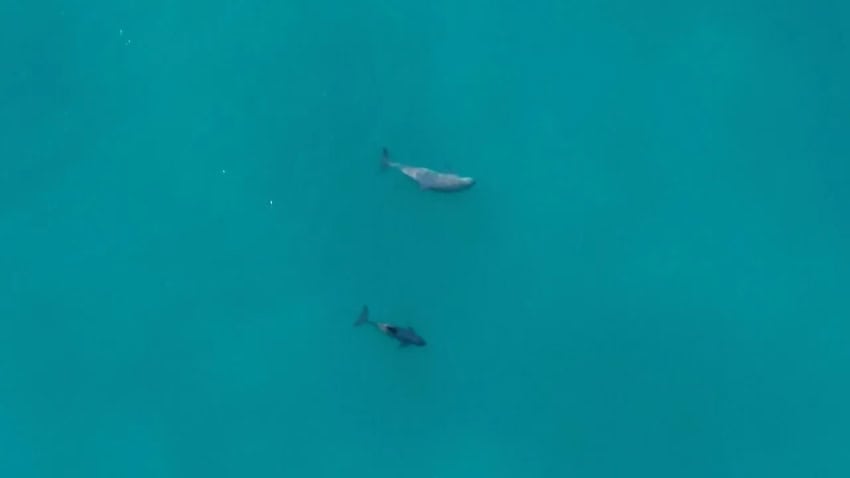
Ten or fewer vaquitas are remaining in the wild, at least according to the most recent estimates. But extinction is not guaranteed. A study published in Science in 2022 noted that the species has the genetic resilience for recovery, and new calves were born as recently as last year. But it all depends on whether local fishermen embrace other fishing methods, which some have done, whether the gillnet ban remains in force and, even more importantly, whether it is strictly enforced. The latter possibility is yet to be realized, but there’s still at least a fleeting hope.
Chris Sands is a writer and editor for Mexico News Daily, and the former Cabo San Lucas local expert for the USA Today travel website 10 Best and writer of Fodor’s Los Cabos travel guidebook. He has also contributed to numerous other websites and publications, including The San Diego Union-Tribune, Marriott Bonvoy Traveler, Forbes Travel Guide, Porthole Cruise and Travel, and Cabo Living.