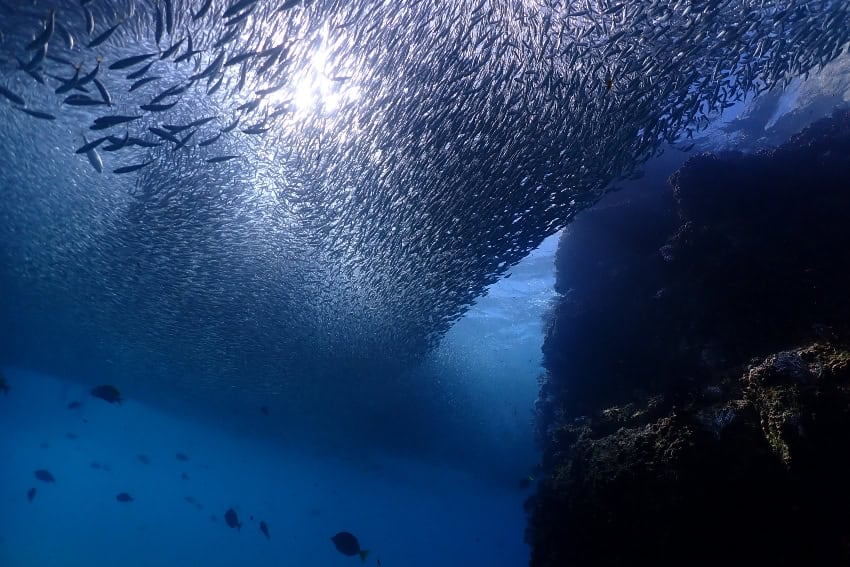
Cabo Pulmo is cause for hope. Once a small fishing village on the East Cape of Los Cabos, when the waters around its coral reef became fished out by the early 1990s, residents lobbied the federal government to make it a marine park. It’s now a national park and world-class dive destination, with the most abundant marine life in the Gulf of California, or Sea of Cortés. In fact, during its decade of peak recovery, between 1999 and 2009, marine life grew by an astonishing 463%.
But almost as soon as Cabo Pulmo became an internationally recognized model for marine conservation and sustainability, threats began appearing on the horizon. Not surprisingly, given that the park is located in Los Cabos, an area of rapid tourism growth in recent decades, many of these threats to degrade Cabo Pulmo’s pristine ecology have come from real estate developers.
Semarnat cancels permits for Baja Bay Club
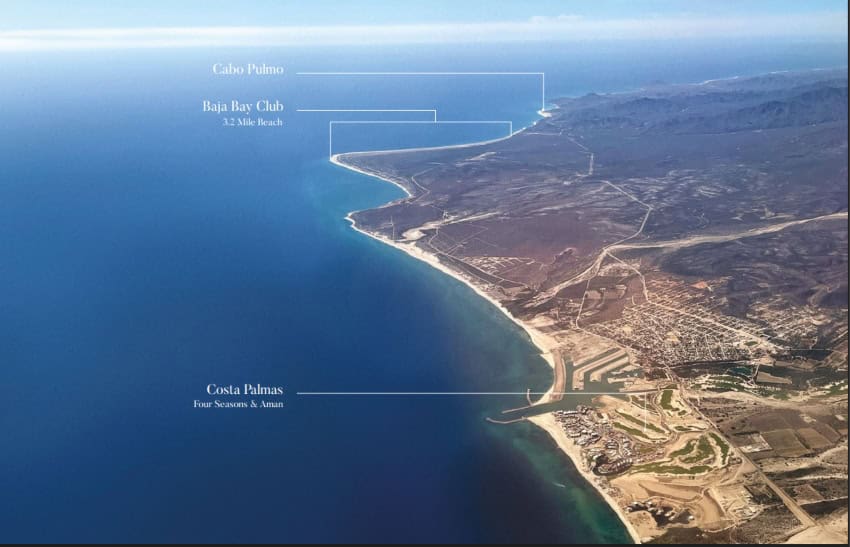
In March, Mexico’s Ministry of Environment and Natural Resources (Semarnat) ruled environmentally “unviable” a large-scale development called Baja Bay Club, only 1.5 kilometers from Cabo Pulmo, that was to include 422 villas, a 275-room beachfront hotel, a marina and an 18-hole golf layout by noted golf course architect David McLay-Kidd.
In its ruling, Semarnat noted some omissions and irregularities in Baja Bay Club’s application for the project, including the concealment of water sources and runoff — a direct threat to Cabo Pulmo’s reef system. The project would also have disrupted wildlife corridors and endangered protected species and Semarnat likewise confirmed that the application had been split into two separate filings — for the project and its hotel — to avoid a regional environmental impact assessment.
But more legal wrangling will almost certainly follow. After all, the battle over this project, and the one that preceded it on the same land, has gone on for 20 years.
Cabo Cortés
The story started back in 2006, when Spanish firm Hansa Urbana submitted its environmental application for Cabo Cortés, an epic-scale project on 3,814 hectares that was to include 15 hotels, 30,000 hotel rooms, plus two golf courses and a marina. Environmental groups and residents of Cabo Pulmo immediately mobilized to fight the project, bringing so much pressure to bear that by 2012, then-President Felipe Calderón promised publicly to cancel Cabo Cortés. Semarnat made it official in 2015 with a 100-plus page ruling, stating that the project was simply incompatible with Cabo Pulmo’s protection.
The real question is, why were the permits ever approved in the first place? Mexico’s Senate seemed to agree when, in 2011, it called on the Secretary of Public Administration to investigate the granting of Cabo Cortés permits to determine whether any laws had been broken. But such an investigation never took place.

Cabo Dorado Trust
The Cabo Dorado Trust subsequently acquired 600 hectares owned by Hansa Urbana to repackage as Baja Bay Club. The trust is administered by Diego Sánchez Navarro of Grupo Desarrolla, son of Eduardo Sánchez Navarro, the largest developer in Los Cabos.
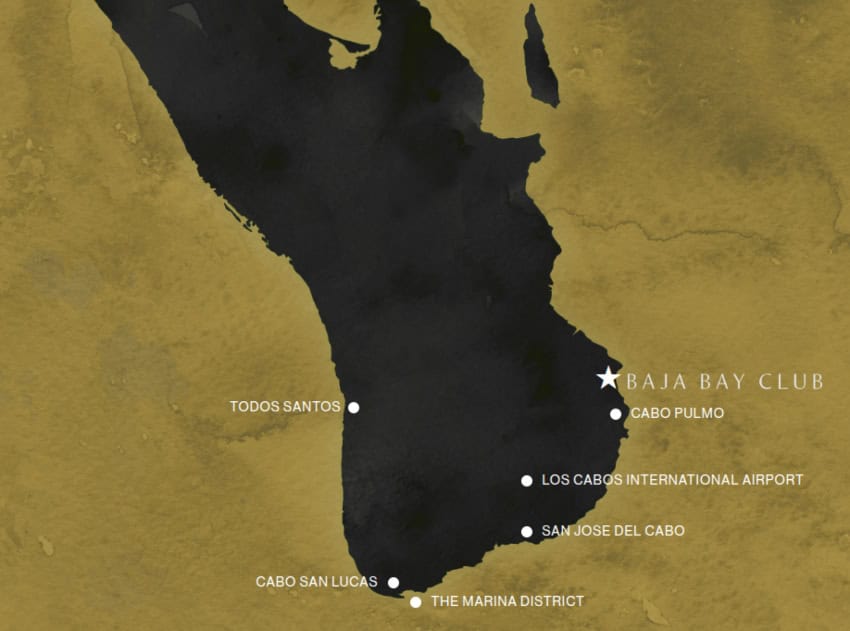
Along with other Baja Bay Club principals, DMB Development, Hart Howerton and Swaback Architects and Planners, the project was one of two to receive approval during the final weeks of Andrés Manuel López Obrador’s presidency. The other was La Abundancia, a smaller 68.6-hectare development that’s also, by dint of its proximity to Cabo Pulmo, a threat to the park’s ecology.
By February 2025, however, permits for both Baja Bay Club and La Abundancia were suspended, with the former’s canceled in March of this year. La Abundancia’s status is still pending.
So the battle continues, and as more developments target the East Cape, the last coastal area of Los Cabos that hasn’t been heavily developed, more loom on the horizon. Especially given that more than 3,000 hectares of the old Cabo Cortés project remain undeveloped.
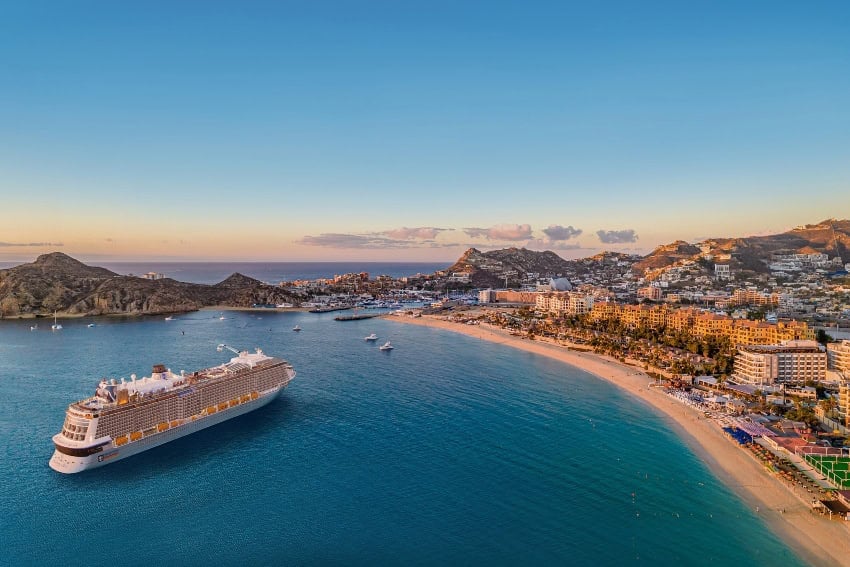
Cabo San Lucas set a record for cruise ships in 2025 and 2026 looks even better
Air travel to Los Cabos is slightly down in 2026, but one area of the tourism economy is still thriving: cruise ships. Cabo San Lucas topped the one million mark for cruise ship arrivals in 2025 — 1,057,758 passengers from 285 cruise ships — the first time the Land’s End city has ever reached this milestone.
Last year was a record year for cruise ship travel to Mexico, and several Pacific Coast ports benefited, with Ensenada (1.3 million) and Puerto Vallarta (1 million) also posting all-time highs for cruise visitors. For Cabo San Lucas, 2025 arrivals were up by 46% over 2024, a sharp uptick, but one in line with the massive increases seen in recent years.
In 2022, for example, Cabo San Lucas welcomed 540,773 passengers, a tally that it has nearly doubled only three years later; and if the first two months of 2026 are any indication, more records will be smashed this year. In January and February, the destination saw 264,140 arrivals, an astonishing 75% increase relative to the same months in 2025.
The cruise ship boom
What’s behind this cruise ship boom? Much bigger ships. In 2022, the average cruise ship in Cabo San Lucas brought 2,382 passengers. In 2025, that average had grown to 3,711. Considering Carnival is expecting ships that can carry 8,000 passengers by 2029, this super-sized trend should continue.
Chris Sands is a writer and editor for Mexico News Daily, and the former Cabo San Lucas local expert for the USA Today travel website 10 Best and writer of Fodor’s Los Cabos travel guidebook. He has also contributed to numerous other websites and publications, including The San Diego Union-Tribune, Marriott Bonvoy Traveler, Forbes Travel Guide, Porthole Cruise and Travel, and Cabo Living.