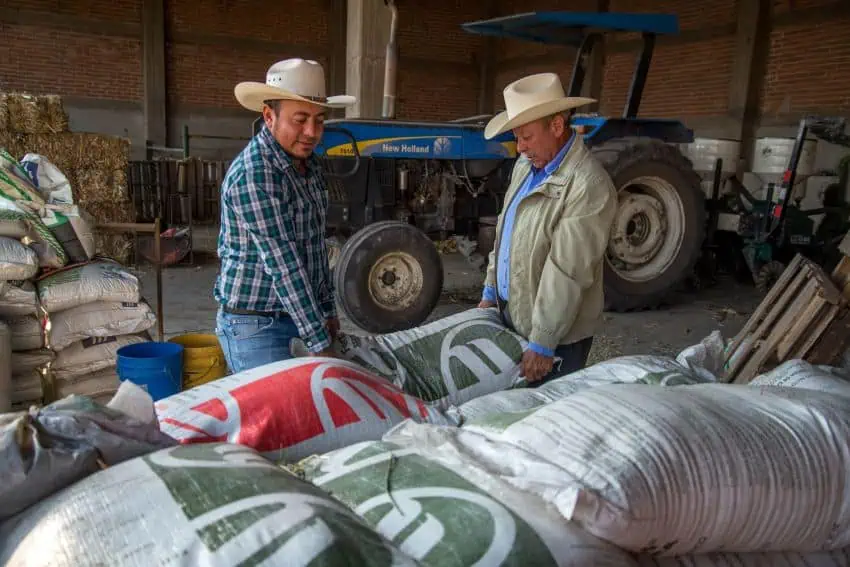
Mexico’s economy grew 3.3% in annual terms in March, a trend driven by the agriculture and service sectors. However, annual economic growth hit just 1.9% in the first quarter (Q1) of the year, according to data from national statistics agency INEGI.
The GDP of the primary or agricultural sector increased 4% annually in March while the tertiary or services sector grew 3.8%.
The GDP of the secondary or manufacturing sector also increased on a year-over-year basis but by a more modest 2.1%.
Compared to the final three months of last year, the economy grew 0.3% in the first quarter.
Mexico’s economic growth shows signs of wavering
The 1.9% annual growth rate between January and March is slightly lower than INEGI’s preliminary estimate of 2%. It is also 0.6 percentage points lower than the 2.3% rate recorded in the final quarter of 2023.
The El Economista newspaper reported that Mexico’s annual growth rate has now declined during six consecutive quarters.

The best performing sector in Q1 was the tertiary sector, which recorded 2.4% annual growth. That figure, however, was the lowest year-over-year growth rate for any quarter since Q2 of 2022.

The secondary sector grew 1.5% in the first quarter while the primary sector expanded 0.7%. Within the secondary sector, construction activity increased 10.7% compared to a year earlier.
Q1 growth remains high for the construction sector
Pamela Díaz Loubet, Mexico economist at BNP Paribas, said that the construction sector has been buoyed by government spending on infrastructure projects and private sector spending on facilities for companies relocating to Mexico as part of the nearshoring trend.
While impressive, the 10.7% construction sector growth figure in Q1 is well below the sector’s 24.4% annual growth in the second quarter of last year, and thus a sign that the construction boom is slowing.
Commenting on the economy as a whole in light of the latest data, the chief Latin America economist for Pantheon Macroeconomics, Andrés Abadia, said that “stricter financial conditions” and “difficult external conditions” are among the factors that have recently limited growth in Mexico.
The Bank of Mexico set its benchmark interest rate at a record high of 11.25% for a year until it made a 25-basis-point cut in March.
The Mexican economy grew 3.2% in 2023, but the pace of growth is expected to slow this year.
The International Monetary Fund is currently predicting a 2.4% expansion this year, while the consensus forecast of more than 30 banks, brokerages and research organizations recently surveyed by Citibanamex is that the Mexican economy will expand 2.2% in 2024.
With reports from El Financiero and El Economista