Around one in five cars sold in Mexico in 2025 was made in China, according to data from the national statistics agency INEGI and industry groups.
Citing data from INEGI, the Electro Mobility Association and the Nuevo León Automotive Cluster (CLAUT), the Reforma newspaper reported on Thursday that 306,351 “Made in China” light vehicles were sold in Mexico last year, representing 19% of total sales.
The figure includes sales of vehicles made by Chinese automakers such as BYD, Changan, MG and GWM as well as sales of cars made in China by foreign companies such as General Motors and Ford.
Around 244,000 of the “Made in China” light vehicles sold in Mexico last year were Chinese-branded cars, according to the Mexican Association of Automotive Distributors (AMDA). That figure represents around 15% of total sales in 2025, which numbered over 1.6 million units according to AMDA.
Five years ago, sales of Chinese-branded vehicles accounted for less than 1% of total sales in Mexico, the El Economista newspaper reported. Mexico is now the world’s top importer of vehicles made in China.
The rapid increase in sales of Chinese cars, and the resultant impact on the Mexican auto industry, was a key reason why the federal government took the decision to increase tariffs on vehicles made in China. As of Jan. 1, such vehicles are subject to a 50% duty when entering Mexico, up from 20% in 2025.
‘Cars built in China don’t have a single part made in Mexico’
CLAUT director Manuel Montoya told Reforma that the significant market share of “Made in China” cars in Mexico is largely due to their attractive prices, which are possible thanks to low production costs in the East Asian economic powerhouse.

“The traditional brands [such as Ford and GM] that manufacture here and also in China have the option of bringing a quota of vehicles from there [to Mexico] at [Chinese] prices,” he said.
“… That’s why you have an SUV such as the Ford Territory with a super price [in Mexico] and that encourages people to buy,” Montoya said.
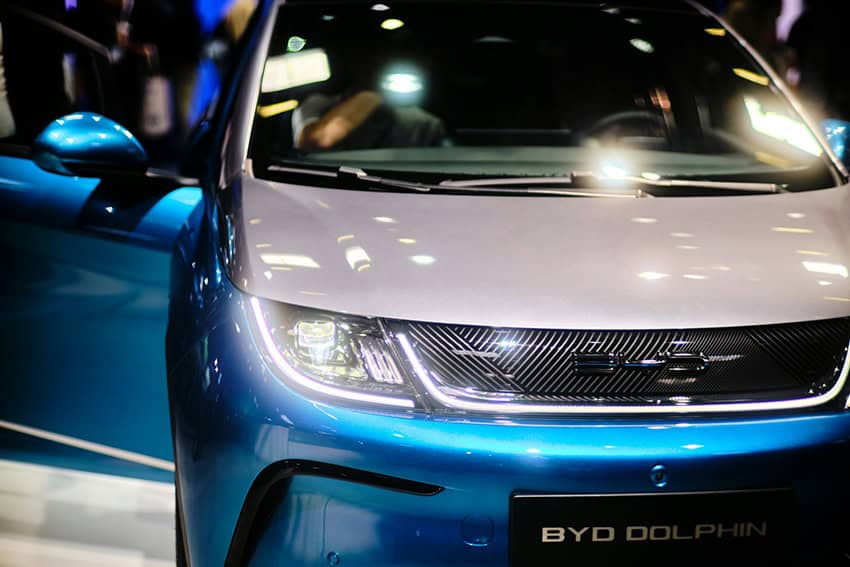
BYD electric vehicles have become popular in Mexico because of their affordability compared to other EVs. Around 85,000 BYDs were sold in Mexico last year, representing about one-third of all sales of Chinese-branded vehicles.
Montoya said that “Made in China” vehicles are selling “because they have very attractive prices and, in addition, they’re very well made.”
While many Mexican consumers are happy about having access to Chinese cars, the rise of the Chinese auto industry represents a threat to its Mexican counterpart.
GM started to export made-in-China cars to Mexico in 2020 with its Chinese JV partner SAIC. This helped pave the way for SAIC and other Chinese automakers to grow quickly in the Mexico market.
From @dunne_insights’s excellent newsletter: pic.twitter.com/yqtneHBw0R
— Kyle Chan (@kyleichan) April 30, 2025
“Cars built in China don’t have a single part made in Mexico,” noted Montoya.
“It affects us because the Mexican industry lives off production of vehicles made in North America. It really affects us, the United States and Canada,” he said.
Will higher tariffs impact sales of Chinese cars?
AMDA president Guillermo Rosales told El Economista that it is difficult to predict what impact the higher tariffs will have on sales of Chinese cars in Mexico.
Although the 50% duty took effect on Jan. 1, Rosales said he didn’t anticipate “significant changes” in sales of Chinese-made cars in the first half of the year.
“The year already started and we’re not seeing upward price changes,” he said.
Higher prices for Chinese vehicles could become apparent later in the year as dealerships take delivery of cars that entered the country after Jan. 1. However, Chinese automakers are known for having the capacity to absorb and offset tariff increases.
Still, the 50% tariff on vehicles from China and other countries with which Mexico doesn’t have a free trade agreement (such as India and South Korea) “is a measure and a public policy that balances the market,” according to Rogelio Garza, president of the Mexican Automotive Industry Association.
“… As the Economy Minister [Marcelo Ebrard] has said himself, [it creates a] level playing field in order to be able to compete in Mexico,” Garza said.
With reports from Reforma and El Economista