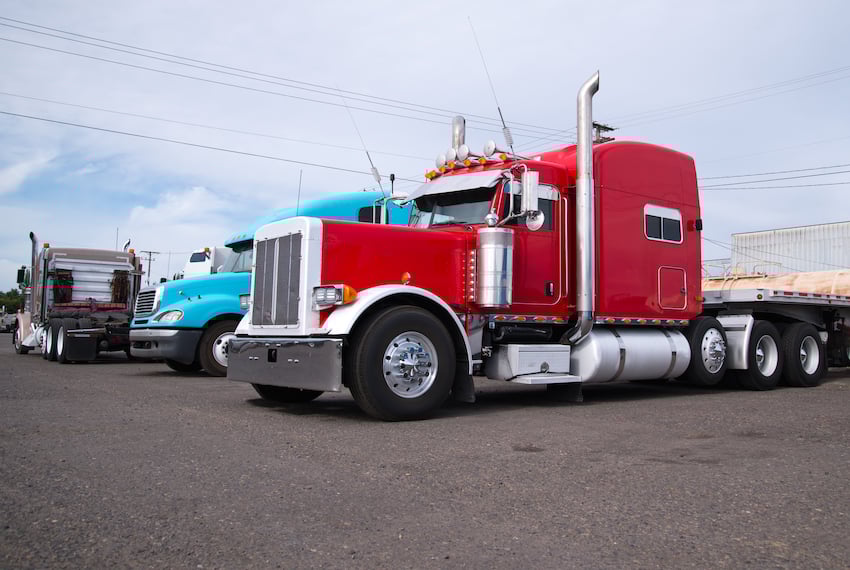
It was a light year for heavy vehicles in Mexico as sales, production and exports plummeted in 2025.
Preliminary data released by the national statistics agency INEGI showed that Mexico’s heavy vehicle industry experienced its worst year since the pandemic in 2020, registering historic drops, in large part due to the 25% tariffs imposed on exports by U.S. President Donald Trump.
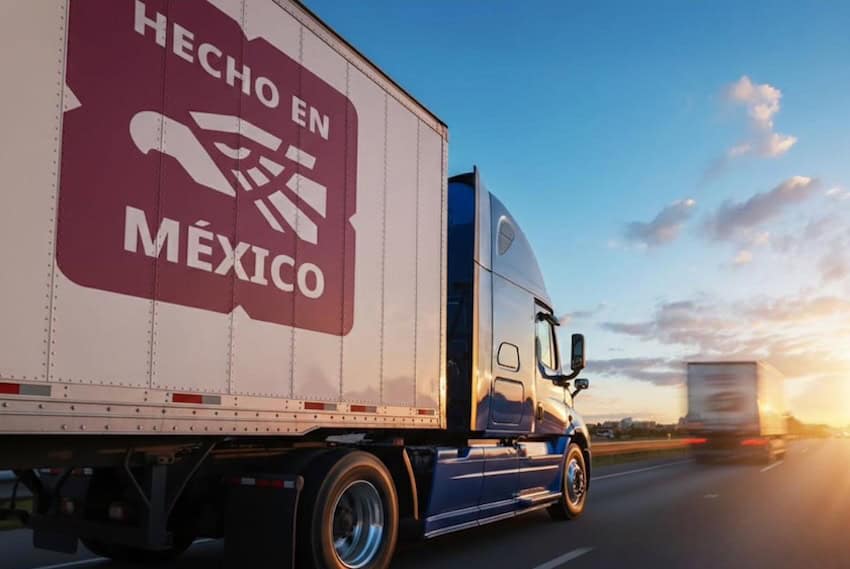
The Trump tariffs impacted the industry across the board.
Mexico exported 113,931 units in 2025, its lowest level since records began to be kept, even lower than the pandemic year 2020’s 115,000. Compared to 2024, total exports fell 28.6%, while production slipped nearly 29% compared to last year.
The United States was the main destination for heavy vehicle exports, accounting for 94.2% of the total; Canada accounted for 3.3%.
The domestic market also shrank as the 14 companies included in the Administrative Registry of the Automotive Industry of Heavy Vehicles reported a sharp decline in sales.
According to the registry, retail sales totaled 39,833 units, the lowest figure since 2021 and a contraction of 31.67% compared to 2024.

In December, retail sales of heavy vehicles reached only 3,306 units, representing an annual drop of 39.27%, the largest month-to-month decrease for any month since records began in 2018.
The situation was even more dire in the wholesale segment. In December, 3,498 units were sold, a year-on-year drop of 62.68%, the largest recorded for a comparable month.
For all of 2025, wholesale sales reached 30,673 units, the lowest figure since 2020 and a decrease of 54.70% compared to 2024, the largest annual contraction on record.
As for production, there was also a sharp decline for heavy vehicles.
Total production in 2025 was 138,954 vehicles, representing a 34.84% decrease compared to 2024, the largest annual drop ever.
In December 2025, 12,547 units were produced, representing a year-on-year drop of 19.80%.
Nearly 98% of total heavy vehicles produced corresponded to cargo vehicles, while the rest were passenger vehicles, demonstrating the high dependence of the sector on the transport of goods.
With reports from Reporte Indigo, La Jornada and Radio Sonora