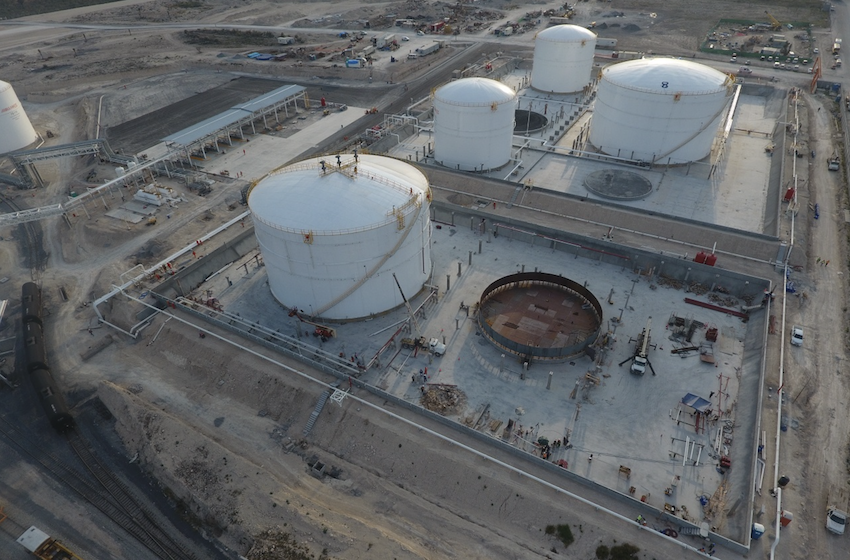
Bulkmatic, a logistics company for Mexico’s main railway terminal, has announced plans to invest US $600 million to develop multimodal stations in various states over the next 10 years.
The company’s commercial director, Francisco Melo, said that the investment will be placed across different zones and equipment, with the goal of expanding fuel storage capacity and strengthening intermodal terminals.
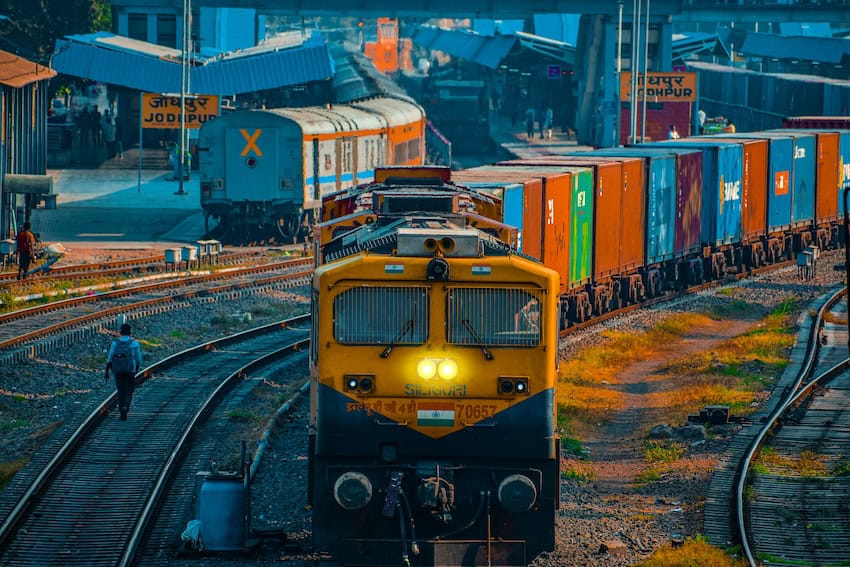
“In terms of track capacity, we are talking about being able to receive an additional 3,000 cars per month on top of what we currently handle, which is between 3,000 and 3,500 cars,” Melo said at the Energy and Infrastructure Forum on the National Agenda.
In 2026 alone, Bulkmatic plans to allocate some US $100 million to the first and second phases of a 100-hectare terminal with a capacity to handle 500,000 fuel barrels.
Mexico has the second-lowest fuel storage capacity among OECD countries, with reserves equivalent to about 3.5 days, while the international standard is 90 days. Experts and business leaders have warned of a “latent risk” due to a lack of infrastructure and regulatory uncertainty, which has slowed new investments in terminals.
The private sector has only 12 operating storage terminals, and growth has stalled under the current administration’s energy policy, even though Pemex owns more than 70 terminals.
In an interview with El Cronista, Melo said that the relationship with current regulatory authorities is much better compared to what it was during President Andrés Manuel López Obrador’s term (2018-2024).

“I see a lot of openness, especially from the Ministry of Energy,” Melo said. “Still, procedures are tougher and with more requirements.”
The cities where Bulkmatic plans to develop the multimodal terminals include Pesquería, Nuevo León; Ciudad Juárez, Chihuahua; Hermosillo, Sonora; Torreón, Coahuila and Guadalajara, Jalisco. Coatzacoalcos, Veracruz and Salina Cruz, Oaxaca, would be connected with the Interoceanic Train, while Progreso, Yucatán to the Maya Train.
Meanwhile, the facilities that will see fuel handling include Pesquería, Nuevo León (with a capacity of 690,000 barrels), Hermosillo, Sonora (400,000 barrels) and Tula, Hidalgo. (720,000).
As of now, the company is not planning to mobilize hydrocarbons in Mexico’s southeast. Melo said they are considering more plastic resin and food-grade material.
With reports from Expansión and El Cronista