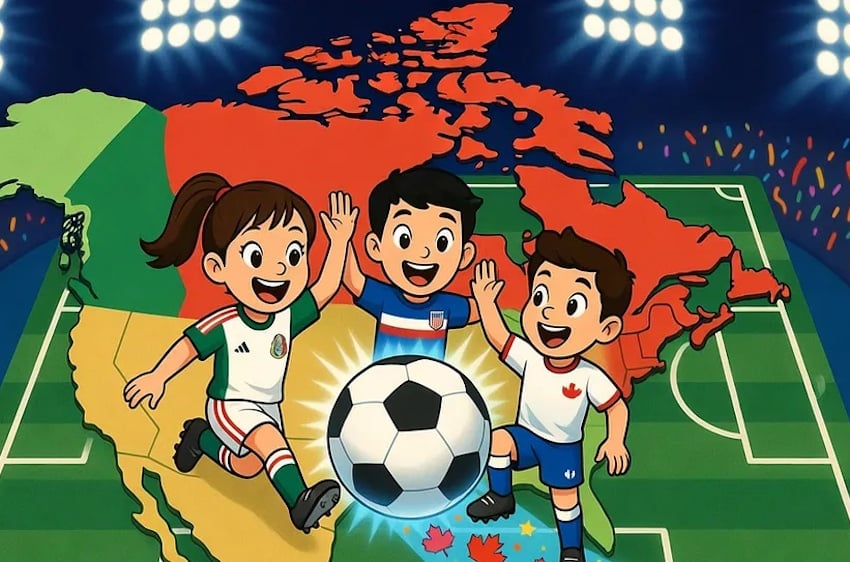
I was raised watching, playing and experiencing football — soccer for my American friends, though I’ll use the words interchangeably here.
My dad started taking me to Ciudad Universitaria Stadium in Mexico City to watch Pumas when I was barely old enough to walk. I’ve been going ever since. It was the only time all week I was allowed to swear. I saw people from every corner of the city chanting the same songs, I hugged countless strangers after every goal, and yes, I’ve cried tears of pure joy alongside tough, strong men when the Pumas last lifted a trophy (sadly, it was a long time ago). Believe me: soccer is the ultimate social blender.
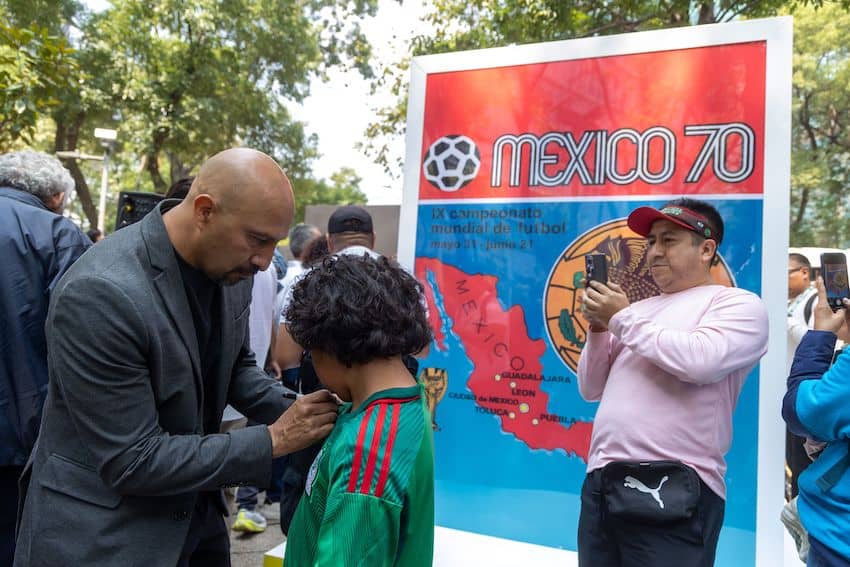
I’m a true fan. A couple of times I’ve traveled to Europe, I’ve made sure to catch a Champions League match (the tournament where the top club teams from every national league face off). I saw Benfica (Portugal) take on Manchester United (England), mainly to watch Javier “Chicharito” Hernández, a Mexican forward, do his thing.
Another time, it was Real Madrid versus Paris Saint-Germain at the Santiago Bernabéu. The magic starts the moment you step onto the subway: fans from every corner of the world, wearing different colors, sharing the same buzz. Soccer has taken me closer to cities, countries, and cultures than anything else ever could. When Rafa Márquez played for Barcelona, I fell in love with Cataluña — just like my parents did with Madrid decades earlier when Hugo Sánchez lit it up for Real Madrid. Players become walking ambassadors. Once, backpacking in Thailand, someone asked where I was from. When I said Mexico, the guy shouted: “I love Chicharito!” Never underestimate the soft power of a football shirt.
So let’s get serious about something fun: soccer — and sports in general — can be a powerful platform for social integration, economic development, talent mobility, cultural mixing and serious revenue. It’s the perfect soft but extremely effective tool to pilot deeper North American integration.
Catch up on Pedro Casas’s “Regional Utopia” series here.
Social integration
A systematic review of 69 studies on sport for social integration among disadvantaged populations (migrants, refugees, at-risk youth) shows football consistently scores four big wins: interaction through shared play, identification with something bigger than yourself, acculturation (learning the new culture while keeping your own roots) and placement (real pathways to jobs, school and networks).

Grassroots programs like Midnight Basketball in the U.S. or Community Cup in Ottawa prove the pattern — crime drops, social capital rises and “them” quietly turns into “us.” In North America’s super-diverse cities, ethnocentric soccer teams let Mexican-American kids stay rooted while building proud hyphenated identities. Barriers exist (cost, discrimination, old-school gender rules), but when programs are co-designed with the players themselves, soccer turns tension into trust faster than any trade agreement ever could. We need to tackle this systematically. Time to look at Europe…
Economic development & solidarity
The Union of European Football Associations (UEFA) doesn’t just reward the superclubs (like Real Madrid, Paris Saint-Germain or Manchester United), it forces them to subsidize the rest of the pyramid. Ten percent of Champions League revenue is allocated to solidarity payments, with €308 million earmarked this cycle for clubs outside the elite.
That money builds academies, women’s programs and community pitches in places that would otherwise be forgotten. North America can copy the model and improve it: tie a permanent Liga MX-MLS-Canadian hybrid tournament — the Leagues Club, for example — to a legacy fund that channels prize money into border-city leagues, public fields in underserved neighborhoods and youth development where the next stars are born. The result? Broader economic growth, inclusion and a stronger regional talent base that feeds everyone.
Talent mobility
Before 1995, European clubs lived under strict “foreigner quotas”; a capped amount of foreigners per team.
Then the Bosman ruling happened: the European Court of Justice ruled that those limits violated free movement of workers. Overnight, talent flowed freely — Spanish kids in German academies, Polish strikers lighting up the Premier League and Mexican prospects finally getting real shots abroad. We can do the same here without erasing national flags. A “North American youth sports passport” would let kids from Tijuana, El Paso or Windsor cross borders for tournaments the same way players already move in Europe. Liga MX already dominates U.S. Hispanic viewership and packs American stadiums. Imagine formal talent pipelines that turn raw border passion into pro contracts while still feeding strong national teams and a thriving continental league.
Cultural mixing without losing national identity
Europe proved you don’t have to surrender your flag to gain a continent. Fans still scream for Spain, Germany or Poland, but they trade scarves, share memes and build hybrid identities during EURO summers (the national-team continental tournament that feels like a mini-World Cup).
In North America, Mexican national team games in the U.S. routinely outdraw the U.S. team. The more than 40 million Mexicans and Mexican-Americans in the U.S. fill stadiums every time El Tri plays. I saw it firsthand a few weeks ago in Chicago — freezing cold, yet thousands packed Soldier Field for Mexico versus Belgium. Soccer is living proof that regional identity doesn’t replace national identity; it makes both richer, louder and more fun.
Revenue streams
EURO 2024, hosted by Germany, didn’t just fill stadiums — it turned out to be a huge source of revenue: €7.44 billion in economic impact for Germany, with 44% of ticket holders coming from abroad and nearly two-thirds using public transit.
The Champions League is a redistribution machine pulling in €4.4 billion in gross revenue in 2024/25, with €3.4 billion going to clubs. North America has already experimented with this — Leagues Cup finals drew 69,000 fans, and the 2026 World Cup will co-host 104 matches across three countries. Early projections point to hundreds of millions (if not billions) in tourism, media value, sponsorships, hotels and short-term rentals, especially in border cities. Every peso or dollar spent on tacos, scarves and match-day beers stays inside the region, turning soccer from a cost center into a continental cash engine.
That said, a friendly but firm critique: soccer cannot become an elitist sport. It was born in the streets and trenches and must stay accessible. Tickets for the 2026 World Cup cannot price out the very families and working-class fans who make this beautiful game what it is. The whole point is social cohesion, family values, and bringing people of all classes together on the same stands. We missed the mark on pricing this time, but we can — and must — do better going forward.
The 2026 World Cup as catalyst
While 48 teams battle across 16 stadiums in three countries, a parallel score (maybe more important) will be measured in tourism, international fandom, infrastructure upgrades and lasting connections. This is North America’s chance to spearhead a true turning point in our region. It’s the perfect excuse to lock in permanent structures: a continental club tournament, solidarity funds, youth passports and border-city circuits that turn the pitch into the place where Mexico, the U.S. and Canada finally play as one team.
Europe turned 22 guys chasing a ball into a continental identity project. We’ve got the fans, the passion, the infrastructure, the tacos and the 2026 stadiums already installed. The only question left is whether we keep kicking the ball back and forth across the border… or finally build the shared pitch we all deserve.
Let’s use this World Cup as the catalyst for something bigger, more ambitious and more forward-looking. Soccer has always been the best pilot program — and the best excuse — for deeper social, cultural, political and economic integration. We must not miss the chance.
Pedro Casas Alatriste is the Executive Vice President and CEO of the American Chamber of Commerce of Mexico (AmCham). Previously, he has been the Director of Research and Public Policy at the US-Mexico Foundation in Washington, D.C. and the Coordinator of International Affairs at the Business Coordinating Council (CCE). He has also served as a consultant to the Inter-American Development Bank. Follow his Substack here.