I find myself still fuming at The Economist’s coverage of the Mexican economy in an article from two weeks ago. If you missed it, they had an article titled “Mexico’s broken economy” that had a picture of a man on a horse in front of Mexican beer bottles. Talk about an insulting article. I wrote about it here. It was so offensive that the Mexican government even wrote and published a formal rebuttal of the article. You can see it here.
In countless conversations that I have with people about Mexico, I find that many — especially wealthier Mexicans — are still in denial about how Mexico is changing. Many of them are pessimistic, negative and backward-looking. They say that “Mexico is going to hell,” but when asked to provide data to back up their strong opinions, they have little if any. It seems to be more of a “feeling” to them than something that is data driven. They have little if anything positive to say about what is going on in the country today. I love debating these people, especially when they tell me that they are considering moving to Spain for opportunities instead (which I have heard more than a few times).
For those with an open mind, an appreciation for the complexity of the world we are in, and a bent toward positivity, there are signs all around of a quickly changing Mexico. This past week in particular brought some interesting headlines. For the first one, I will start by asking a question: What do you think was Mexico’s biggest export last year?
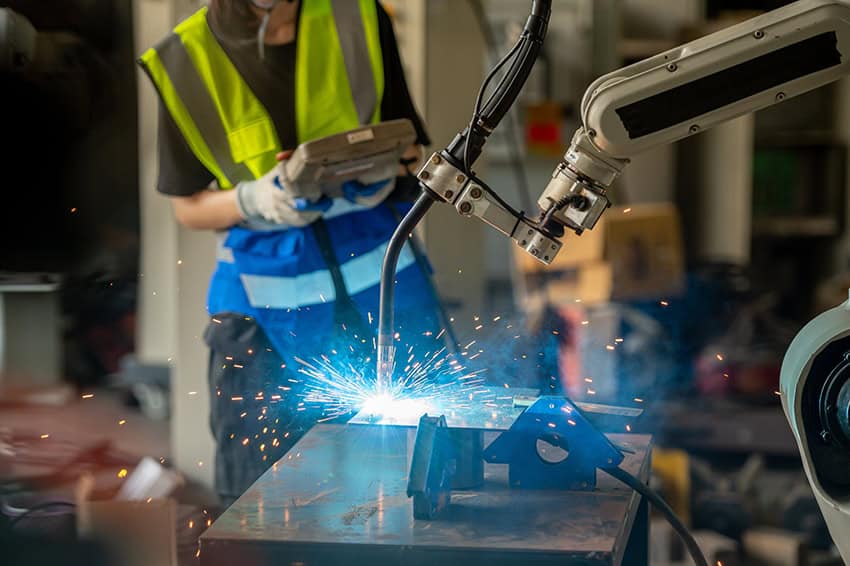
Think about it for a minute. Many people would likely say beer or tequila. Others might think it’s agricultural products. Still others would say oil, automobiles, or auto parts. The answer: high technology computer equipment. That’s right, for the first time ever, high tech equipment was Mexico’s leading export in 2025. In fact, this category of exports grew 145% last year!
Two other recent high-tech headlines caught my attention. One was regarding a direct fiber optic cable being built between Phoenix, Arizona, and Querétaro and another one about a massive supercomputer — one of the top 10 most powerful in the world — launching soon in the country. The cable is designed for hyperscaler-grade applications and the company is in talks with the likes of Microsoft, Google, and Amazon — all of whom are building multi-billion-dollar data centers in Querétaro. It wasn’t too long ago that locals fondly called the city “Puebl-étaro” in a jab at it’s small-town feel. A small town no more, Querétaro is now a booming tech hub, drawing in talent from around the world and quickly becoming one of the country’s most expensive cities.
A narrative can change quickly. After last year’s dismal GDP growth of only 0.8%, many economists were predicting that Sheinbaum’s policies were going to lead to years of slow growth for the country. Just a few months into the new year, analysts have begun to make changes to 2026 projections, with both BBVA and Barclay’s recently increasing their estimates and the Mexican Finance Ministry predicting that growth as high as 2.8% might be possible this year. Foreign direct investment hit a record high last year and there have been some significant new announcements already this year.
Are animal spirits returning to the business community in Mexico? A perspective from our CEO

In another example, MND ran a fascinating article this past week on the changing demographics of Mexico — specifically highlighting the fertility rate and the modern Mexican family. For Mexican women, the fertility rate has had an astonishing drop from 6.8 children to 1.9 in just two generations! The article also showed how a woman in the country now gets married on average at age 32, and a man at age 35. These demographic trends are a result of many factors, but are more typical of what one would see in a middle income, more developed country.
Finally, I want to share a very visible example of the changing country that understandably is open to different interpretations. As of this past week, Mexico (more specifically Monterrey in the north of the country) has a new tallest building. Not only is the still-under-construction “Torre Rise” going to be the tallest building in Mexico, but it will also be the tallest in Latin America, the second tallest in the Americas (after the One World Trade Center in NYC), and the 13th tallest in the world. I am not by any means suggesting that “tall building = economic power,” but buildings of this scale clearly are a sign of investor confidence.
So much for the image of a tired horse in front of dusty beer bottles. So how about you — do you see the changes? And if so, do you see Mexico’s glass as half-full or half-empty?
Travis Bembenek is the CEO of Mexico News Daily and has been living, working or playing in Mexico for nearly 30 years.