The 46th edition of the International Tourism Fair (FITUR), held every year in Madrid, Spain, kicked off today with Mexico taking center stage as the fair’s partner country.
Regarded as one of the world’s largest fairs in the tourism industry, the event will take place from Jan. 21 to 25 at IFEMA Madrid, with three days dedicated to professionals (21-23) and two days for the general public (24-25).
Cuando México se une, no hay quien nos pare. 🇲🇽🔥
Colores, música, naturaleza y mucha fiesta recorren España, @fitur_madrid y se roban todas las miradas. 🌎💃🎶
Nuestro ambiente se siente, se vive y se contagia. El mundo entero sabe que #MéxicoEstáDeModa. 🇲🇽✨#Fitur pic.twitter.com/qTMTJ8uDKZ
— Josefina Rodríguez Zamora (@josefinarodzam) January 21, 2026
As partner country, Mexico is presenting a comprehensive program that will showcase the essence of Mexicanidad to the global tourism market, both at the fair’s venue and at iconic venues around the city.

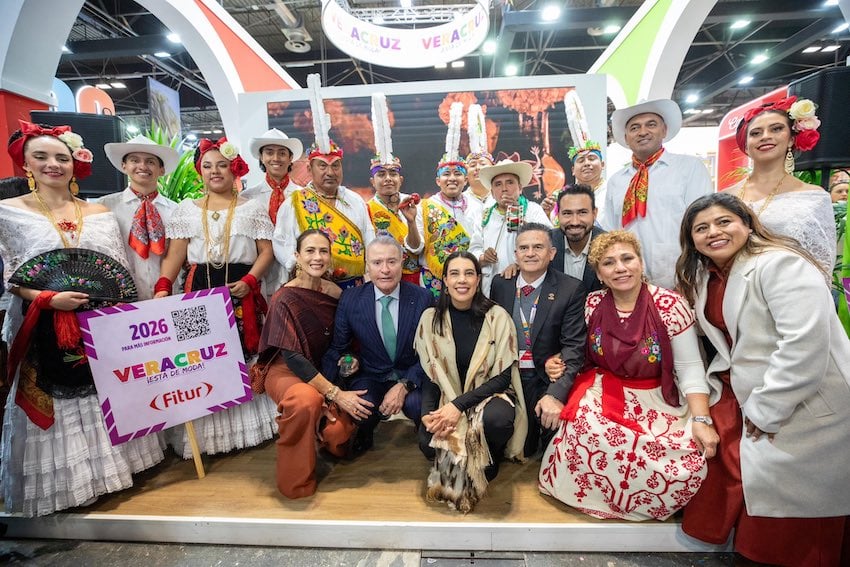
Boasting the largest pavilion in the fair’s Americas section, all 32 Mexican states are represented at FITUR with a program highlighting the promotion of emerging destinations, outdoor and nature-based experiences, pueblos mágicos and cultural and culinary experiences.
Present at FITUR this year are Mexico’s artisans, entrepreneurs and tourist operators who aim to position the country as a unified destination, rather than a collection of isolated regions.
As part of the promotional activities during the five-day event, Mexico’s stand will host cultural performances such as the Guelaguetza of Oaxaca and the Danza de los Viejitos of Michoacán, in addition to a shop selling Mexican handicrafts. Other activities will promote the 2026 FIFA World Cup, taking place in Mexico, Canada and the United States.
Mexican authorities have said that the country’s partnership with FITUR is a strategic opportunity to strengthen Mexico’s image before an international audience, in line with the current administration’s goal of positioning Mexico among the five most-visited destinations in the world by 2040.
“Today, we are aiming for more,” Mexican ambassador to Spain, Quirino Ordaz Coppel, said. “We don’t just want more tourists: we want more investment, more spending, greater connectivity and a strengthened sector. This forum will allow us to share the vision of the Ministry of Tourism within a Mexican government that is committed to tourism as a generator of economic benefits, with one key word: shared prosperity,” he told reporters.
Overall, FITUR features nine pavilions, 10,000 companies from 161 countries — of which 111 have official representation — and 967 main exhibitors.
Beyond the pavilion
As part of Mexico’s promotional activities beyond IFEMA, different parts of Madrid are showcasing Mexican culture through art installations.
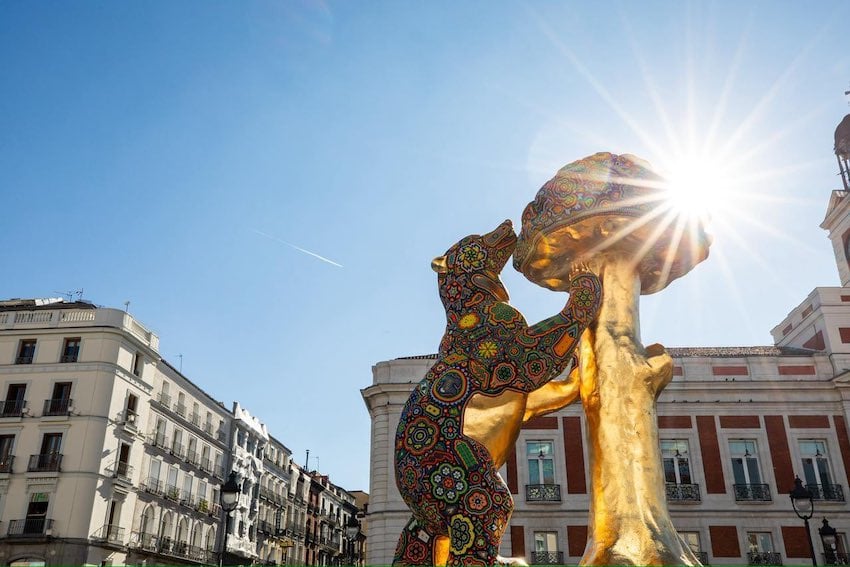
One such display is located at the Puerta del Sol, one of the city’s most visited areas. In this public plaza, the partner countries have installed a monumental sculpture of Madrid’s symbol, the Bear and the Madroño, featuring a design that blends Mexican and Spanish heritage.
Traditionally crafted from bronze, the iconic representation of Madrid’s identity has been reinterpreted by Mexican artist César Menchaca. The monument is now adorned with a colorful and intricate design inspired by Huichol art.
“The Bear and the Strawberry Tree is a profound symbol of Madrid, an emblem that speaks of its history and identity. To be able to engage with it through contemporary art is an honor,” said Menchaca.
Meanwhile, the giant retailer El Corte Inglés on Serrano Street now features a “Ventana a México” (Window to Mexico), a designated space for the promotion and marketing of Mexican handicrafts.
With reports from Publimetro and Milenio