The Mexican economy grew more than expected in the second quarter of 2025, expanding 0.7% compared to the previous three-month period, according to preliminary data published by the national statistics agency INEGI on Wednesday.
The growth rate was 0.3 percentage points higher than the 0.4% median forecast of 13 analysts surveyed by Reuters.
The GDP increase came after the Mexican economy grew 0.2% on a sequential basis in the first quarter of the year, and contracted 0.7% in the final quarter of 2024.
INEGI also reported that the economy grew 1.2% annually in seasonally adjusted terms in the second quarter of the year. Unadjusted data showed a 0.1% annual growth rate for the three-month period between April and June.
Gabriela Siller, director of economic analysis at Banco Base, said on X that the INEGI data shows that it is “clear that Mexico is not in recession.”
“But that doesn’t mean the economy is doing well,” she added.
“There is still a risk of recession for Mexico, especially if the United States begins to strictly enforce tariffs or if more sectors are added to sectoral tariffs,” Siller wrote in a separate post.

The publication of the preliminary growth data for the second quarter of 2025 comes two days before the United States is scheduled to impose a 30% tariff on imports from Mexico, separate from sectoral tariffs that currently apply to steel, aluminum, cars and auto parts.
Manufacturing and services drive sequential growth in Q2
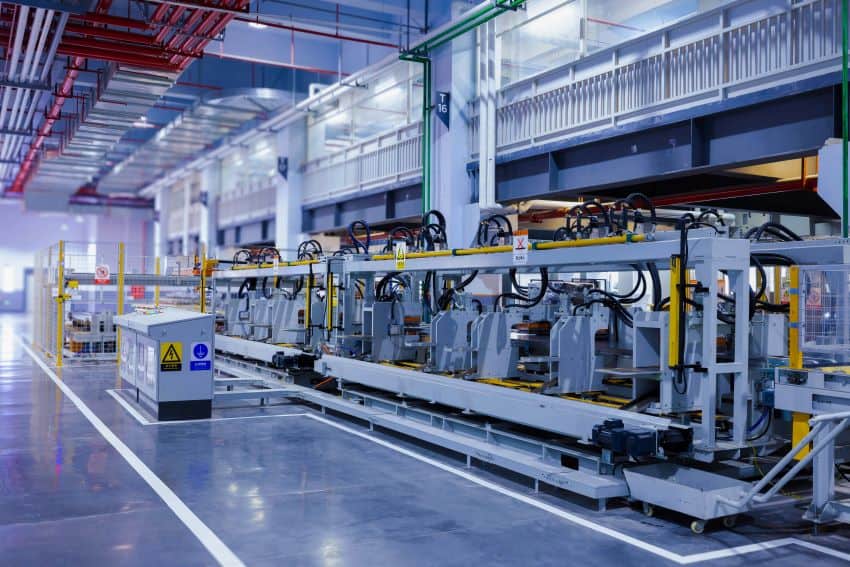
INEGI’s data shows that the secondary sector, which includes manufacturing and construction, grew 0.8% on a sequential basis in the second quarter.
Mexico’s export revenue shot up 10.6% in June, with manufacturing leading the way
The tertiary, or services, sector expanded 0.7% compared to the first quarter, while the primary sector contracted 1.3%.
The newspaper El Financiero reported that the primary sector contraction was related to the U.S. ban on livestock imports from Mexico due to the screwworm risk.
Despite U.S. tariffs, Mexico’s export revenue — largely generated by manufacturing — continued to grow in the first half of 2025, increasing 4.4% annually.
Siller said on X that exports are “boosting” the Mexican economy.
In annual seasonally adjusted terms, the primary sector grew 4.5% in the second quarter, while the tertiary sector expanded 1.7%. The secondary sector contracted 0.2% annually in Q2.
IMF raises 2025 forecast for Mexico
Before the publication of INEGI’s Q2 growth data, the International Monetary Fund (IMF) raised its 2025 forecast for economic growth in Mexico to 0.2% from a previous projection of a 0.3% contraction.
Mexico only major economy projected to shrink in 2025, IMF report shows
The IMF’s updated forecast was included in its World Economic Outlook Update report, which was published on Tuesday.
The IMF is predicting a 1.4% growth rate in Mexico in 2026. That forecast is unchanged from the IMF’s prediction in April.
A 0.2% growth rate in Mexico in 2025 would represent a significant slowdown from the 1.5% expansion recorded in 2024.
The Mexican economy is currently facing significant uncertainty as a result of U.S. President Donald Trump’s tariff policies.
The Mexican government has been attempting to reach a deal with the Trump administration to stave off the 30% tariff due to take effect this Friday. As of Wednesday morning, no deal had been reached.
With reports from El Financiero and Reuters