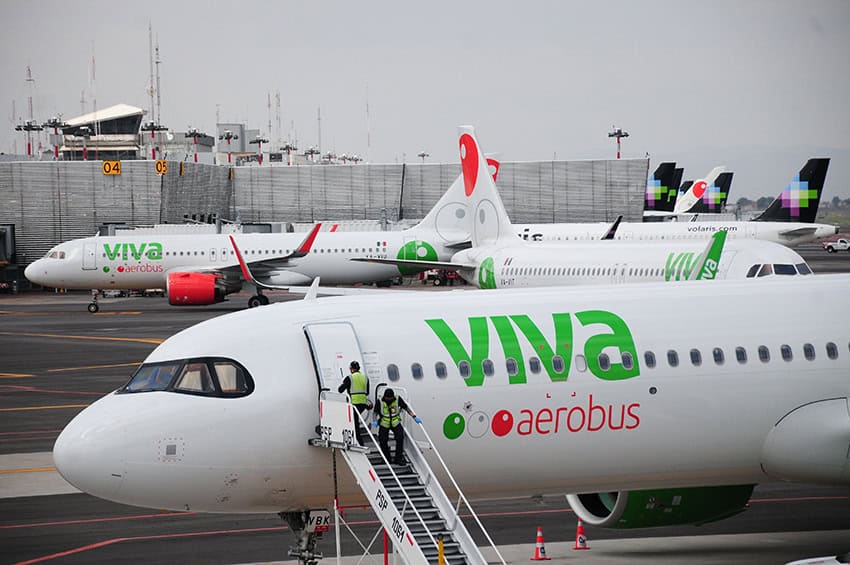
Mexico’s two major low-cost airlines — Volaris and Viva Aerobús — plan to merge into a single low-cost airline group that would become the country’s largest domestic carrier.
According to their announcement Thursday, the two companies would merge under a single holding company, each maintaining its own brand and separate operations, with the aim of increasing low-cost air travel and connectivity, both domestically and internationally.
Viva y Volaris se unen .. aqui el anuncio oficial y la liga con mas información…https://t.co/vVjXOZ4W9c pic.twitter.com/k9jGzBgsgc
— Jose Antonio Ponton (@japonton) December 19, 2025
“Volaris and Viva have entered into an agreement to form a new airline group with the goal of expanding ultra-low-cost air travel for Mexicans and customers both domestically and internationally,” Volaris Executive Vice President Holger Blankenstein said in a LinkedIn post.
He added that the transaction won’t impact existing routes, contracts or agreements, and will keep fares low while increasing travel options. Passengers will also continue to purchase Volaris and Viva tickets separately.

“Customers will continue to have the same options they value today, with broader access to point-to-point travel solutions,” he said.
Meanwhile, Viva CEO Juan Carlos Zauzua said that “both airlines share a similar low-cost DNA and mindset and have always believed in making travel more accessible and possible for everyone.”
Under the terms of the agreement, the carriers will unite their holding companies in a merger of equals, leaving each company with 50% ownership. Viva shareholders will obtain newly created shares in Volaris’ holding company, while current Volaris investors will keep their stakes.
The deal is still subject to regulatory approvals and both companies expect it to be finalized in 2026, with shares remaining listed in Mexico and New York.
The new group’s board will be made up of members from both carriers and headed by Mexican magnate Roberto Alcántara, who leads the transportation group IAMSA, which owns and controls Viva.
Meanwhile, Volaris’s largest shareholder is the private equity firm Indigo Partners, which also controls the US airline Frontier and the Chilean airline JetSmart.
What the merger means for Aeroméxico
Both airlines fly exclusively Airbus aircraft and operate similar routes. They both share the same competitor in Mexico: flagship carrier Aeroméxico.
The two low-cost airlines combined hold about three-quarters of the domestic market. In 2024, Viva and Volaris together accounted for some 71% of domestic traffic (38% for Viva and 33% for Volaris), while Aeromexico hovered around one-third of the domestic market.
They also outnumber Aeroméxico in number of aircraft. Combined, the two low-cost-airlines operate a fleet of 211 aircraft, while Aeroméxico operates 161, according to the Federal Civil Aviation Agency (AFAC).
With the merger, the new low-cost group would become the leader in domestic flights, leaving Aeromexico as the second domestic player, with more weight on higher-value international routes.
With reports from Reuters and El Economista