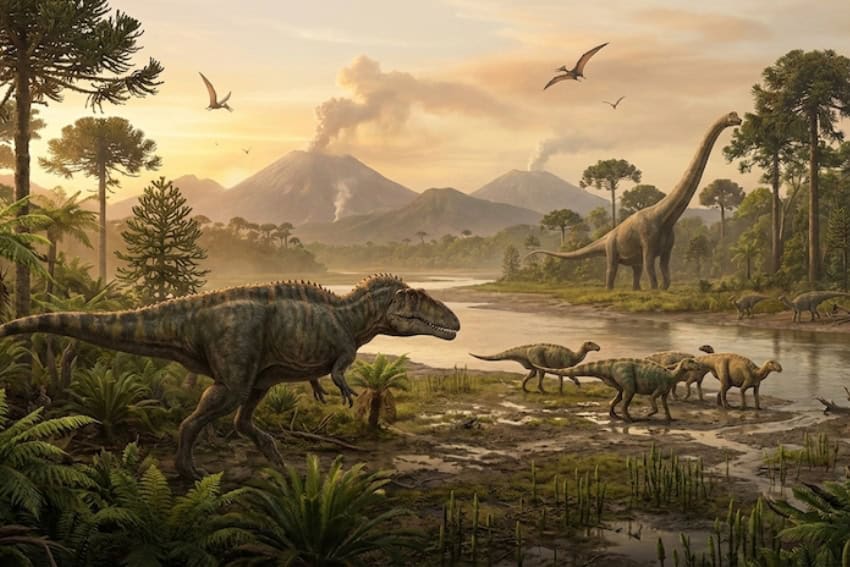
For the longest time, dinosaurs roamed what we now know as Mexico. For over 170 million years, according to researchers at the National Autonomous University of Mexico (UNAM), countless species of prehistoric lizards and enormous fish dominated what is now Mexican territory, which looked nothing like it does today.
Mastodons, mammoths and gigantic bird-like lizards — some of the world’s most impressive prehistoric species once roamed our country. To honor their impact and legacy in our present-day megabiodiversity, here’s our list of the most remarkable dinosaur species to roam Mexico for millions of years.
Where the dinosaurs were
The northern region of the country has seen abundant paleontological discoveries. Many species of “dire lizards,” as described by Gaceta UNAM, roamed throughout what is now Coahuila, a paleontological mecca due to its abundance of fossils. However, the northern states of Baja California, Sonora, Nuevo León and Chihuahua have also been of academic interest to paleontologists worldwide.
But while northern Mexico stands out from the rest of the country for its rich prehistoric fossil sites, central states like Michoacán and Puebla have also recorded significant discoveries, as documented by the Autonomous University of Aguascalientes. Further south, dinosaur remains have been found in the present-day region of Oaxaca and even along the coast of Guerrero.
It’s worth noting that these super-cool dinosaur species not only lived in the territory that now belongs to Mexico, but also often inhabited other parts of North America and possibly extended south of Mexico and further into the continent.
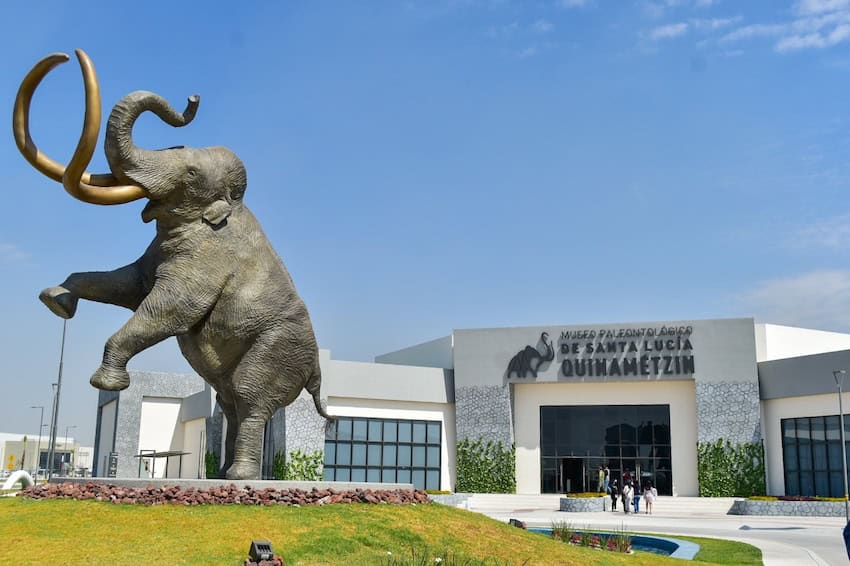
On a side note, during excavations for the Felipe Ángeles International Airport, workers unearthed a series of perfectly preserved mammoths. It was a find heralded by major media outlets around the world. Dubbed “Tierra de Gigantes” — the Land of Giants — this is the largest mammoth site in the world recorded to date. Due to the great number of well-preserved remains, the government even built an impressive site museum to display them.
It’s worth noting that prehistoric mammals such as mammoths are not considered dinosaurs. But Mexico does have an exceptional collection of fossil remains of ancient reptiles, unlike any other in the world.

So, which dinosaurs inhabited prehistoric Mexico?
Using the paleontological remains of both animals and plants, we can trace back in time what the current territory we now call Mexico was like (in biological terms, at least) in the age of the dinosaurs. Here’s a look at which dinosaurs have been found by paleontologists to have lived in Mexico in prehistoric times.
Quetzalcóatlus
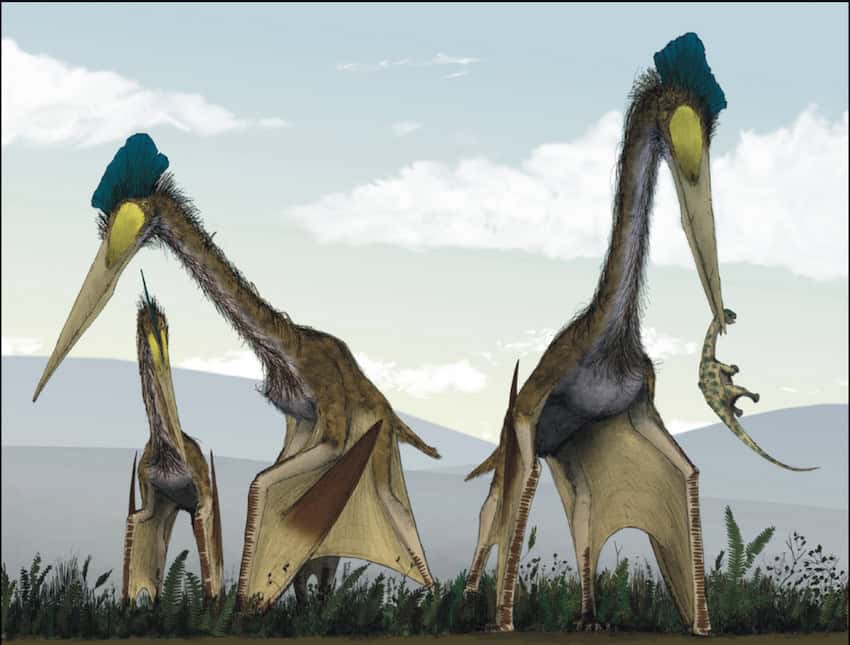
This ginormous prehistoric lizard-bird inherited the name of our beloved feathered serpent god, Quetzalcóatl, the Lord of the Skies and the Wind. With a wingspan at times estimated at up to 16 meters, this was an azhdarchid pterosaur from the Late Cretaceous that lived on the North American continent about 66 million years ago, in the northern state of Coahuila. With a super sharp beak and stiff necks, these prehistoric animals are thought to have measured up to 10 meters tall.
Think of it as an enormous and very ancient vulture. As it fed mainly on carcasses of other smaller animals and soared over prehistoric Mexico’s skies, I can’t think of a better description for it. Given the impressive size of their vertebrae, some paleontologists dismiss this possibility, thinking instead that they caught their prey in mid-flight.
Megapnosaurus
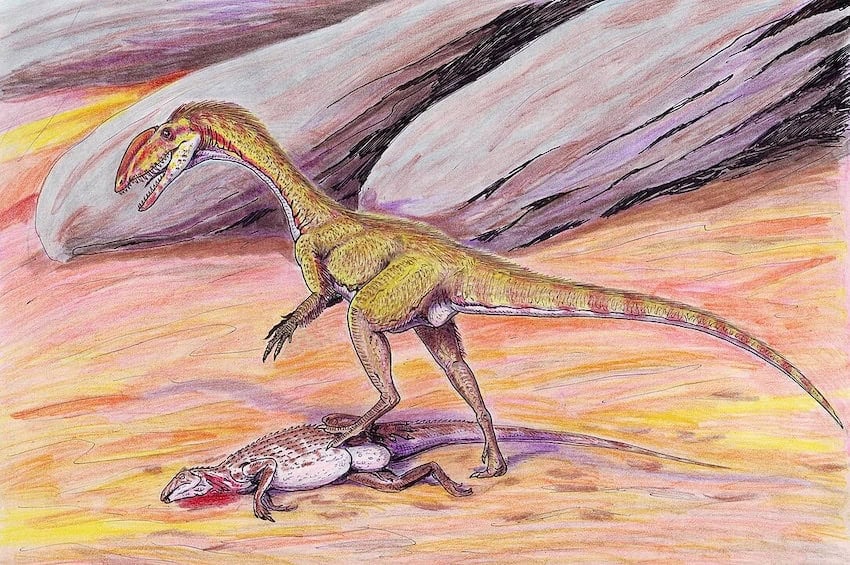
Also known as “the great lethal lizard,” these prehistoric lizards are among the oldest deadly predators found in North America. This species inhabited the continent 200 million years ago, and was characterized as a small and agile predator (compared to its gigantic congeners, that is), only 3 meters long.
Based on the paleontological sites found, it is thought that these animals lived in herds, teaming up with their family members to hunt and feed. Impressively enough, these ancient lizards figure among the dinosaurs with feathers!
Gorgosaurus
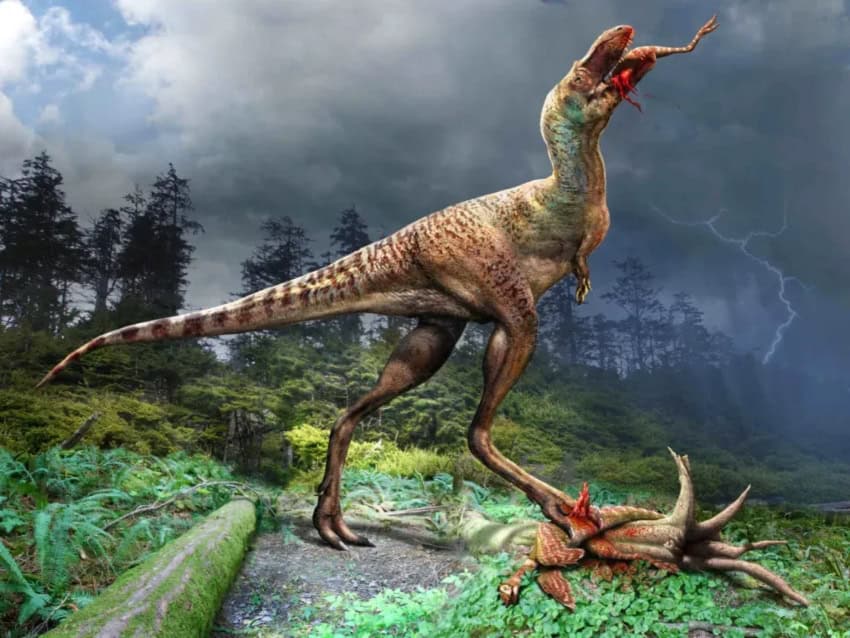
Gorgosaurus, a distant relative of Tyrannosaurus rex, is among the apex predators of the large American lizards. It is known to have eaten big lizards and ancient birds, as well as large herbivores. They were so large that very young specimens found weighed over 330 kilograms. On average, according to Royal Tyrrell Museum (Canada) specialists, that is only 13% of the body mass of an adult specimen.
Reaching 8 meters in length at adulthood, this species is estimated to have been able to run up to 40 kilometers per hour. Based on remains found in the states of Baja California, Sonora and some areas of Coahuila, it is believed to be the largest carnivore discovered in Mexico.
Kritosaurus
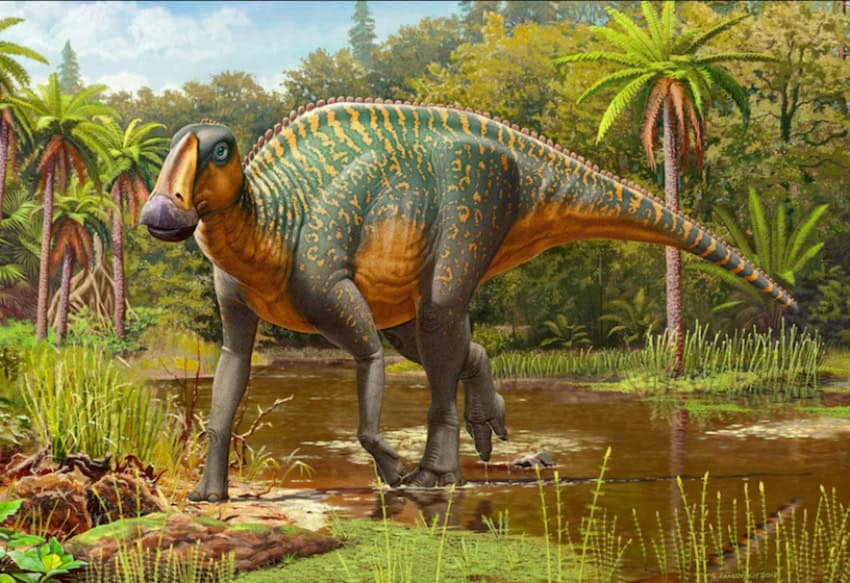
The Kritosaurus belonged to a family of hadrosaurid dinosaurs that roamed in present-day Mexico during the Cretaceous period, approximately 73 million years ago. This herbivore, about 10 meters long and weighing four tons, is currently known for its spectacularly ornate skulls. So, yeah, they basically had prehistoric mohawks.
Besides their distinctive “hairstyle,” these giant lizards could be as big as a school bus. Based on the shape of the jaw, researchers think it had some kind of organ to communicate with their family members. As if that weren’t enough, it had a sharp beak, which helped it to uproot plants, which it then processed with a complex chewing apparatus capable of crushing the fibrous vegetation of the time.
Andrea Fischer contributes to the features desk at Mexico News Daily. She has edited and written for National Geographic en Español and Muy Interesante México, and continues to be an advocate for anything that screams science. Or yoga. Or both.