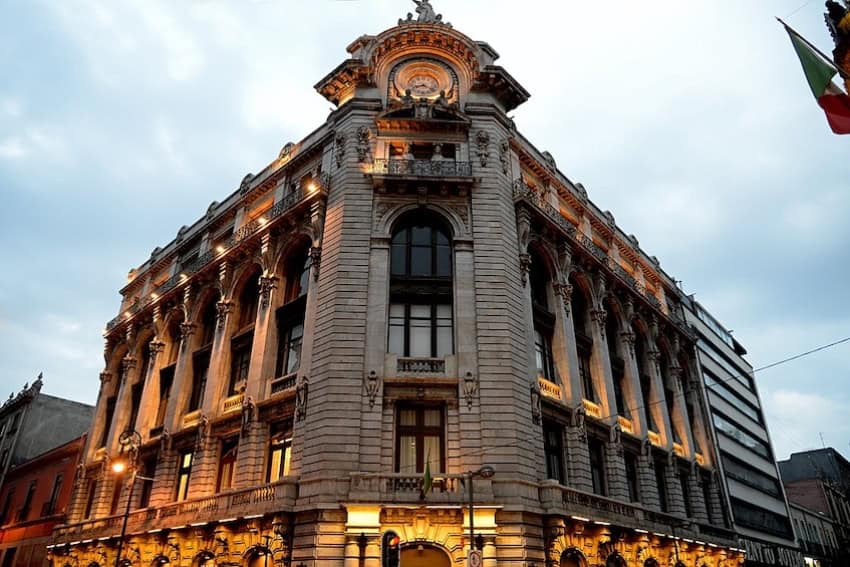
Porfirio Díaz was a hero of the French intervention in Mexico in the 1860s. Although his campaign slogan was “effective suffrage, no reelection,” once he came to power, he refused to relinquish it. He held power — with a brief four-year interregnum under ally Manuel González — from 1876 to 1911, when the Mexican Revolution broke out. His long term in office is known as the Porfiriato in Mexican history.
Like other 20th-century dictators in Latin America, his rule was authoritarian, racist and often sought to emulate European styles. The best example of this is the architectural movement that bears his name: the Porfirian era, which manifested itself in Mexico City in palatial buildings and impressive mansions that undeniably followed Parisian architectural trends.
Defining the Porfirian-era architectural style in Mexico
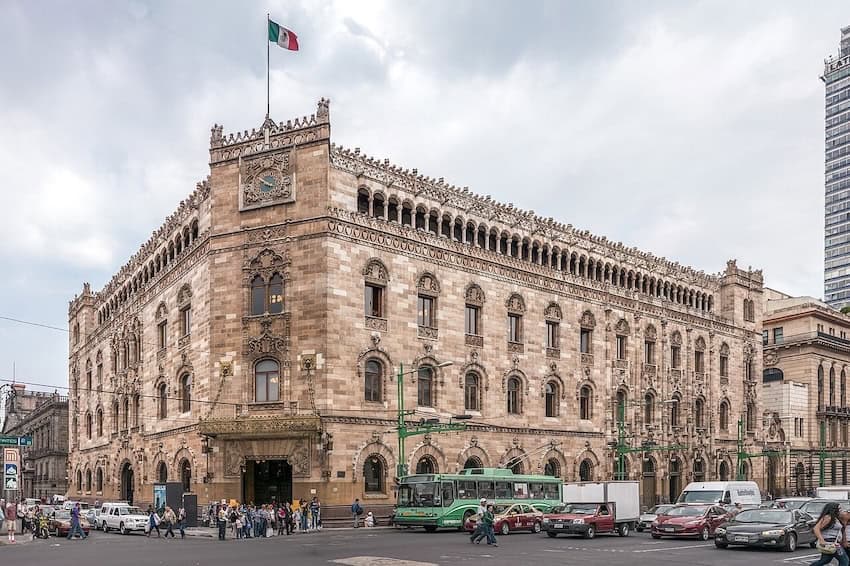
Since the dictator looked to Europe — and specifically the French capital — as a model of sophistication and progress, he wanted to imprint that same image on his own imperial capital. For this reason, many of Mexico City’s largest museums feature this Parisian influence, which extends to the surrounding neighborhoods and remains to this day.
This blend of styles, known as eclecticism, sought to project an image of a modern and prosperous Mexico. Just as it adopted the elongated forms of French Art Nouveau, it also drew inspiration from the Venetian Gothic Revival to adorn some of the palatial buildings in the Historic Center. The style was not intended to be understated. On the contrary, it favored monumental buildings that emulated the grandeur of Porfirian rule.
Luxury was not lacking during the era of “Don Porfirio,” as he was known during his presidency. Besides being monumental, the buildings have a marked tendency toward verticality and symmetry: Every ornament, relief and window is a match on the opposite side.
On your next visit — or even on a leisurely Sunday stroll — do not miss these iconic spots, which rank among the most beautiful Porfirian-era buildings in Mexico City.
Palacio de Bellas Artes
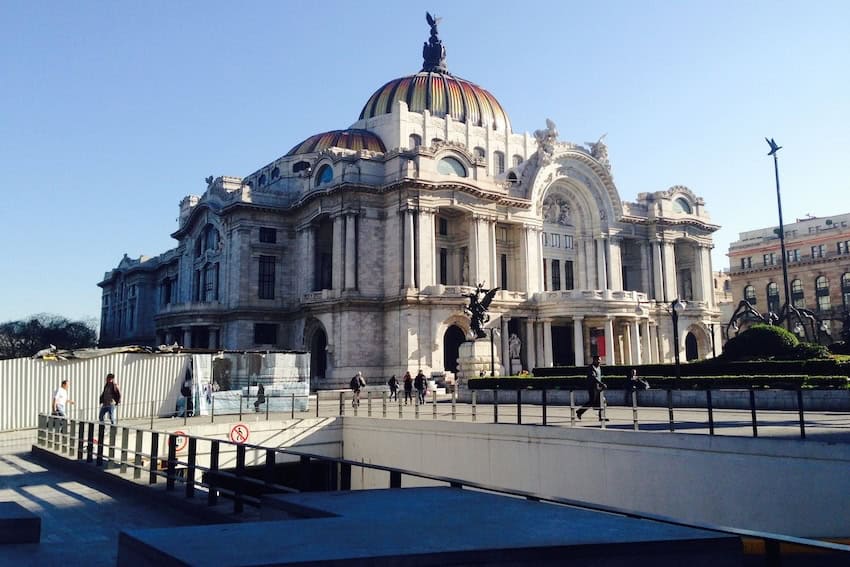
The construction of the Palace of Fine Arts took place during a turbulent time in Mexico City. While it was planned to celebrate the 1910 centennial of Mexican independence, construction was halted by the outbreak of the Mexican Revolution.

Given that it took 30 years to build, the facade and interiors of the Palace of Fine Arts blend elements from various architectural styles. While there are clear elements of French Art Nouveau, the building also features modernist details that interact with neoclassical accents. But it’s designed so well that this polyphony of architectural styles might go unnoticed. Everything comes together in harmony.
Today, the Palacio de Bellas Artes is one of the most emblematic cultural venues not only in Mexico, but in all of Latin America. It boasts concert halls and several galleries that have showcased the works of some of the world’s most renowned artists.
Where: Ave. Juárez S/N, Centro Histórico, Cuauhtémoc.
Palacio de Correos
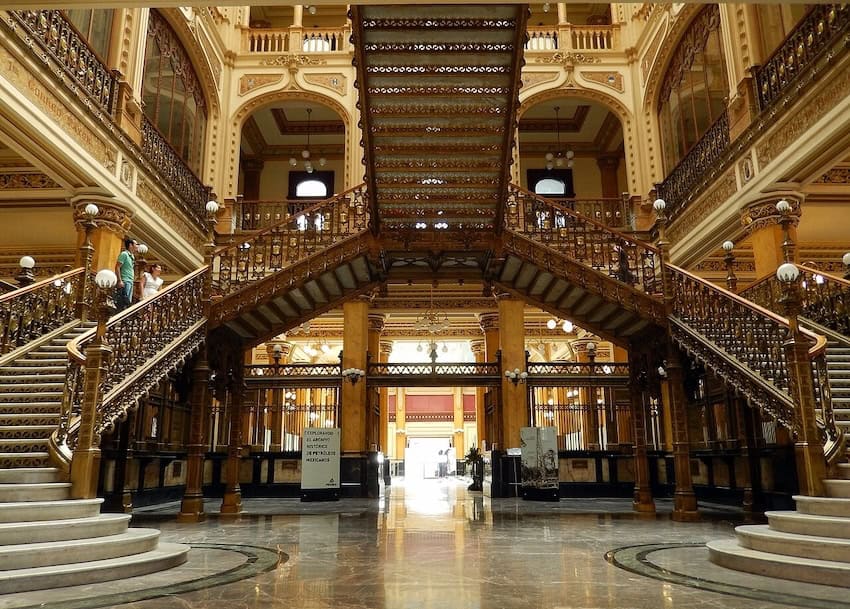
Just a few meters from the Palacio de Bellas Artes, on the corner of Tacuba Street and Eje Central, stands the magnificent Postal Palace. Long before digital communication, people sent handwritten letters and the Mexico City postal service was responsible for delivering these and other documents throughout the country.
With its impressive palatial staircases, this building is considered one of the masterpieces of Porfirian architecture. Like the Palace of Fine Arts, it seamlessly blends diverse architectural styles. According to the Mexico City government, these include Art Nouveau, Spanish Renaissance Revival, Plateresque, Spanish Rococo, Elizabethan Gothic, Elizabethan Plateresque and Venetian Gothic Revival, to name but a few.
Where: Calle de Tacuba 1, Centro Histórico, Cuauhtémoc.
Casa Boker
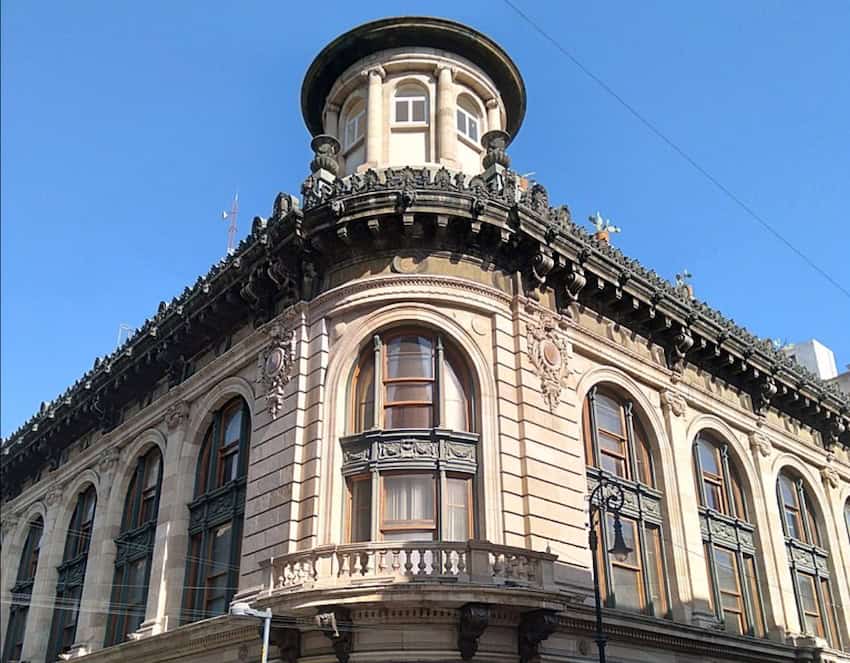
Porfirio Díaz never missed an opportunity to inaugurate his French-style palaces. Such was the case with Casa Boker on June 3, 1900. Like other businesses in the center of the capital, the Mexico City government documents that this building houses “a hardware store in continuous operation dating back to the late 19th century.” In fact, the business is named after a German immigrant who settled in Mexico City to practice the same trade his family had held for generations.
Although Casa Boker has not always had the same façade, the one seen today was part of Díaz’s urban development project. He hired architects De Lemos and Cordes from New York, who designed the original Macy’s department store. After a serious fire in the 1970s, part of the building was rented to the iconic Sanborns department store chain, which opened a cafe and store there. The hardware store remains open more than a century later, serving residents in Mexico City’s legendary Centro Histórico.
Where: 16 de Septiembre 58, Centro Histórico, Cuauhtémoc.
Museo Nacional de Arte
Ver esta publicación en Instagram
Last, but definitely not least, is the Museo Nacional de Arte (MUNAL), considered one of Mexico City’s Porfirian-era jewels. Facing the majestic wrought-iron gates is the iconic “El Caballito“ statue by Manuel Tolsá, one of the most recognizable landmarks in the Historic Center.
Originally, the building was not intended to house a museum. Rather, it was the seat of the Ministry of Communications and Public Works. Following Porfirian tradition, several of the building’s decorative elements were commissioned in Europe — specifically by Italian artisans in Florence, according to the Mexico City government, “such as the door knockers, window frames, leaded crystal, stonework, furniture, lamps and ironwork.”
Díaz was so fascinated by the building that he chose one of the second-floor reception rooms for his public statements and for receiving foreign dignitaries. The building served for some time afterward as the National Archives and was converted into the National Art Museum in 1982.
Where: Calle de Tacuba 8, Centro Histórico, Cuauhtémoc.
Andrea Fischer contributes to the features desk at Mexico News Daily. She has edited and written for National Geographic en Español and Muy Interesante México, and continues to be an advocate for anything that screams science. Or yoga. Or both.