
A Mexican author is a finalist for 2025’s coveted International Booker Prize, which is awarded exclusively to translated fiction.
Dahlia de la Cerda — the only Hispanic author to have made it onto the prize’s longlist this year — was nominated to the list of 13 finalists for her debut book, “Perras de Reserva“ (translated into English as “Reservoir Bitches”), the title a nod to the Quentin Taratino film “Reservoir Dogs.”
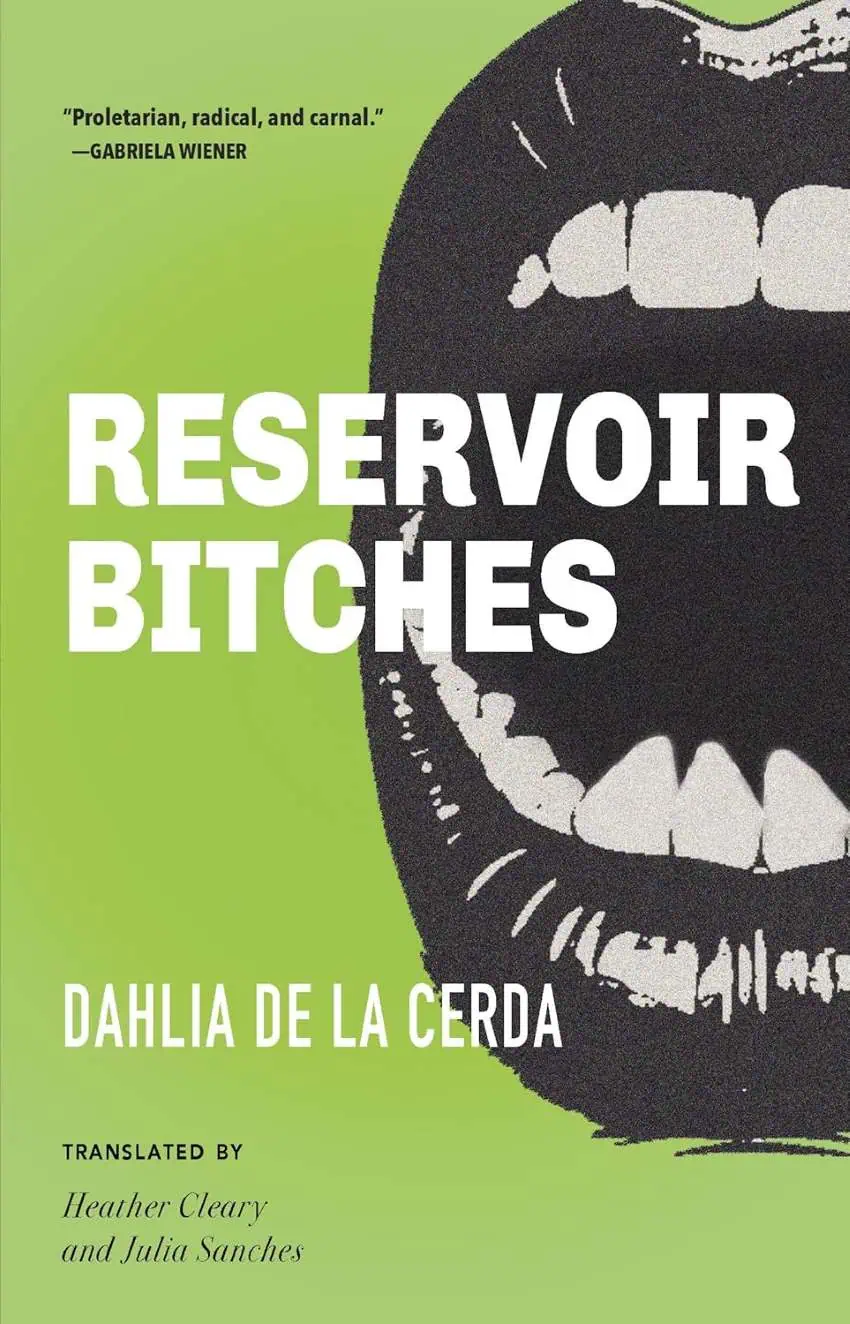
The book, originally published in Spanish by Mexican publisher Sexto Piso in 2022, has been longlisted for its English edition, published by Scribe UK and translated by Julia Sanches and Heather Cleary.
“Life’s a bitch. That’s why you’ve got to rattle her cage, even if she’s foaming at the mouth,” the book’s blurb on the Booker site says.
The quote captures the irreverent and angry tone of de la Cerda’s short-story collection, made up of 13 stories about 13 women facing daily life in Mexico, with its constellation of gender violence and marginalization. Among the raw subjects her stories cover are clandestine abortion and femicide.
The Booker committee calls “Reservoir Bitches” a “gritty, streetwise, and wickedly funny fiction from Mexico.”
De la Cerda told the newspaper Excelsior that her goal “was to show a variety of diverse women — in very adverse, complex contexts — and to have them be different voices from those that had been heard in literature.”

According to De la Cerda’s website, the main influences on her vision and writing are her childhood and young adult experiences in the state of Jalisco, where she faced, among other things, harassment from organized crime.

Born into a family she said was “unrelated to art,” in Aguascalientes, with parents who worked in nightclubs and bars, de la Cerda studied philosophy but couldn’t graduate due to a lack of resources.
“I am a companion in self-managed abortions, I have a cholo-gothic aesthetic, I love horror, and I am passionate about exploring violence in its multiple forms,” she says about herself on her website.
The International Booker Prize
The younger sibling to the Booker Prize, the International Booker Prize, established in 2016, considers novels and short-story collections originally written in foreign languages and translated to English for publication in the United Kingdom or Ireland.
The jury evaluated 154 works submitted by publishers, all published (or to be published) between May 1, 2024, and April 30, 2025. The longlist includes authors from Palestine, Denmark, Romania, Switzerland, Italy, India, Suriname, Japan (2 authors), and France (3 authors).
The £50,000 award is divided in half between author and translator. All finalists receive £5,000, also divided between author and translator.
The winner will be announced on May 20, in a ceremony to be held at the Tate Modern in London.
With reports from El País