In Mexico, as in much of the world, feminism has taken center stage in the political agenda at the same time as femicide and gender violence have escalated to unprecedented levels.
Feminist struggles have permeated all areas of daily life and literature is no exception. For years, Mexico has been home to a long list of women writers who discuss feminism and gender violence. Many of them have had international success in translations, including the great baroque-era poet Sor Juana Inés de la Cruz and the more contemporary Fernanda Melchor, Gabriela Jáuregui and Dahlia de la Cerda, among many others.

Let’s talk about the latter. In the last year, de la Cerda has been a topic of conversation for the rawness of her texts and the forcefulness of her political position. Above all, she draws attention for writing about what others are afraid to write about, what people feel uncomfortable looking at: the reality of millions of women in this country.
Dahlia de la Cerda was born in the city of Aguascalientes. She studied philosophy and worked for years selling second-hand clothes in a flea market and roses on the street, answering calls in a call center, selling Avon products, and working in bars and in a candy factory. While doing all of these jobs and without a room of her own, de la Cerda wrote and participated in literary contests and cultural scholarships in the hope of earning extra money that would allow her to continue writing, studying and defending causes such as free, legal and safe abortion for all people able to gestate.
In 2009 she won the Los Arquitos Cultural Center’s Letras de la Memoria contest and in 2015 received a PECDA artist grant from the State of Aguascalientes. De la Cerda won the National Endowment for Culture and Arts’ (Fonca) coveted Jóvenes Creadores (Young Creators) grant in 2016 and 2018.
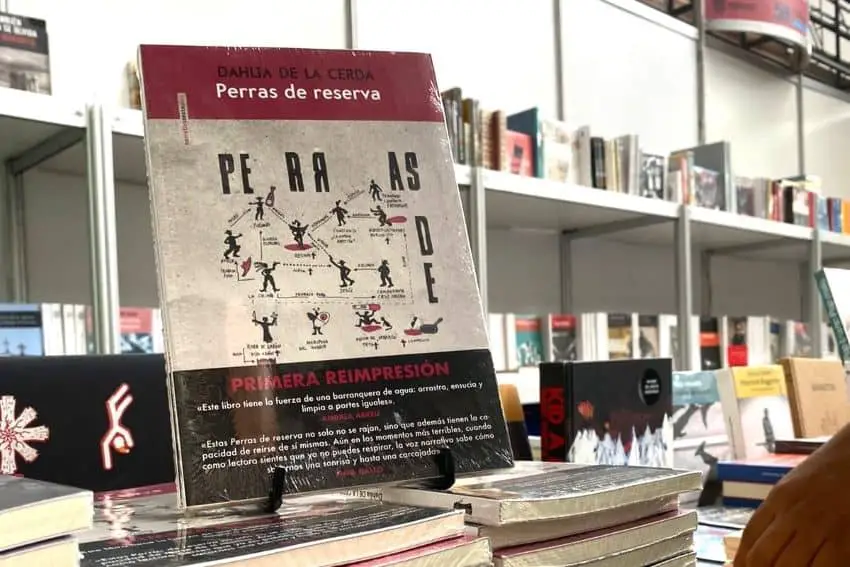
De la Cerda burst into prominence with her 2022 short story collection “Perras de Reserva,” a book of short stories that tear at the crudeness of gender violence, marginalization, racialization, clandestine abortion and femicide.

In her “Perras de Reserva” — which has since been translated into five languages and recently won a PEN Translates award as “Reservoir Bitches,” in Julia Sanches and Heather Cleary’s English translation — de la Cerda makes no concessions. She knows the violent reality of the country she lives in because she has experienced it firsthand and is confident that only by narrating the reality with which it exists can she really make those who are more privileged understand that this violence is systemic in our country, and that it puts thousands of lives at risk every day.

Discussing the stories and the women she gives voice to, the writer from Aguascalientes said in an interview with Excelsior that her goal “was to show a variety of diverse women, in very adverse, complex contexts, and to have them different voices from those that had been heard in literature.” In an interview with the newspaper El Universal, de la Cerda remarked, “In the case of women who come from precarious backgrounds, we needed to mirror ourselves in literature.”
In her 2023 book “Desde los Zulos,” de la Cerda is even more irreverent and contentious, exposing disputes for power and economic resources between different social movements, the erasure of women and above all, the imperative need to articulate a feminist movement that transcends the traditional concepts of white feminism. She is in favor of a movement that centers women who fight from the margins: racialized women who fight against classism and racism.
In addition to her literary work, de la Cerda is co-founder and co-director of Morras help Morras, an organization that advocates for legal abortion and the dissemination of information on this issue so that it can be available to everyone.
Camila Sánchez Bolaño is a journalist, feminist, bookseller, lecturer, and cultural promoter and is Editor in Chief of Newsweek en Español magazine.