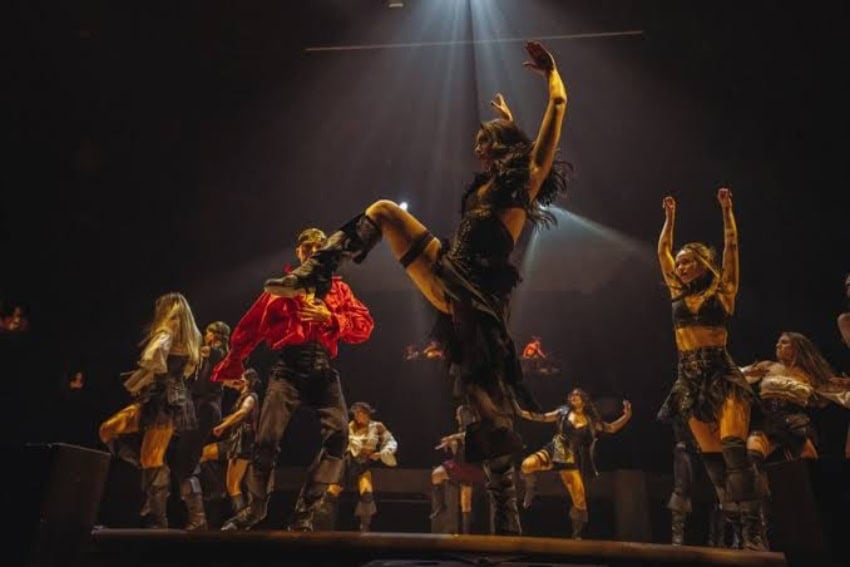
Just about every evening for the past year and a half, more than 1,000 people have made their way to El Frontón, a century-old Art Deco theatre in Mexico City’s small but historic enclave, Tabacalera.
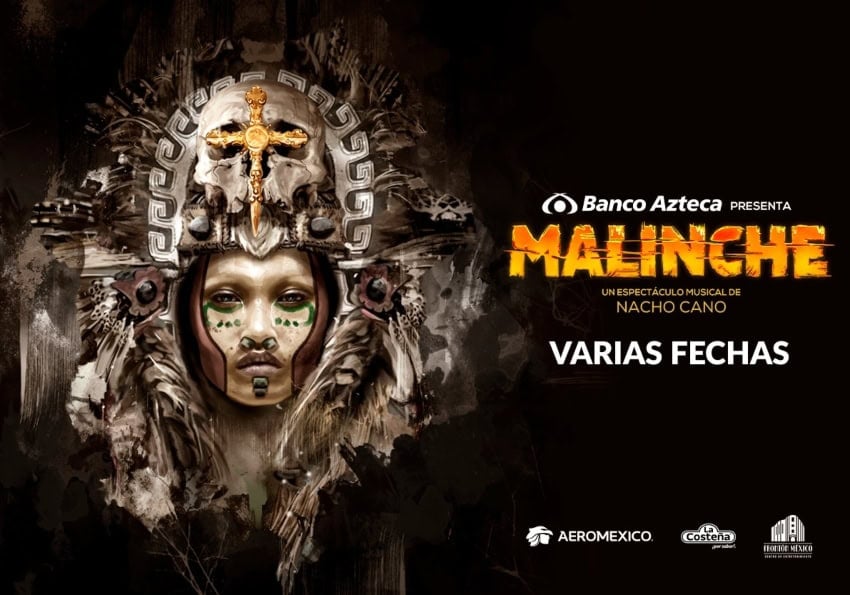
There, the musical, “Malinche,” has been in full swing, having recently kicked off its second run on Aug. 15, with more than 80 cast members singing and dancing flamenco, urban, hip-hop and contemporary to the vision of Jesús Carmona, donning face paint, leather crop tops and fringed two-pieces in an auditorium seating 1,299.
View this post on Instagram
Created, written and directed by Nacho Cano, the show entered the Mexican theatre scene in March 2025 after a two-and-a-half-year run in Madrid, where it was housed in the IFEMA complex.

It wasn’t exactly Cano’s vision, who unsuccessfully pitched for a 30-meter Aztec-inspired pyramid in Hortaleza, but the venue was still kitted out with a small pyramid, cenotes, pyrotechnics and live bands, making a sizeable impression in Spain’s commercial theatre market.
Since its opening night, though, “Malinche” has faced backlash for what some consider historically insensitive depictions of the 1519 Spanish Conquest, including its retelling of Aztec emperor Moctezuma’s Christian awakening.
The controversy surrounding “Malinche” requires a discussion that centers not only its account of the titular Nahua woman, but also the political background of those who paved the way for its success.
Navigating the history and identity of Malinche
Much of popular art cannot be separated from its contemporary political milieu, both socially and geographically, and Nacho Cano’s work is no exception.
It was just seven years ago that then-President Andrés Manuel López Obrador sought an apology from Spain’s King Felipe VI over the colonial treatment of Indigenous Mexicans. After he failed to deliver such an apology, the king was subsequently excluded from President Claudia Sheinbaum’s inauguration, though he has since acknowledged that “there were significant abuses.”
New statues on Paseo de la Reforma honor six Indigenous women
Often described to those who don’t know her as the “Mexican Pocahontas,” it is widely understood that Malintzin, Doña Marina (her Christian name), or Malinche was an Indigenous woman who became Hernán Cortés’ interpreter and thus played a critical role during Spain’s conquest. Around 14 years old when she met Cortés, Malinche would eventually give birth to their son.
In no uncertain terms, Malinche’s history has been written for her. There is no surviving account from her own voice, only skewed and holey Spanish and Nahuatl accounts of the conquest. As an interpreter pushed into slavery, a potential informant of the Cholula massacre, or a willful lover — depending on who you ask — Malinche’s story becomes warped and warbled on the tongues of many.
A contested icon across modern political agendas
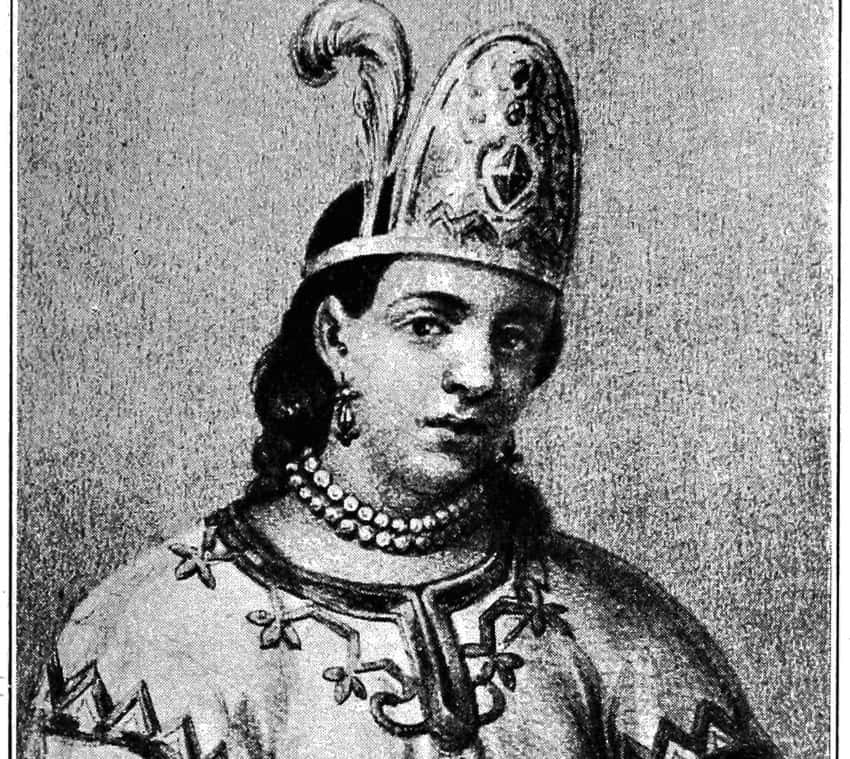
Like any cultural paradigm, scholars have attempted to categorize her perception and presentation both temporally and by groups supporting varying ideologies.
A traditional nationalist slant views Malinche as a traitor, “La Chingada,” taking on an Eve-like persona in her betrayal of the nation for the conquistadors, ultimately facilitating the tragic end of the Mexica. Others stress her victimhood not only at the hands of her oppressors but also in her literary portrayal as a traitor.
Here we see, through the abstraction of Malinche, the reduction of the female to a single narrative. Her portrayal even inspired the neologism “malinchista,” which refers to those favoring foreign cultures and ideals.
Meanwhile, feminist and Chicanx discourse have outlined Malinche’s dynamic representation in alignment with varying political agendas and strived to empower her agency. Many view her as a victim of colonial patriarchy who, as scholar Gloria Anzaldúa described it, exists beyond the “traditional/treacherous binary,” and chose to “be a survivor” who “cast her lot with the Spaniards to ensure survival of a race.”
Other postcolonial scholars take on such subaltern perspectives but question Malinche’s true autonomy, often highlighting the backdrop of religious colonial values of benevolence that Malinche was constructed and demonized against.
Acutely relevant, a pro-Hispanic and contemporary transformation of the narrative sees Malinche much like Disney portrays Pocahontas — a young woman whose love for the heroic Western explorer enabled the birth of the mestizaje, making her the “mother” of Mexico.
And so enters Nacho Cano, creator of “Malinche.”
Nacho Cano’s path from pop star to controversy

Ignacio “Nacho” Cano is a former member of the popular band Mecano, a luminary of Spain’s ’80s music scene and one of the biggest Spanish pop stars of the time. The band’s debut album sold 1 million copies in Spain alone, and they have since sold more than 30 million records worldwide.
Cano went on to develop the wildly influential “Hoy No Me Puedo Levantar,” a musical exploring Madrid’s post-Franco countercultural movement, La Movida, and one of the most financially successful Spanish musicals to date.
Despite his status as a 20th-century pop idol, Cano also established himself as a controversial political figure. He’s an avowed ally of the right-wing president of the Community of Madrid and People’s Party, Isabel Díaz Ayuso, who presented him in 2021 with the Order of the Second of May.
Ayuso herself was described by Politico as being in a “nationalistic showdown with Mexico.”
Such political dissension stems from her admiration of Cortés and defense of the Spanish Conquest as a civilizing mission, perhaps most notably at this year’s “Celebration of Evangelization and Mestizaje in Mexico.”
Sheinbaum has rebuked Ayuso’s characterization of the “conquest as salvation,” while Ayuso has been dubbed by Morena party members “the heir to the Spanish Falange,” a far-right fascist political movement founded in Spain in the 1930s.
Cano has similarly argued that “without Cortés there would be no Mexico,” a sentiment reflected in the feathers and flashlights of his extravagant musical production.
Divided perspectives and powerful corporate backing
In July 2024, Cano was arrested for alleged improprieties and poor working conditions for the performers in Madrid’s “Malinche,” including undocumented immigrants. The charges were dropped the following year, with Cano insisting that left-wing leaders led an alleged coordinated attack.
Beyond the show itself, Cano offers viewers a more detailed insight into the 10-year process behind his play in the 2021 Netflix documentary, “Making Malinche,” a name whose very essence speaks volumes. Malinche is once again a woman methodically remade and reduced, this time to an unwavering, consensual lover.
In an interview with El Mundo, Cano argued that Mexico’s history has been told “deliberately poorly,” and claimed in the documentary that his work is more historically accurate.
The overarching narrative he perpetuates is that Malinche was not a betrayer, but a woman whose passionate love for a Spaniard gifted humanity the New World.
We have seen a correlation between Malinche’s shifting portrayal and shifting Mexican cultural identity, as critics argue Cano has both sanitized and romanticized the violent reality of Spanish conquest.
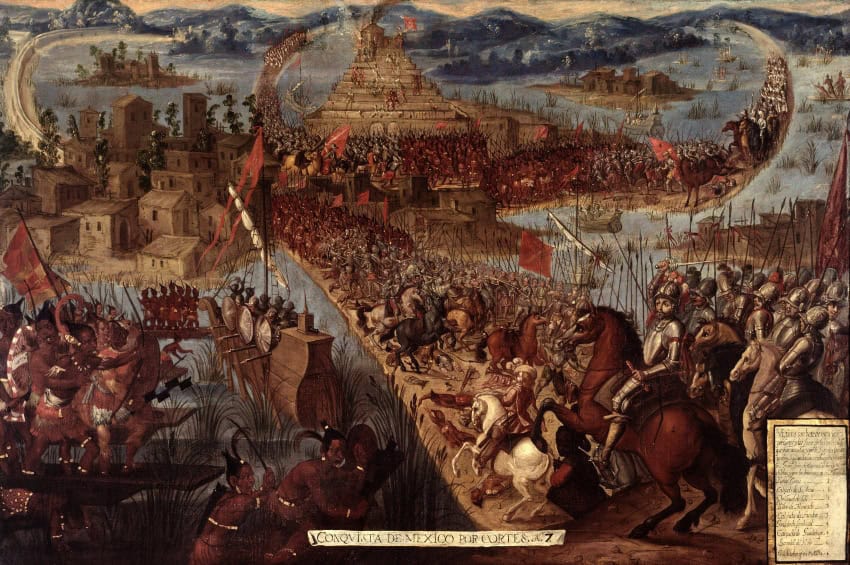
Left-wing critics have argued the musical erases Indigenous trauma and experience in its “perpetuat[ion] of a Eurocentric narrative,” describing it as a “spectacle of postmodern Falangism.”
On the other end of the spectrum, conservative critics have chided Cano for doing a disservice to Catholicism, accusing him of not pushing far enough “an authentic ode to the history of Spain, against ideological revisionism and the Black Legend,” a reference to a school of thought that suggests “anti-Catholic” and “anti-Spanish” narratives deliberately position the Spanish Empire as singularly motivated by cruelty and greed.
However, these are not the only reasons many people in the left-wing community have boycotted “Malinche.”
The champions of ‘Malinche’
Ricardo Salinas Pliego, a Mexican television magnate and chairman of Grupo Salinas whose net worth is estimated to be US $5 billion, is responsible for bringing “Malinche” to Mexico and promoting it on his network, TV Azteca. His wife, María Laura Medina de Salinas, served as an executive producer during its opening in Mexico last year, after falling “in love” with it in Madrid and “form[ing] a synergy” with Cano, according to José Manuel Azpiroz, the director of communications at Salinas’ Grupo Elektra.
What’s more, the show is officially “presented” by Banco Azteca, part of Salinas’ conglomerate.
US files fraud charges over alleged US $450 million scam of Mexican media magnate Ricardo Salinas
Much like Cano, Salinas is no stranger to controversy, having been accused of tax evasion to the tune of US $3 billion while also flirting with a presidential run.
Once labeled “the newest face of the Mexican new right,” he is an outspoken critic of Sheinbaum and supporter of the National Action Party (PAN), with a political temperament that follows in the footsteps of Argentina’s president, Javier Milei, and U.S. President Donald Trump.
Salinas and Cano also have close ties to Juan Miguel Zunzunegui, a Mexican historian and avid rejector of the Black Legend. He defends the Spanish empire and upholds a history that dismisses Indigenous suffering and denies the mass violation of women.
In an interview with El Mundo, he said, “[t]he Spaniard who thinks they did horrible things in America does so out of ignorance.”
Cano recently wrote the prologue to Zunzunegui’s book, “Hernán Cortés,” and Zunzunegui is involved in the current run of “Malinche,” making a special appearance as Spanish friar and translator Jerónimo de Aguilar.
Turning historical violence into a love story
Malinche’s representation has been utilized as a vehicle to express specific sociopolitical ideologies within Mexican society, both at home and abroad. The question now is why proponents of “Malinche” feel a desire to promote a history of colonial violence as a love story that’s couched in consent and results in creation?
Some have asked a similar question of Disney’s romanticization of colonial relationships in its 1995 adaptation of “Pocahontas,” with the understanding that depicting a “mutually satisfying encounter” legitimizes what they describe as the violence of Western history.
“Malinche” too warrants consideration as part of a broader ideological posture seeking to sublimate Spain’s imperial legacy. However, with its second season running through January 2027, its popularity, devoid of nuanced conversations about who gets to write and rewrite history, speaks for itself.
Millie Deere is a freelance journalist.