The story goes that when Chavela Vargas, the iconic singer of Mexican ranchera music, visited Tepoztlán in the state of Morelos, she was captivated by the mountain known as Chalchitépetl. She was amazed by its beauty, but more importantly, Vargas was struck by the fact that she had dreamed of that exact formation many times, despite never having seen it before. After seeing the mountain, she decided to make the town her home.
“She came, knocked on the door, and asked what she had to do to live here, and that is how she ended up staying,” said Gerardo Ramírez, the manager of Casa Chavela.
How Chavela chose her home
Vargas, who was Costa Rican by birth and famous for her declaration, “We Mexicans are born wherever the hell we want,” arrived in Mexico at age 17 and began her career singing in cantinas. She was later discovered and mentored by the iconic Mexican singer José Alfredo Jiménez. Vargas was a close friend — and perhaps more — to figures like Frida Kahlo, Diego Rivera, Joaquín Sabina and Federico García Lorca, and she became a major icon for the LGBTQ+ movement.
Vargas arrived in Tepoztlán in 2007, by which time she was already a legend whose career was celebrated throughout Latin America and Europe. The house she chose was located on the Tepoztlán-Cuernavaca Federal Highway and belonged to Emma Teresa Ortiz, known as “Monina.” At the time, the property was called Quinta Monina. There were once two other houses on the property, which were also inhabited by artists, including the famous actress María Eugenia Llamas.
When Vargas arrived at Quinta Monina, she requested changes to the house that reflected her strong personality and creativity. Today, the building has become a landmark of Mexican architectural design.
‘Quédate Esta Noche’: The passion of Chavela Vargas and Frida Kahlo

An architectural gem
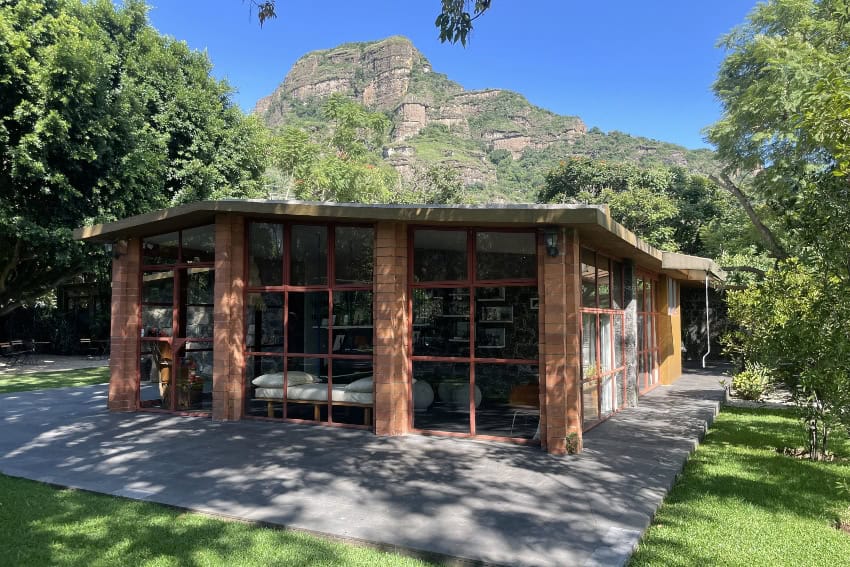
The initial design of Casa Chavela was straightforward, with a large hallway connecting the kitchen, living room, dining room and two bedrooms, as well as a terrace. This was later transformed at Vargas’ request. Today, the house is a blend of volcanic rock — typical of Tepoztlán construction — and large windows with orange ironwork that bathe the interior in light, reminiscent of functionalist architecture.
“The reason all the ironwork is this orange color is that, when Chavela moved into this house, she asked for the terrace to be enclosed with glass, which has become a distinctive feature of the house,” Ramírez explained.
In 2020, the Romero family — comprising architects, designers and engineers — purchased the property and remodeled it using local materials, inspired by Vargas’ original ideas.
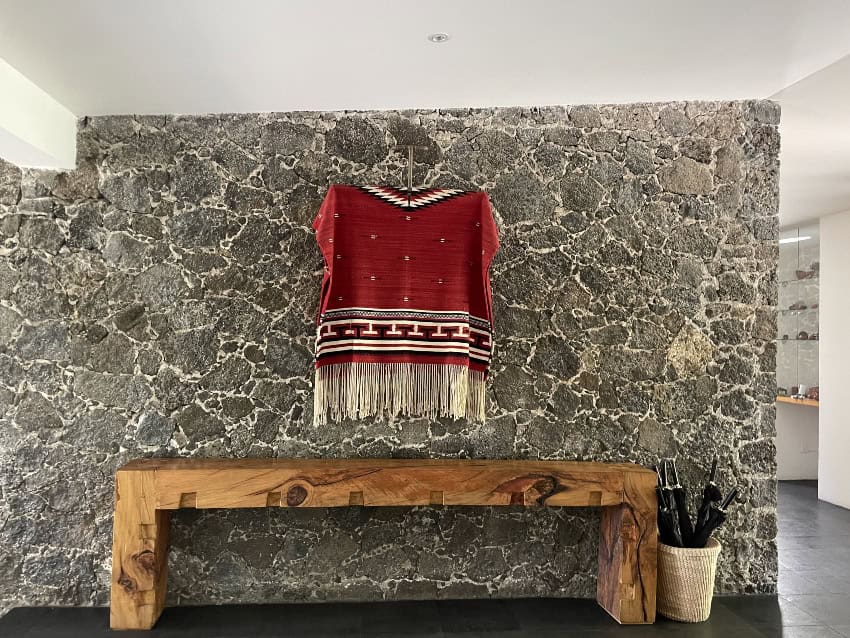
They replaced the tiles, added two rooms and expanded the orange ironwork windows to the bedrooms and dining room, giving the house openness and light. In terms of decoration, the home features ocote pine crafts from the nearby town of Ocotitlán, and Vargas’ iconic jorongos (traditional Mexican woolen garments) hang on the walls. Her famous equipal — a handcrafted, pre-Hispanic-style armchair — lined in bright colors, can also be admired.
A place for art, inspiration and creativity
The surrounding gardens contain more than 60 trees that the owners have added in recent years, while preserving the original vegetation. A Y-shaped pool and numerous totems made from traditional clay from Amayuca, Morelos, add to the house’s unique atmosphere.
A podium in the shape of a kiosk crowns the garden and is used for ceremonies such as weddings. Furthermore, as the land slopes down, an area of old stables appears; these now serve as rooms for artists in residence.
Further down is a huge open living room that serves as a cultural space for concerts, meetings and exhibitions. While Casa Chavela welcomes guests through Airbnb and by renting out rooms like a hotel, it also has a social purpose: It offers free lodging to artists in residence.
Since 2022, five artists have completed residencies of between two and three weeks, donating their work to the house collection. Many of these pieces were inspired by Vargas, though the work can cover any topic.
Framing nature through architecture: An interview with acclaimed architect Diego Villaseñor
Vargas spent her final years in this house, from 2007 to 2012. During this time, she found peace and formed a profound relationship with the mountain of her dreams, Chalchitépetl. After a complicated and magnificent life, she found a place of contemplation here, as well as the strength to overcome her struggles. Casa Chavela is undoubtedly imbued with the personal magic and spirit of her personality.
Ana Paula de la Torre is a Mexican journalist and collaborator for various outlets, including Milenio, Animal Político, Vice, Newsweek en Español, Televisa and Mexico News Daily.