Arriving in Tepoztlán — the mountainous Pueblo Mágico about 90 minutes south of the heart of Mexico City’s Coyoacán neighborhood — evokes a surrealistic reverence for Mexico’s natural splendor.
Cradled in the Sacred Valley of Tepoztlán, after crossing into the state of Morelos, you’ll make a sweeping, winding descent into the forest-encircled town. A natural amphitheater is formed by the surrounding Sierra de Tepoztlán and Chichinautzin mountain range, while Tepoztlán’s cobblestoned roads and lazy plazas underscore the small town’s relaxing rhythms.
A spiritualist getaway
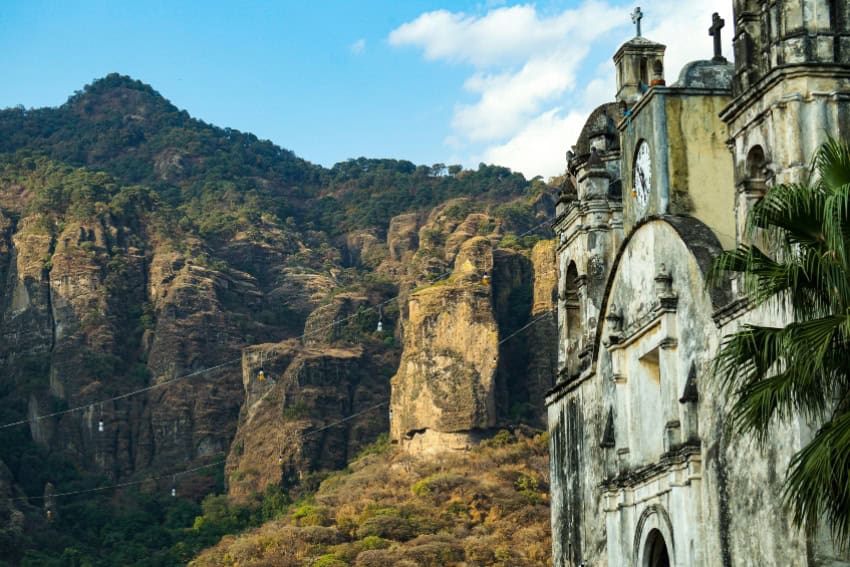
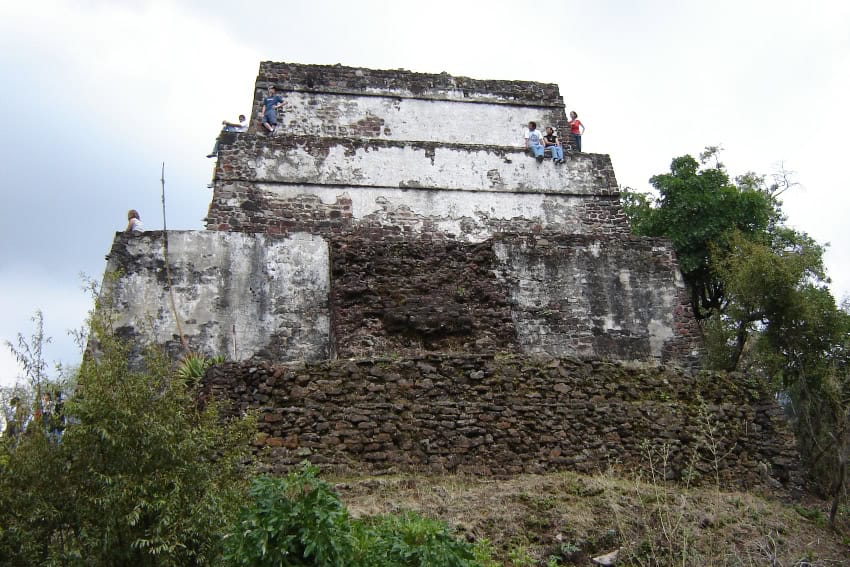
The pueblo is largely known for attracting hikers from around the globe, conveniently located at the edge of El Tepozteco National Park, which includes a 1.8-mile round-trip trek up a steep hill that culminates with the 500-year-old Pyramid of Tepoztecatl and panoramic views at the summit. In addition, the town provides a modernized mix of high-end dining options (such as Nixte, an upscale smokehouse serving indigenous Mexican food from a wood-fired kitchen), minimalistic elegance (Casa Ayehualco once belonged to the Mexican architects Diego Villaseñor and Ana María Maldonado) and contemporary Mexican art (Dilao, a surrealist sculpture garden, was inaugurated by the artist Eduardo Olbés in 2019).
Above all, Tepoztlán is heralded as a spiritualist getaway, with an abundance of health-forward, organic and old-world experiences focused on rejuvenating the body, mind and spirit. Massages, temazcales and psychedelic-induced retreats abound in the pueblo of just over 14,000.
And yet, one of its greatest features, which perhaps gets overlooked among Tepoztlán’s surplus of attractions and temptations, can be literally traced back to Mexico’s Indigenous roots with pulque.
Tepoztlán, a town of pulque worship
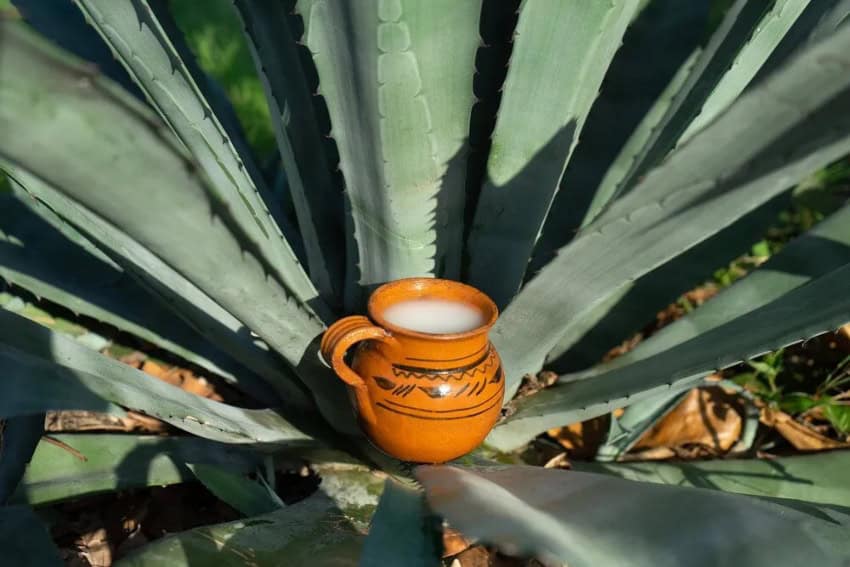
Pulque — the fermented sap of agave plants, known as aguamiel — is believed to be over 2,000 years old. A viscous, milky powerhouse, it’s one of Indigenous Mexico’s most defining libations.
What exactly does Tepoztlán have to do with pulque? Mexicas believed the region to be the site of Tepoztécatl — the god of fermentation and drunkenness. If that’s not convincing enough, Tepoztécatl’s mother, Mayahuel, is celebrated as the goddess of agave, fertility and — you guessed it — pulque.

Both Tepoztécatl and Mayahuel are intimately linked to Tepoztlán’s pre-Hispanic mythology, where Tepoztécatl, in particular, is believed to have founded the community. The nearby pyramid is recognized as an important ceremonial site dedicated to Tepoztécatl, built between 1150 and 1350.
It makes sense, then, that Tepoztlán has become a pilgrimage-worthy center for pulque worship, with more than two millennia’s worth of pulque cultivation and consumption. To date, tlachiqueros — a term derived from the Nahuatl word tlachiqui, or “one who scrapes,” to denote agricultural workers who tend agave sap — can be found throughout the region, gathering the aguamiel that eventually alchemizes into pulque. This fresh supply can be found at various pulquerias in town today, where there is never a shortage of the Mesoamerican “nectar of the gods.”
Pulque consumption in Mexico
And yet, Tepoztlán is not a mass producer of pulque, either. Instead, it’s hyper-local, artisanal and family-operated. Rural areas in Puebla, Hidalgo and Tlaxcala boast the largest pulque production. But Tepoztlán, despite its relatively diminutive size, is still viewed as a pulque drinker’s paradise for its quality and range of pulquerias.
Though deeply steeped in ancient customs, pulque is very much a part of the present-day Mexican lifestyle. According to Scielo, the consumption of pulque has risen in the last few years “due to a greater appreciation of national identity and its organic nature free of conservatives.” The love of pulque is ostensibly trending upward, as has been documented by Mexico News Daily. Tepoztlán, therefore, is in a prime position to showcase its best properties.
Gardens, wellness and pulque
When it comes to the artistry of organic, slow consumption, it doesn’t get more earthy than a glass of pulque. The beverage is a great fit for Tepoztlán’s gastronomic ethos, known for its array of healthy foods and traditional kitchens that serve regional dishes like itacates — a simple, corn-based dish often stuffed with natural ingredients like flor de calabaza.
In a modern-day context, this combination of wellness and indigenous foods translates deliciously for travelers and locals alike, who can taste a range of pulque styles and flavors to go along with it all.
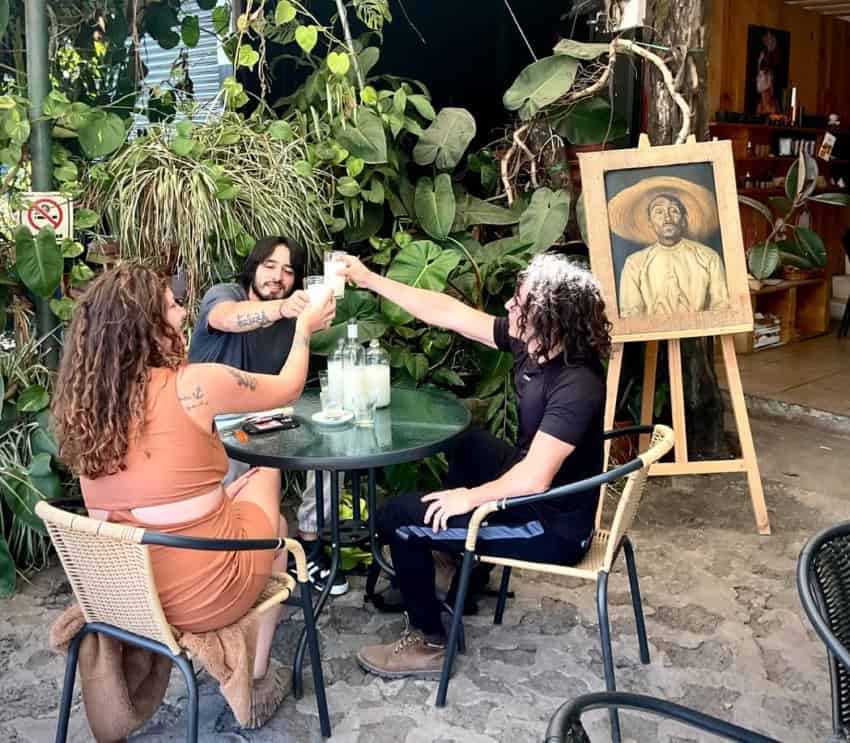
Pulquimia — a botanical garden and pulqueria rolled into one — is a leading example of how the next generation of pulquerias are able to offer an elevated experience that remains grounded in pulque traditions. Flavors include inventive, health-forward combinations like cacao with amaranth, cinnamon and rose petals, or peanut with manzanilla and orange. The elixirs are said to help with one’s digestive and immune systems and overall health. Here, pulque isn’t something of the past to be consumed as a novelty. It’s a daily lifestyle anchored in holistic health practices. The pulqueria includes a covered outdoor patio with views of a lush garden and the abutting mountain peaks. In all, the experience is refreshing and calming, if not medicinal, in a way that would be hard to find in a larger city environment.
A guide to Tepoztlán pulquerias
Of course, there are also classic pulquerias that supply old-school dive-bar vibes rather than that of a glamorous resort getaway. One such joint is Pulques El Nectar Tepozteco, located on one of the pueblo’s main streets — which closes to vehicles on weekends and becomes swarmed by passersby and vendors on foot. The pulqueria is easy to find: it has a giant mural of a rabbit holding up a clay cup that is overflowing with pulque froth. Symbolically, the rabbit is a sign of fertility and intoxication in Mexica cosmology, and it is believed that the goddess of pulque gave birth to 400 rabbits. There is even a codex of drunkenness associated with various rabbits from Mexica times, demarcating one’s various levels of intoxication (loss of control, happiness, etc.).
Reveling in the spirit of pulque
El Nectar embodies this spirit. When I entered upon my first of a few visits, a man was passed out in a chair, drunkenly asleep, while others reveled joyously nearby. The menu is extensive, with no less than 10 options listed behind the counter at any time. I went with a mazapan and later a guayaba — both rich in texture, and one of which included the ground remains of natural ingredients that were at some point broken down to make the base of the beverage.
The pulque is thick, unmistakably fresh and made in-house, poured from ladles into various cup sizes, depending on your level of thirst and appetite. I asked to speak with an owner to get a sense of the place’s history, but I was told he’s only available on weekends, and alas, I was there during the week. But even without a private history lesson, the pulque at El Nectar was truly among the best I’ve ever encountered in my search for the finest “Champagne of the gods.”
Sipping all the way
I was also informed that the creatively named Pulques Tepoztlán, located further up the village roads, was a worthwhile stop on my pulque tour. Unfortunately, I was never able to make it due to ongoing storming conditions during my visit and constant power outages.
Before I left town, I did, however, swing by another purveyor of pulque: Pulque Coyote. Surreptitiously found inside a corner store that otherwise functions as a de facto Oxxo, you can ask the cashier about their pulque. It’s made locally, of course, and is bottled in an old, unmarked plastic jug, which certainly did not have pulque in it before. It’s a bit of a moonshine variety, without much explanation or frills. The place was only on my radar because I asked the concierge at my hotel where he recommends trying pulque. At Coyote, you can ask for your desired amount and take it to go, as there are no seats or places to lounge inside the small corner shop.
Wherever you load up, you will encounter a variety of pulquerias with their own spin on pulque, to be sure, all around town. Go forth, and drink responsibly.
Alan Chazaro is the author of “These Spaceships Weren’t Built For Us” (Tia Chucha Press, 2026), “Notes from the Eastern Span of the Bay Bridge” (Ghost City Press, 2021), “Piñata Theory” (Black Lawrence Press, 2020), and “This Is Not a Frank Ocean Cover Album” (Black Lawrence Press, 2019). He is a graduate of June Jordan’s Poetry for the People program at UC Berkeley and was selected as a Lawrence Ferlinghetti Poetry Fellow at the University of San Francisco. His work can be found in NPR, The Guardian, SLAM, GQ, L.A. Times, and more. He is currently based in Veracruz.