On June 20, as Pride parades filled the streets, the team at Proyecto LAM was preparing for their annual “Noche de los Murciélagos” (“Night of the Bats”).
Proyecto LAM is a vibrant plant nursery in Santa Catarina Minas, Oaxaca, founded in 2018 by Graciela Ángeles and her family, who produce Real Minero. Graciela explains that originally, the project focused on studying the agave plant; then “as a side effect, the need arose to study its pollinators, especially the bats.”
View this post on Instagram
Guests are invited for a sunset walk through the garden before a series of presentations, dinner and mezcal.

The underrated importance of bats
Each year, they invite specialists to speak on the garden’s themes: its plants, pests and pollinators. This year, Irene Martínez Velasco spoke about the genetics of agave before Rosario Aceves Íñiguez, a biologist from Guadalajara, led an introduction to bats. She discussed the ecological significance and diversity of bats before emphasizing some of the challenges faced by bat populations.
Rosario says she considers bats to be one of the most misunderstood groups of mammals, “despite also being among the most fascinating, interesting and wonderful.”
Bats play a fundamental ecological role in the maintenance and functioning of ecosystems, yet they remain one of the most undervalued groups of mammals. In Mexico, where agave plays an iconic role, bats are invaluable. Nectar-feeding bats and agaves share a close ecological relationship where bats act as primary pollinators. Preserving this bond is vital for agave biodiversity and the survival of endangered bat species.
Bats’ role in agave propagation
Graciela says that “declines in bat populations threaten the survival of the agaves, particularly those propagated solely through seeds.” Agave spirits producers can support bat populations by allowing a percentage of agaves to flower and go to seed to support nectar-feeding bats. “Bat Friendly” is a certification that promotes conservation and encourages consumer participation in tequila and mezcal, while initiatives such as the one noted above encourage the producers of these liquors to adopt sustainable practices.
However, fear surrounding bats follows this unfairly maligned mammal. Myths of blood-sucking vampires and perceptions like dirty “flying rats” plague bats and those trying to help them. Ongoing stigma and their nocturnal behaviors make bats difficult to study.
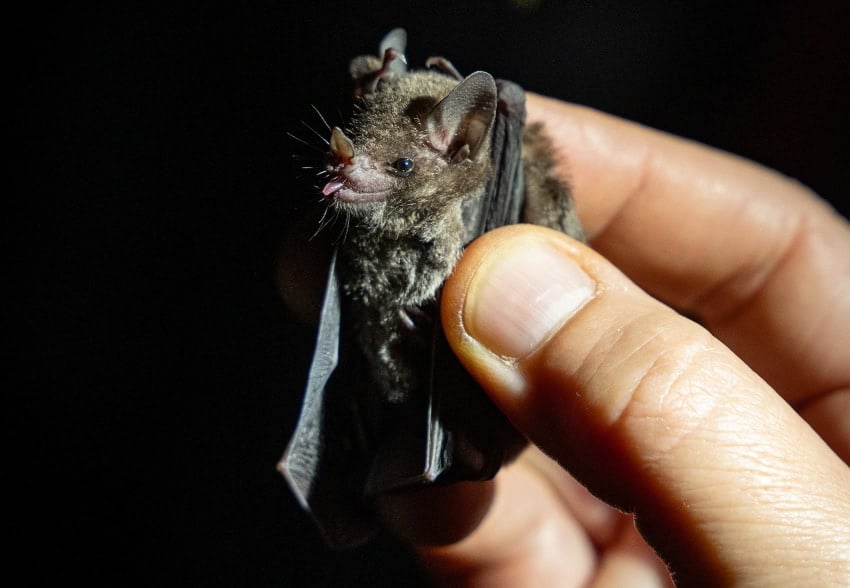
Studying bats also has significant challenges. Rosario explains that “national insecurity and forced disappearances hinder field research.” She says fieldwork using capture methods has become more complicated because work is done at night, which implies greater risk. “There has been a shift towards other techniques that do not require capture, but in projects where it is possible to record or work with bats, many studies and research projects require having the specimens in hand.”
Habitat loss and other challenges for bat populations
A major concern is habitat loss. Rosario described how this reduces the number of places where bats can roost and limits food sources. Monocrops, like the agave plants used for tequila, with significant levels of pesticides, are also hurting bat populations.
Disease is also having a significant impact, in particular “white-nose syndrome,” a fungal disease that primarily affects cave-dwelling bats. According to Rosario, “over the last decade, this has led to the deaths of millions of individuals in various regions of the world.” In Oaxaca alone, it is suspected of causing a drastic decline in bat populations.
Rosario’s concerns about bat populations were echoed by Graciela. She informed the group that over the past three years, the number of bats they have found during these activities has plummeted. “During the first capture in 2018, there were several hundred bats. Last year, we only managed to capture three bats. This year, 15 were captured.”
Fortunately, there are endeavors to conserve bat populations. Conservation efforts prioritize what Graciela describes as “citizen science,” which involves making scientific data accessible to the public and facilitating knowledge sharing between farmers, producers and academics. Events like the “Noche de los Murciélagos” bring the public closer to science through workshops, talks and bat-monitoring demonstrations. These efforts help to foster awareness of the bat-agave connection.
Teaching kids (and adults) about the beauty of bats
This year, they held a contest with students from the middle school in Santa Catarina Minas to make artwork about bats. They awarded certificates and sketchbooks to the winners. For Graciela, this is a way to “influence these young people to develop their creative skills, whether through writing or drawing, and at the same time bring them into a scientific activity.” She says, “I think one of the most important things is that this year we had so many children visit. It’s something beautiful that young people are interested in science.”
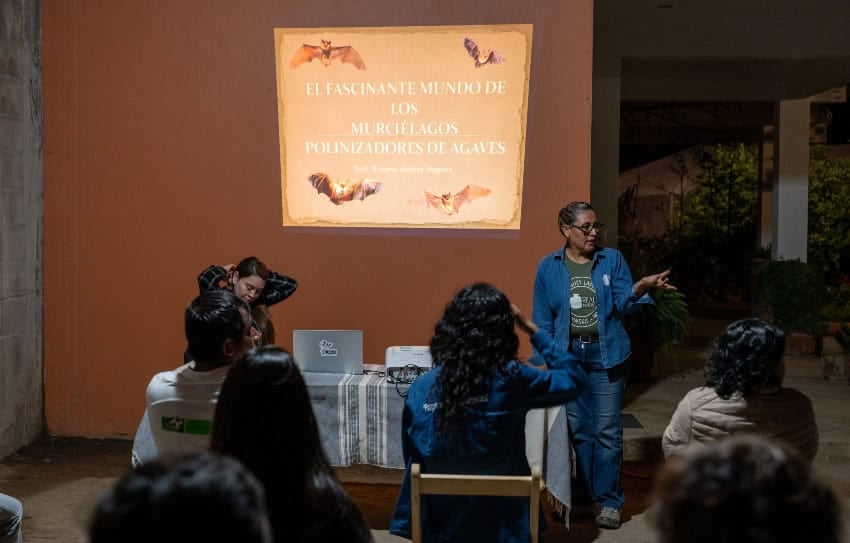
Rosario says that the public can contribute by “learning about the ecological importance of bats, avoiding the destruction of their roosts, promoting their conservation and supporting initiatives and products that encourage practices friendly to these species.”
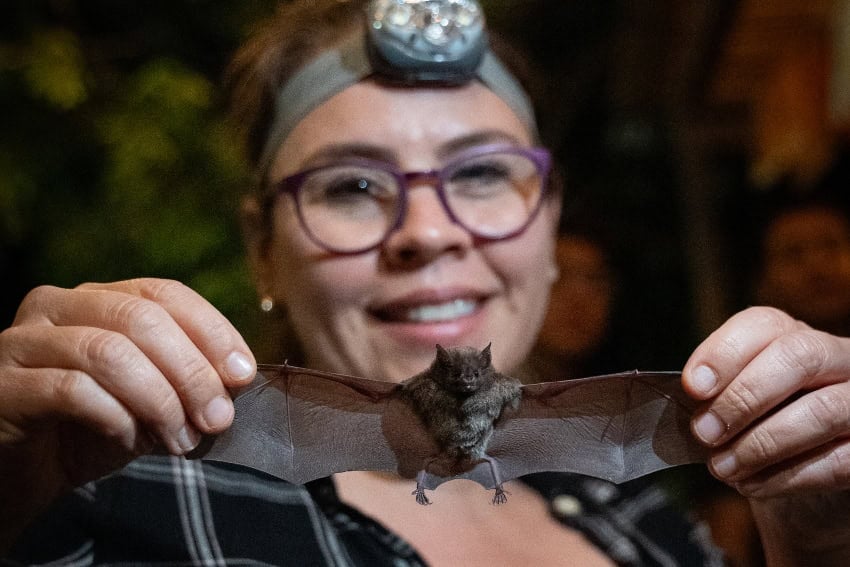
During the evening, Rosario and the team from Proyecto LAM used techniques like “mist-netting” to capture and identify species. They recorded data on the bat’s weight, sex and size, which helps document the health and presence of local populations over time. It was fascinating to watch them at work.
‘Intrepid pollinators’ released into the night
Once they had made their assessments, the bats were fed some sugar water before being released back into the wild. Rosario held each bat, and there was a brief pause before they took off into the night. It was surprisingly moving to see these fragile animals spread their wings as they realized they were free again.
Hopefully, events like “Noche de los Murciélagos” will continue to inspire people to learn about bats. Not as stigmatized creatures of the night, but as the intrepid pollinators that help maintain our diverse and beautiful ecosystem. As Graciela warns, without bats, we won’t have agave — or mezcal!
Anna Bruce is an award-winning British photojournalist based in Oaxaca, Mexico. Just some of the media outlets she has worked with include Vice, The Financial Times, Time Out, Huffington Post, The Times of London, the BBC and Sony TV. Find out more about her work at her website or visit her on social media on Instagram or on Facebook.