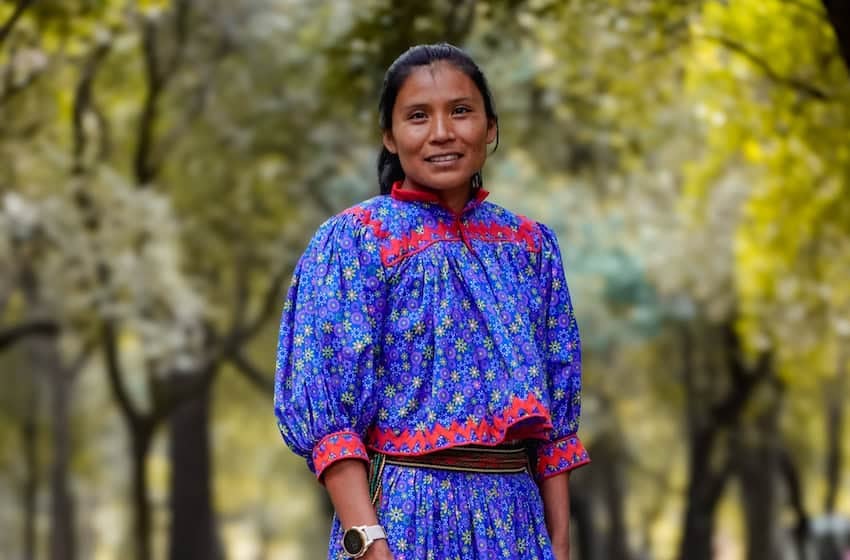
Juana Ramírez Hernández, a Rarámuri runner from the northern state of Chihuahua, has been invited to participate in the world’s largest women’s marathon in Japan on March 8.
Taking place in the city of Nagoya, the marathon is recognized by Guinness World Records as the world’s largest women’s marathon with around 20,000 runners at the starting line.
Ramírez’s participation in the marathon’s 15th edition underscores the event’s mission to “support and celebrate” women runners from all backgrounds, nationalities, cultures and levels of experience.
Organizers have said that together with her sisters, Ramírez “represents the next generation of Indigenous runners, carrying forward ancient running traditions while adapting them to modern ultramarathons and trail running.”
Female Rarámuri runners are especially famous for running in traditional dress and sandals at national and international running competitions. However, Ramírez has been seen running with normal running shoes on certain occasions, as was the case at the México Imparable (Unstoppable Mexico) race in September 2025, demonstrating her interest in adopting contemporary comforts.
“Through her athletic pursuits, [Ramírez] serves as a bridge between Rarámuri culture and contemporary sport,” the event’s organizers said.

Ramírez was introduced to a global audience in the international bestseller “Born to Run” by Christopher McDougall. Her invitation to Nagoya followed her victory in the Indigenous Division of the 2025 Ciudad Juárez International Marathon, underscoring the marathon’s aim to bring together the world’s top female elite athletes in competition.
The event will also feature a special exhibition dubbed “Mexico, Tierra de Campeones” (Mexico, Land of Champions), which will run from March 6 through 8 at the Marathon Expo.
The show will boast traditional attire from Chihuahua, the homeland of the Rarámuri (also called Tarahumara) Indigenous community. Through displays of huaraches (sandals) and vibrant garments, the exhibition will introduce visitors “to Mexico’s enduring running heritage,” organizers remarked.
Who is Juana Ramírez?
Ramírez, 21, is originally from the municipality of Guachochi, in the Sierra Tarahumara, Chihuahua. She was born into a rural Rarámuri family where running is part of everyday life, as they move between communities and mountains on foot.
As an ultramarathon runner and road marathoner, she has competed in 42, 63 and 100-kilometer races. Her father, Santiago, and siblings Lorena, Mario and Talina, have also participated in various running competitions.
Mexico News Daily