Amidst the bustle of the Mexican fair in Madrid, a bureaucratic subplot was unfolding: The greatest private collection of Mexican modern art was being handed over to a Spanish bank for an indefinite period. This was the mysterious and once “lost” Gelman collection, in which big artists like Frida Kahlo, María Izquierdo, Diego Rivera, David Alfaro Siqueiros and others found a home for their artwork.
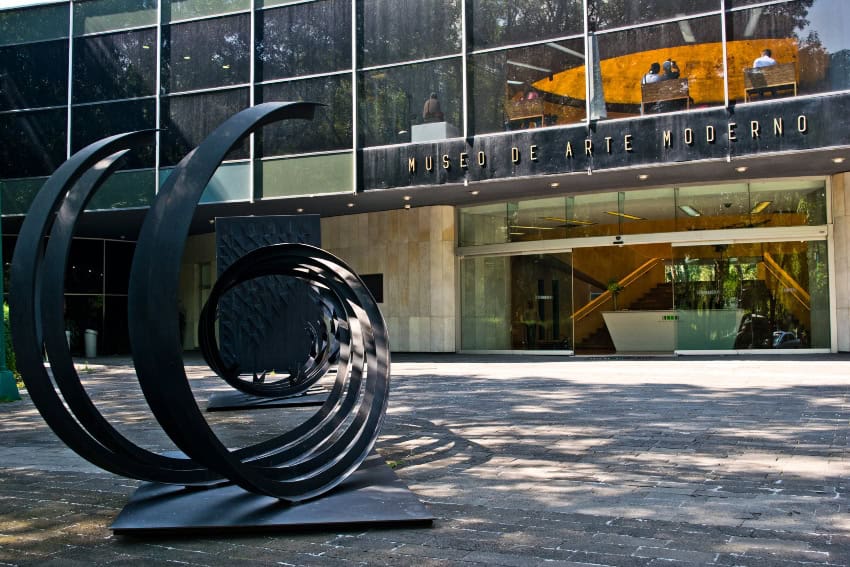
But before going abroad, it was announced that the Gelman collection will have a three-month exhibit at the Museo de Arte Moderno in Mexico City.
Jacques and Natasha Gelman
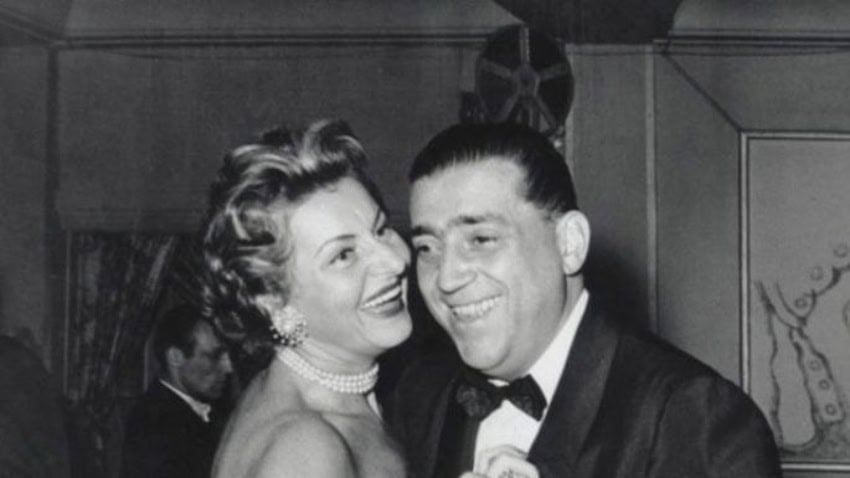
As the children they couldn’t have, Jacques and Natasha Gelman raised their collections to be among the most important of the 20th century. Although two collections grew together, parallel to the interests of Jacques and Natasha, we should rather consider them part of a trio because they created a third collection of pre-Columbian sculpture whose location is nowhere to be found to this day.
Let’s talk about the ones we do know about: The Gelmans were passionate about European art, as both came from Eastern Europe, which led them to build a collection of the European Masters. A selection of 47 paintings displayed works by Matisse, Picasso and Miró, and was exhibited at the Metropolitan Museum of Art (MET) in 1989. In 2001, the MET became the permanent home of this collection after the Gelmans’ death, following negotiations with executor Robert Littman. As William S. Lieberman wrote in his introduction to the catalogue:
“Although acquired for personal enjoyment and never intended as a survey, the Gelmans’ choice of European paintings and drawings is astonishingly coherent. Its quality is superbly sustained, and I find it difficult — perhaps impossible — to suggest any other private selection similarly defined in focus that is of comparable caliber.”
The art collections
On the other hand, the couple gathered artworks from their chosen home, Mexico, where they met after Jacques emigrated here in 1938. They later married in 1941. This was the year when their collections were born.
Upon his arrival in Mexico, Jacques became one of the most important producers of Mexican film history. Along with actors Mario Moreno and Santiago Reachi Fayad, he helped to create Cantinflas, an iconic character in “Golden Age” Mexican Cinema.

Gelman became wealthy from the movies, as well as a good friend of Moreno. As they grew closer, Moreno introduced Gelman to the group of intellectuals he belonged to, which included Rufino Tamayo, David Alfaro Siqueiros and Diego Rivera and Frida Kahlo.
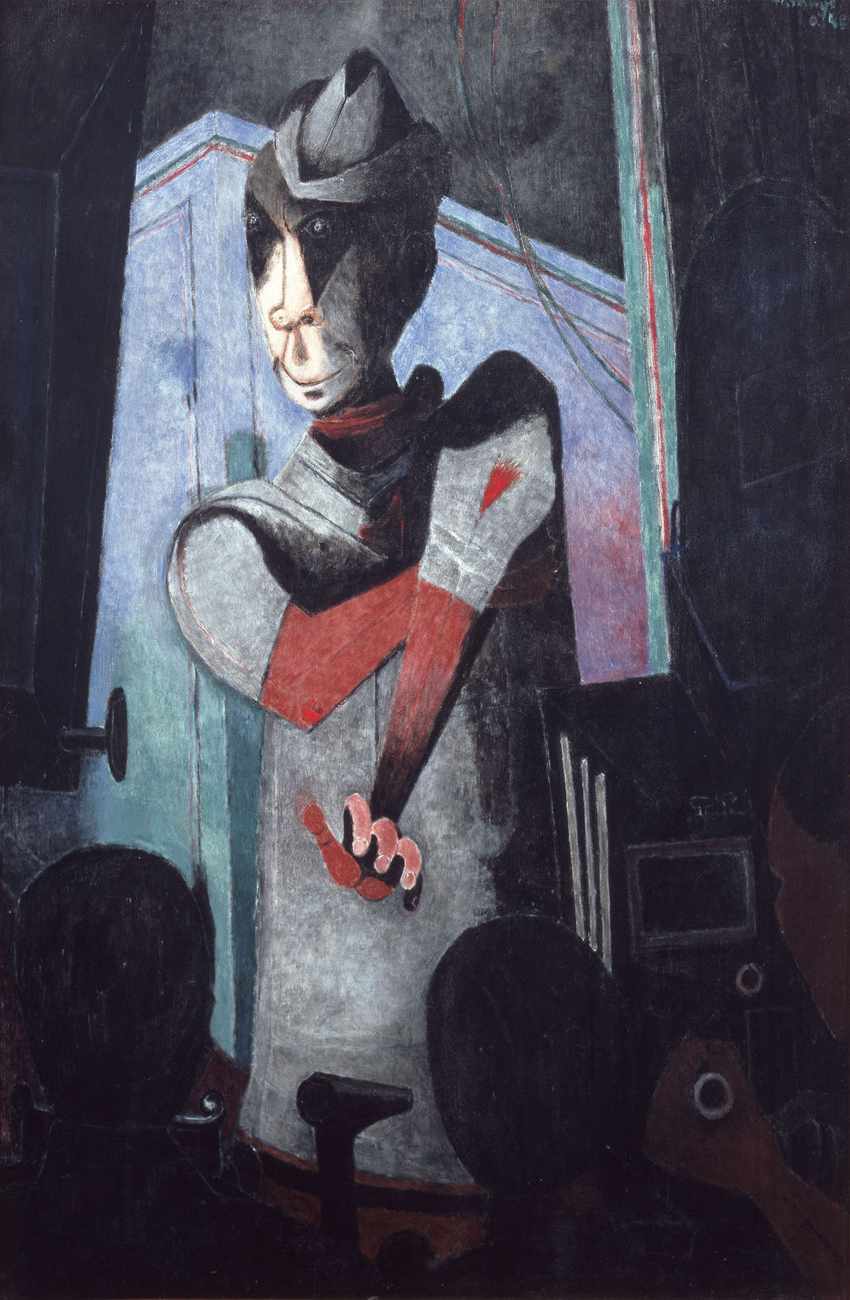
From here, the Gelmans started not only collecting art but also commissioning portraits from these artists. Natasha was painted by Rivera, Kahlo and Siqueiros, among many other artists, making these artworks statement pieces of the collection.
“There are two kinds of collectors: those who own a collection and those who are owned by it. Jacques and Natasha Gelman were the latter,” said art historian Pierre Schneider, a friend of the Gelmans.
A lost archive
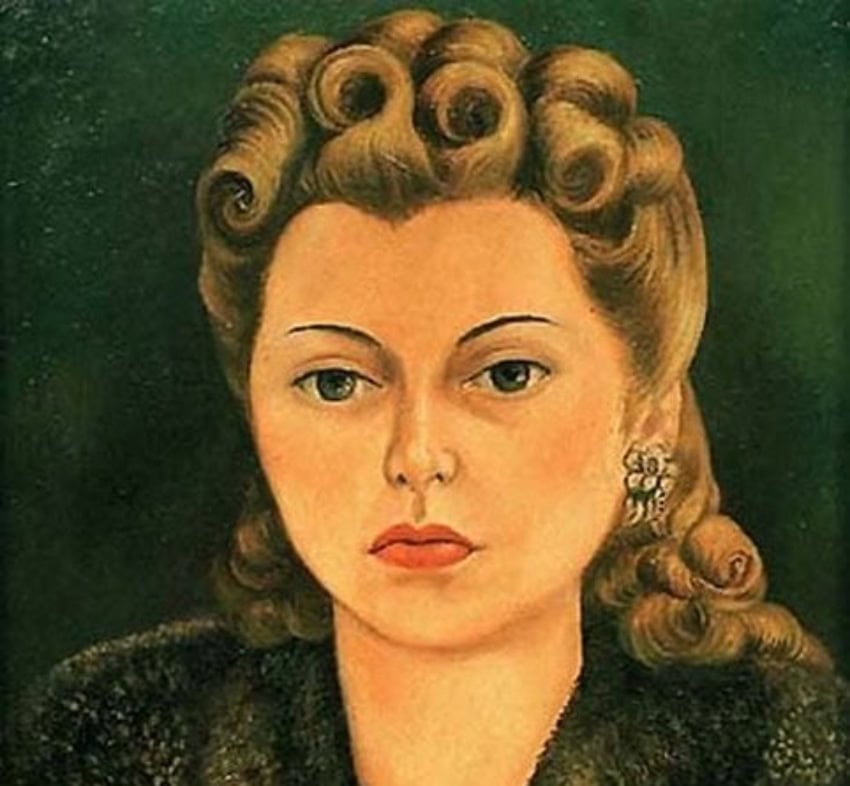
Jacques and Natasha dedicated their lives to the Mexican collection, but the story took a turn after Jacques died in 1986. An 88-year-old widowed Natasha began to suffer from Alzheimer’s disease. That was when a secondary character became the face of the collection and, therefore, of the doubts that came to surround it: Robert Littman.
Littman was no newcomer in the art world. He had been the director of Museo de Arte Contemporáneo Rufino Tamayo and an art advisor to the late Televisa owner Emilio Azcárraga and his wife, Paula Cusi. Littman had been acquainted with Jacques, a Tamayo Museum board member, since the early 1980s, when Littman joined the museum board.
Littman was, for years, a great friend to Jacques and Natasha, so it was not entirely surprising that he was named the trustee for the Gelman estate, though there are some loose ends to this version of the story. Littman began taking liberties that the Gelmans may not have agreed with, such as expanding the collection after both were deceased and selling pieces of it, even though Natasha and Jacques had stated that all the pieces should stay together.
Littman’s stewardship of the Mexican collection
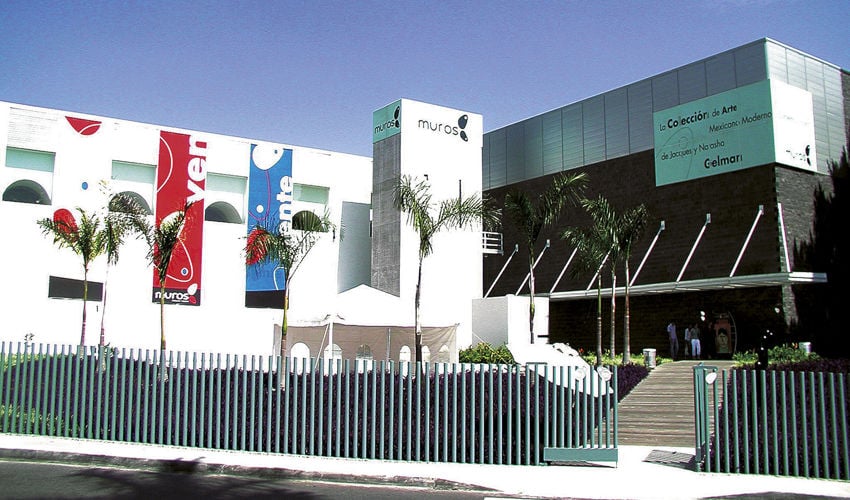
After the Gelmans’ deaths, the Mexican government offered to design a space for their permanent exhibition at the Museo Nacional de Arte (MUNAL), and just like at the MET, that space would bear the Gelmans’ names. But Littman refused, saying that Natasha had asked that the collection remain in private hands. So instead, the Fundación Cultural Parque Morelos was founded to be in charge of managing the artworks.
“The understanding between us was that the collection would eventually find a safe and secure state-of-the-art private facility to house it within the borders of Natasha’s adopted land, Mexico,” explained Littman in the catalogue of the Gelman collection, edited for its first exhibition in 2004 at the Muros center in Cuernavaca.
Littman stated that the collection was “coming home” because the pieces had finally found a permanent, private abode in Cuernavaca, where the Gelmans spent their last years. But there was a lot of buzz around this museum because it was built on the land that had once belonged to the old Casino de la Selva, a historic building in Cuernavaca. The movement for the historic building’s protection and the rumors around the Gelman collection made this exhibit ephemeral, lasting just a few weeks.
After that, Littman (using his newly created Fundación Vergel) continued to be in charge of the collection, but not without issues. The artworks stepped out of the public eye, making them difficult to track with only hints now and then: an exhibit in Australia, a strange auction at Sotheby’s, an allegation from Natasha’s brother and only heir, and even a claim by Mario Moreno’s family, who declared Jacques and Mario had arranged for the latter to be in possesion of the pieces once Gelman died. That, of course, never happened.
After all these issues, Littman ultimately sold the collection to Lorenzo Zambrano, a member of the family that founded CEMEX, an important building materials company in Mexico.
A broken last will
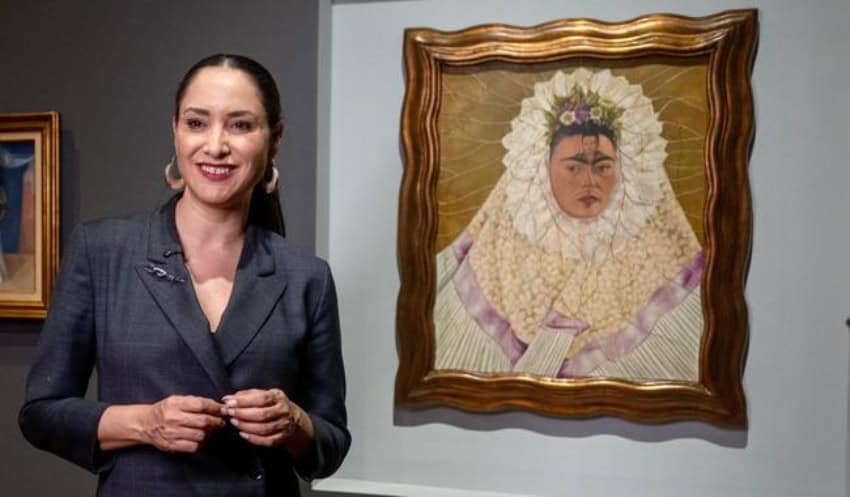
Now we have a completely different scenario: Fundación Santander, the cultural wing of the Spanish bank, recently announced that the Gelman collection would be exhibited at its new facilities for an undetermined period.
This breaks one of Natasha’s requests that the artworks stay in Mexico, although it is not an isolated case: Dolores Olmedo’s collection (which also includes works by Mexican masters) was in a similar situation when it was almost removed from its official site in Xochimilco, Mexico City. The reopening of her museum is planned for 2026.
As for the collection’s new manager (Zambrano is still the owner), Santander has stated that everything about the transition has gone smoothly and under the supervision of the Instituto Nacional de Bellas Artes y Literatura (INBAL). But doubts have been raised about whether the temporary, undefined period of custodianship by Santander should happen at all.
A short stop in Mexico City
The announcement of the collection’s display at Museo de Arte Moderno in Mexico City has definitely taken us by surprise, since neither Bellas Artes nor the Santander Foundation mentioned it in the first press releases. Now, 68 of the 160 pieces that will be sent to Spain will be available for viewing in Mexico in the exhibit “Relatos modernos. Obras emblemáticas de la Colección Gelman Santander,” which will be open from Feb. 17 to May 17, 2026.
Lydia Leija is a linguist, journalist and visual storyteller. She has directed three feature films, and her audiovisual work has been featured in national and international media. She’s been part of National Geographic, Muy Interesante and Cosmopolitan.