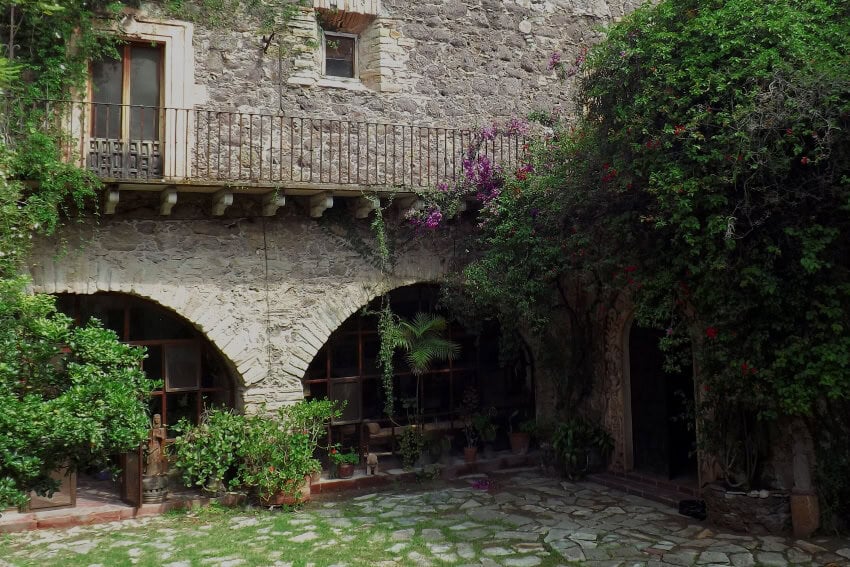
Foreign and Mexican tourists alike visit the city of Guanajuato for its beauty, history and charm. Captivated by the downtown center, they often miss the quirky, storied Gene Byron museum and gallery housed in an 18th-century ex-hacienda, tucked away in the suburb of Marfil.
The museum is named for Gene Byron, a Canadian artist (related by birth to the British Romantic poet Lord Byron), who bought the former silver and gold hacienda in 1962 with her Spanish husband, Virgilio Fernández.
Who was Gene Byron?
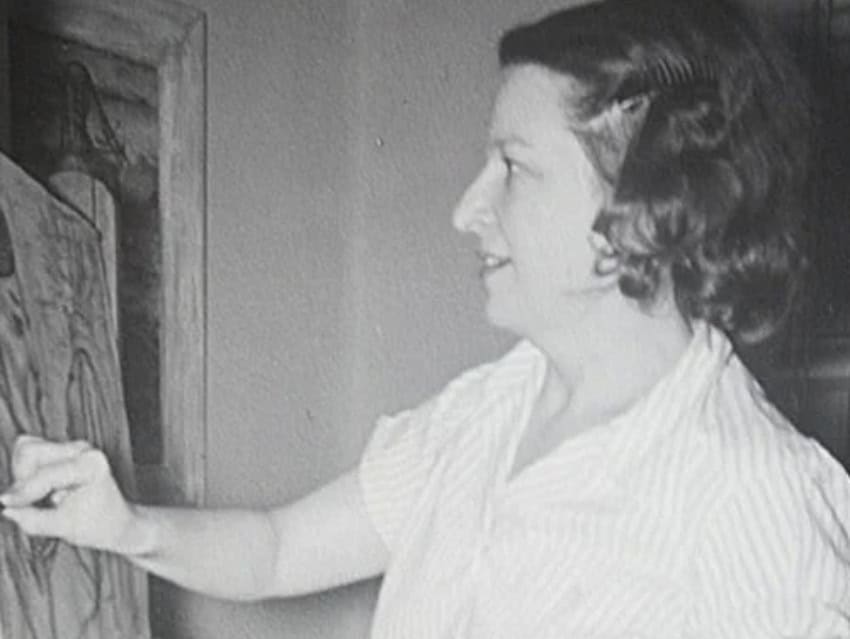
Gene Byron was a Renaissance woman — originally a successful Broadway actress and radio performer, she later became a painter. Influenced by Mexico’s muralists, she moved to Mexico in the 1940s, visiting diverse parts of the country like Veracruz, Guerrero, Chiapas, Yucatán, Campeche and Oaxaca.
In Mexico, she continued to paint, but added design and restoration work to her repertoire. She specialized in mid-century modern design, creating distinctive tin and copper lighting, wall sconces and decorative items, often incorporating hand-painted tiles. Her artwork was exhibited in museums in Houston, San Antonio, Chicago, New York and Mexico City.
Meanwhile, Fernández, born in Morocco, became a Communist at a young age and was working as a nurse in Madrid when the Spanish Civil War broke out in 1936. He spent much of the war as a medic on the front lines of Madrid and Guadalajara, Spain, participating in some of the most decisive battles of the Civil War alongside volunteers from across Europe and America.
How Gene Byron and Virgilio Fernández met
In 1938, Fernández was captured by Nationalist forces and interned in a concentration camp in France. He later escaped and was exiled to Mexico, where, along with over 25,000 other Spanish refugees, he was welcomed. He spent the rest of his life in exile in Mexico.
Fernández studied pediatrics in Monterrey, where he met Byron. They moved to Guanajuato in 1958, buying the former Santa Ana hacienda, which they restored, transforming it into both their home and a gathering place for artists and creatives.

Byron decorated and furnished the ex-hacienda with many of her own designs. The couple lived there together until she died in 1987. Today, it is still full of her furniture, paintings and even the light fixtures and other metal accessories that she designed.
Byron’s home becomes a museum
View this post on Instagram
In 1997, Fernández and his second wife, Estela Cordero, decided to convert the house into a museum. This was no small task because the property was an immueble catalogado (listed on Mexico’s historic register) and they had to acquire lengthy permissions for any changes, even minor ones, from INAH, the federal department that protects and preserves Mexico’s archeological and historical structures.
Today, the property encompasses a museum, gardens, a restaurant, a gift shop and the apartment where museum director Estela Cordero now lives, and where she and Fernández lived until he died in 2019. One of the last surviving members of the International Brigades fighting the Spanish Civil War, Fernández passed away in 2019 at age 100.
The museum maintains a permanent collection of Byron’s work but also offers visiting exhibitions, literary presentations, book talks, art workshops and weekly classical music and jazz concerts. With its extensive gardens and courtyard, the museum is also a popular venue for large functions.
A popular venue for art exhibitions and special events
The restaurant, located on the grounds with a view of trees, offers Mexican cuisine with European influences, and is open from 8:30 to 1 p.m. and then reopens from 2 to 6 p.m. The gift shop sells artisanal products, designs by Gene Byron — such as lamps, mirrors, and ashtrays — and rebozos and other fabrics.
In her role as the museum director, Estela Cordero selects Mexican and international artists to display their work there. Currently, there are shows by the Canadian oil painter and part-time Guanajuato resident Martine Bilodeau, as well as two Spanish artists, Luis González and Miguel Sánchez de San Bernardo.
Speaking with Cordero, she said she sees several trends in contemporary Mexican art: the fusion of pre-Hispanic and folk art with modern techniques and perspectives; art as a social commentary on cultural issues such as violence, machismo, inequality, migration, gender, feminism and identity; and the mixing of traditional art forms with experimental, immersive techniques like multimedia, digital art, videos and performance art.
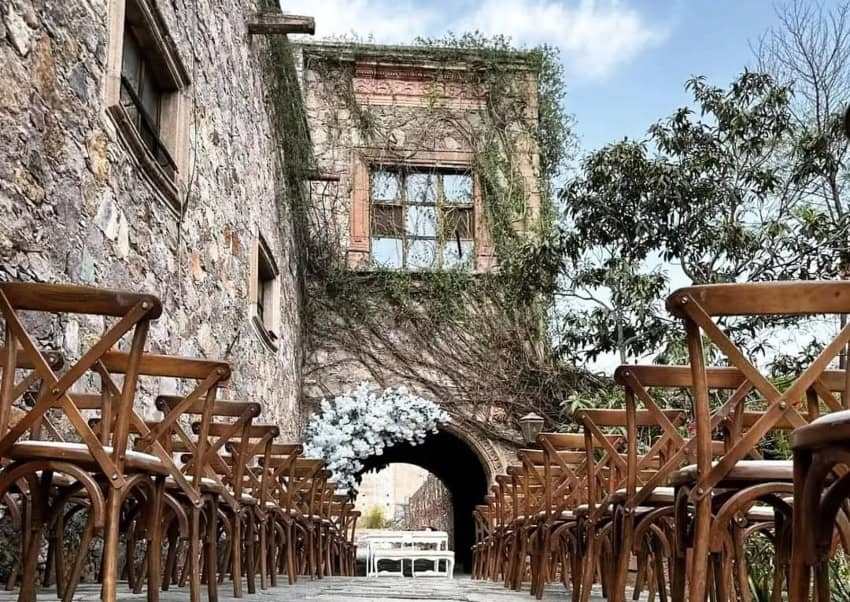
Only a 10-minute taxi ride from Guanajuato’s center, the museum is well worth a visit. And while you’re in Marfil, you can enjoy two other local assets: Stroll along the nearby tree-lined Camino Antiguo (Historic Walk) and visit another ex-hacienda, San Gabriel de Barrera, which contains 17 themed gardens.
Louisa Rogers and her husband Barry Evans divide their lives between Guanajuato and Eureka, on California’s North Coast. Louisa writes articles and essays about expat life, Mexico, travel, physical and psychological health, retirement and spirituality. Her recent articles are available on her website, authory.com/LouisaRogers