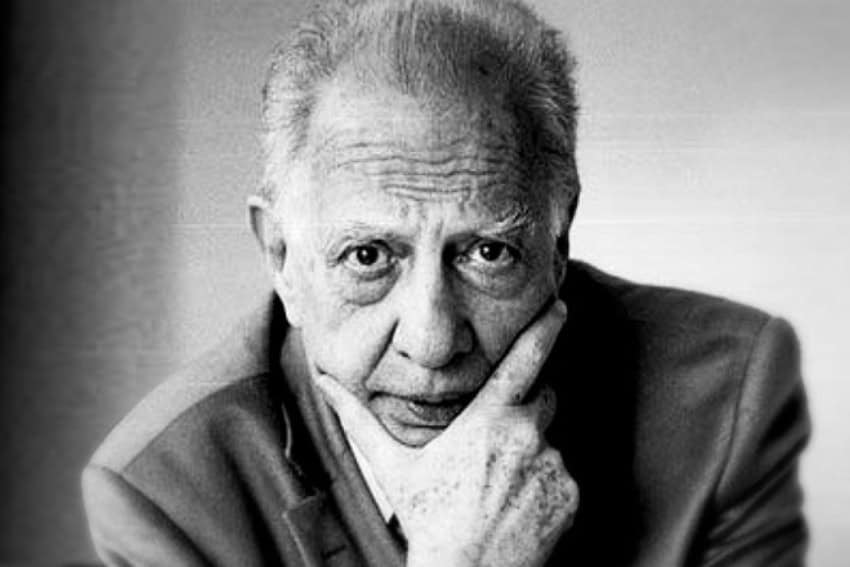
When it comes to Mexican literature, names like Octavio Paz, Juan Rulfo and Sor Juana Inés de la Cruz immediately come to mind for their global influence and stature. And yet, there are too many others to name who have contributed to Mexico’s literary acumen, both contemporary and canonical, in ways that may have been innocuously overlooked with time. Sergio Pitol is one of those voices.
The author of over 40 books — perhaps most famously his “Trilogy of Memory” series of autobiographical essays and travel writing, and his “Carnival Triptych” novels, which include the ubiquitously translated work, “The Love Parade,” a murder mystery that takes place in a World War II-era Mexico City.
A writer of humble origins, yet significant achievements
After receiving the prestigious Juan Rulfo Prize for Latin American and Caribbean Literature (nowadays known as the FIL Literary Award in Romance Languages) in 1999, Pitol said: “A writer does not write to win prizes or tributes; he does it out of biological necessity; he writes as he breathes. And if his task is ever rewarded, he must accept it as incentive, as something casual, a mere sign of chance. And he will do well to remember, so as to position himself within reality, that … some of the greatest literary figures have not received any, for various reasons.” He would later receive the Miguel de Cervantes Prize in 2005, considered to be the most important Spanish-language literary award. Still, he never yielded on his modesty and unpretentiousness.
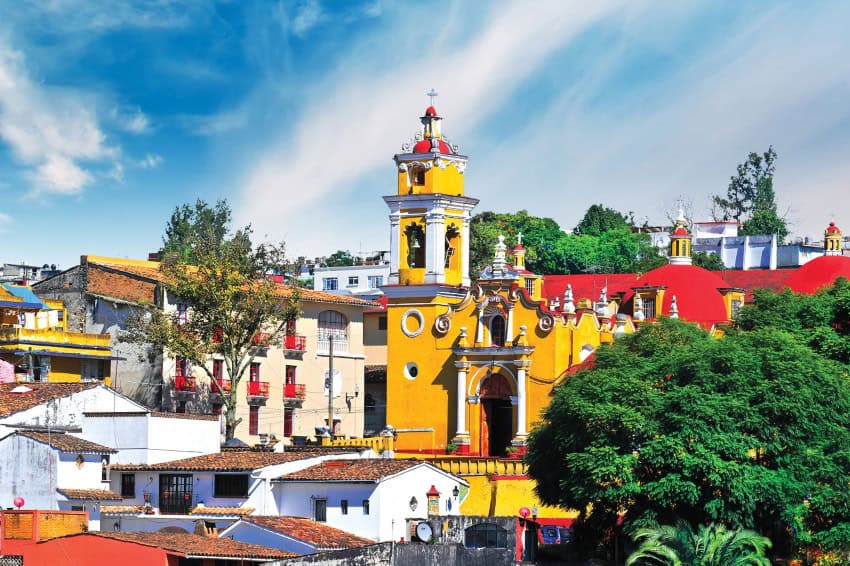
It’s fitting for a writer of humble origins that can be traced back to the rural mountains of Veracruz, the mountainous tropical state where he lived for many years and ultimately died in the capital city, Xalapa. In many ways, the city of Xalapa has remained present in his work, in his essence, in his embrace of the written word — Xalapa, of course, being known as the “Athens of Veracruz,” where a confluent mixture of university students, bohemian artists, musicians and poets can be found mingling at any hour along the city’s romantic, flower-shrouded avenues and cafes. He often championed its role in his creative inspiration and open-hearted lifestyle.
An advocate for Veracruz
Pitol chose to live in Xalapa’s Centro Histórico — far less glamorous for a writer of his fame than, say, the metropolitan cores of Mexico City or Guadalajara, and not as charming or well-kept as Oaxaca or Mérida — for many years, simply because he was an advocate of Veracruz and its cultural, often underappreciated, riches and contributions. Sadly, he passed away in 2018 at age 85, a few miles from where my abuelita once lived in the same area.
At the time of his death, The New York Times dubbed him as one of Mexico’s most inventive and honored figures, not simply for his scriptures, but for his role as a Mexican ambassador and diplomat (as a Mexican emissary, he traveled around Poland, Hungary, Italy, China, the former Soviet Union and Czechoslovakia, among other nations).
Here’s a brief look at Pitol’s life and career — from a Xalapeño perspective.

From Mexican orphan to internationally renowned author
Though born in Puebla in 1933, Pitol moved to El Potrero sugar mill in Veracruz, just outside of Córdoba, at age four, following the death of his father. Tragically, he lost his mother a year later, who drowned in the nearby Atoyac River.
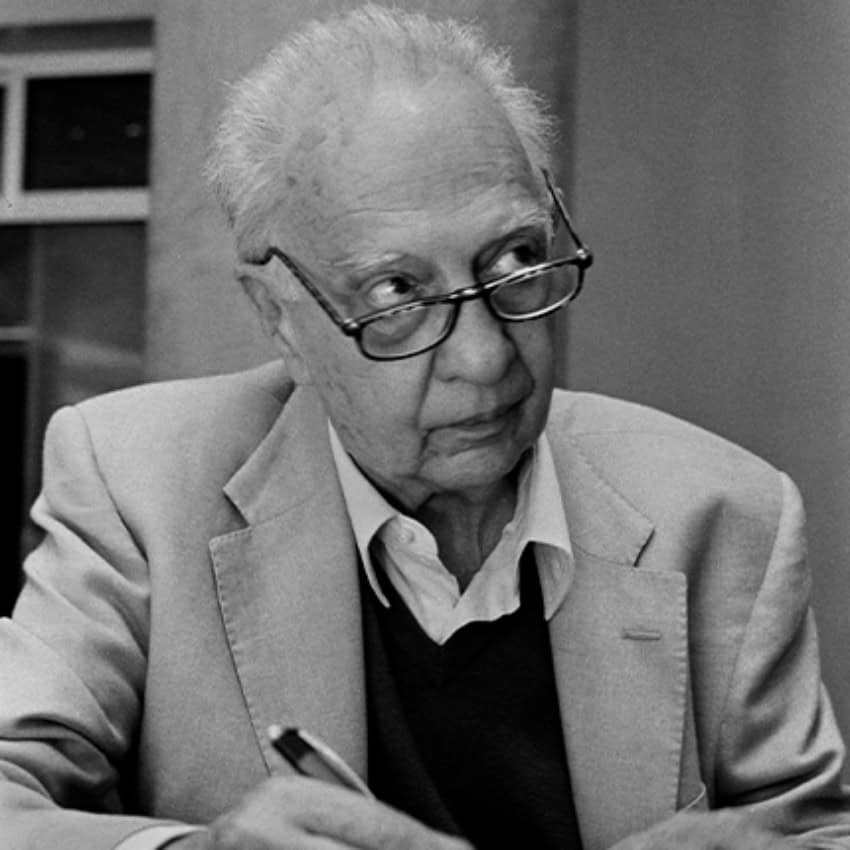
As a child and adolescent, he battled malaria and spent significant time with his grandmother, where he learned to appreciate the craft of writing while bedridden. He credits American and British authors like Robert Louis Stevenson and Mark Twain for expanding his sense of the world through adventurous storytelling. His grandma was an adamant reader of Leo Tolstoy, and through her home schooling and encouragement, the young Pitol was exposed to iconic literary voices throughout his early life, up until he left to pursue degrees in literature and law at UNAM in Mexico City at age 16.
Literary fame and public service
His first publication came in 1959, when his short story collection, “Corralled Time,” appeared in Mexico City’s Estaciones magazine. In contrast to his later works, which are celebrated for their whimsy, parody and sense of dark Mexican humor, his early short stories were somber and dealt with conflicts around the lives of children. At large, his writing has been admired for how it combines deep personal experiences with larger Mexican histories and narratives.
From 1960 to 1989, Pitol served as one of Mexico’s most important diplomats and authors, having spent significant time in Moscow during the end of the Soviet Union’s reign, where he ingrained himself in the cultural intellectualism of the region. As a result, many of his writings reflect his views as a globetrotting freethinker. In 2017, the Los Angeles Review of Books described Pitol’s legacy as making “a compelling case for literature as a way of life, as a lens to politics, and as a key element in the experience of history.”
Much of that philosophy was shaped and nurtured by his time in Xalapa, where he permanently relocated in 1993, shortly after his retirement as a diplomat.
Xalapa: Pitol’s expansive garden
The final years of Pitol’s life were complicated by physical ailments — he died of a stroke inside his home, after years of battling aphasia — but were nonetheless crucial in developing Xalapa’s greater ethos of being a literary bastion. That is, Pitol was a seminal figure in not just Mexico’s international scope, but in Xalapa’s local canon and literary reputation.
In 2018, the same year of his passing, Milenio sent a reporter to Pitol’s home in Briones — on the immediate outskirts of Xalapa, located in a breathtaking cloud forest scenery en route to nearby Coatepec. The visiting journalist writes of Pitol’s final moments: a man enjoying his peaceful gardens, even struggling to speak at times, but very much still a spirited national icon full of grace and hospitality, sharing his love of the opera, which, along with the symphony, are a large part of Xalapa’s historied affair with the high arts. (The details recount his former dogs, some of which were named after literary figures like Homer.)
The legacy of Pitol’s work
In his prior years, he spoke of how many of his ideas emerged while living in and around Xalapa, referencing Palabra y el Hombre — the famed literary magazine that has been published by the school since 1957, making it one of Mexico’s oldest and most respected literary journals, and which still actively releases quarterly issues and hosts cultural events in the city and its surrounding areas. Pitol served as a professor on campus for many years and, until his final days, was a prominently revered faculty member, where he taught everything from classic Mexican literature to experimental German films. In a 2018 publication by Vice, a group of his former students — who went on to become architects, artists, editors and poets — shared photos and memories of their former mentor, Pitol, after learning about his passing.
Sergio Pitol Translations
During his time, the Universidad Veracruzana in Xalapa began to publish a special “Sergio Pitol Translations” series, in which famous texts from around the world were translated into Spanish (the series ended in 2016). In addition, he founded and oversaw the “University Library Collection,” a project which he initiated in 2006 with “the purpose of reaffirming the book as an ideal vehicle for liberation and humanization, (with) titles considered classics of world literature and other disciplines.” According to the university’s official website, Pitol announced that the collection “opens the doors of knowledge to the student, both of the world and of themselves,” reaffirming his tenet of literature as a gateway for human enlightenment. The artwork and imagery for the project were designed and illustrated by local students as part of the university’s Visual Arts program.
A requiem
Today, there is a bookstore, Librería Los Argonautas, located across the street from one of Xalapa’s most prominent parks, which maintains Pitol’s appreciation of classic literature. The bookshop’s owner, Marduck Obrador Cuesta, is one of Pitol’s former students. Upon Pitol’s death, Cuesta published a note, ending with: “Rest in peace, Sergio. I’ll continue reading here.” In many ways, that sentiment is shared by many writers and students of his everlasting work — in Xalapa and beyond.
Alan Chazaro is the author of “These Spaceships Weren’t Built For Us” (Tia Chucha Press, 2026), “Notes from the Eastern Span of the Bay Bridge” (Ghost City Press, 2021), “Piñata Theory” (Black Lawrence Press, 2020), and “This Is Not a Frank Ocean Cover Album” (Black Lawrence Press, 2019). He is a graduate of June Jordan’s Poetry for the People program at UC Berkeley and was selected as a Lawrence Ferlinghetti Poetry Fellow at the University of San Francisco. His work can be found in NPR, The Guardian, SLAM, GQ, L.A. Times, and more. He is currently based in Veracruz.