When I decide what to write about, my first impulse is always the same: to make you fall
in love with Mexico and its people. That’s why I often avoid the uncomfortable subjects.
But there are moments when it feels impossible to talk about anything other than
violence. In those moments, art offers something invaluable: a way to exorcise what we
fear, or at least to face it. Art is, in the end, a form of catharsis.
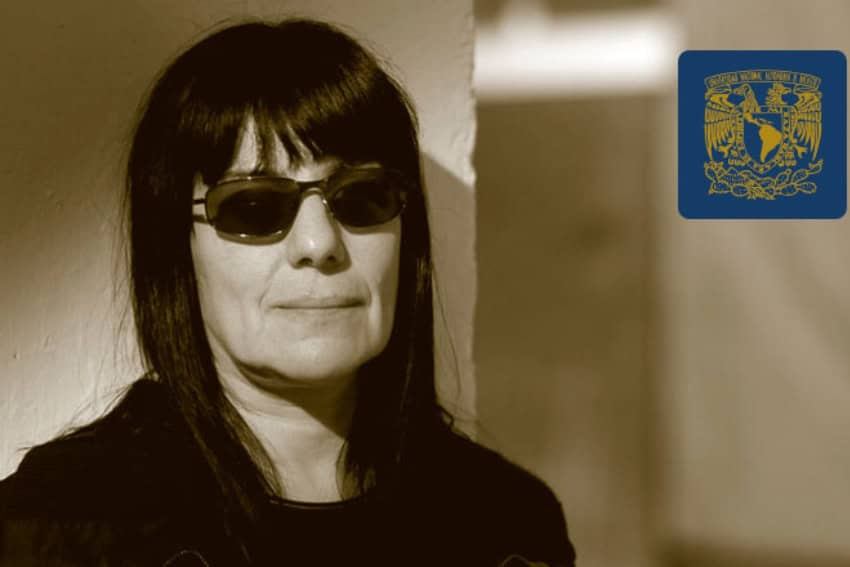
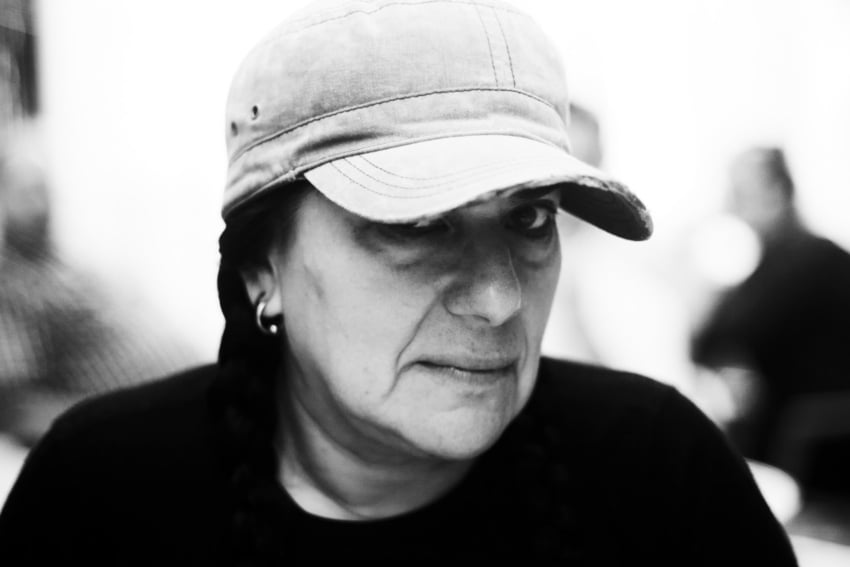
Today I want to talk about Teresa Margolles — because she is one of the few Mexican
artists who has faced our violence head-on. Her work is blunt, unsettling, even violent,
and it reminds us that the victims we read about were human beings, not faceless
numbers. In a week that many of us came face to face with momentous violence in the fallout of the killing of “El Mencho,” it seems a good time to reflect on what these experiences mean on a personal level.
Confronting violence through art
Margolles is controversial for two reasons: her work isn’t “beautiful,” and it’s conceptual.
For many people, that kind of art barely qualifies as art at all.
If you hate contemporary art, I get it. It can seem absurd to stare at the strangest object
in a gallery and be told it’s your job to find the meaning. But here’s the thing: art in every
era has reflected the politics and beliefs of its time. By the late nineteenth century,
artists began to care less about technical perfection and more about provoking
thought — about using art to make us question what we take for granted.
I know that might sound like theory-speak, but stay with me — Margolles turns that idea
into something tangible.
The making of an artist
Teresa Margolles was born in Culiacán, Sinaloa, in 1963. She studied at the Directorate
for the Promotion of Regional Culture in her home state, trained as a forensic technician
at Mexico City’s Forensic Medical Service (SEMEFO) in 1990, and later earned a
degree in Communication Sciences at UNAM.
She has said that photography and the visual arts gave her the courage to enter the
morgue — and that’s where her art began.

With other Mexican artists, she founded the collective SEMEFO, where she refined her
voice and thematic focus. After leaving the group, her solo career propelled her to
international prominence in the art world.
Facing violence head-on
What makes Margolles’s work so singular is that she doesn’t speak abstractly about
death, nor does she hide it behind allegory. She confronts us directly with what we
refuse to see: the physical remains of violence itself.
Her materials are the traces of crime and death — clothing, hair, bones, sheets stained
with blood, dirt from mass graves, shards of glass from shootouts. For Margolles, these
are not just symbols. They are evidence.
Through them, she forces us to ask: Who were these people? In what social and
economic conditions did they live? What role do institutions — political, economic and
media — play in turning violence into a normalized backdrop of daily life?
‘What Else Could We Talk About?’ (2009)
In 2009, the same year President Felipe Calderón declared his “war on drugs,” the
Venice Biennale invited Margolles to represent Mexico. Her exhibition, titled “What Else
Could We Talk About?” posed a direct question to the Mexican government. In the midst
of a national war, she argued, talking about anything else would be obscene.
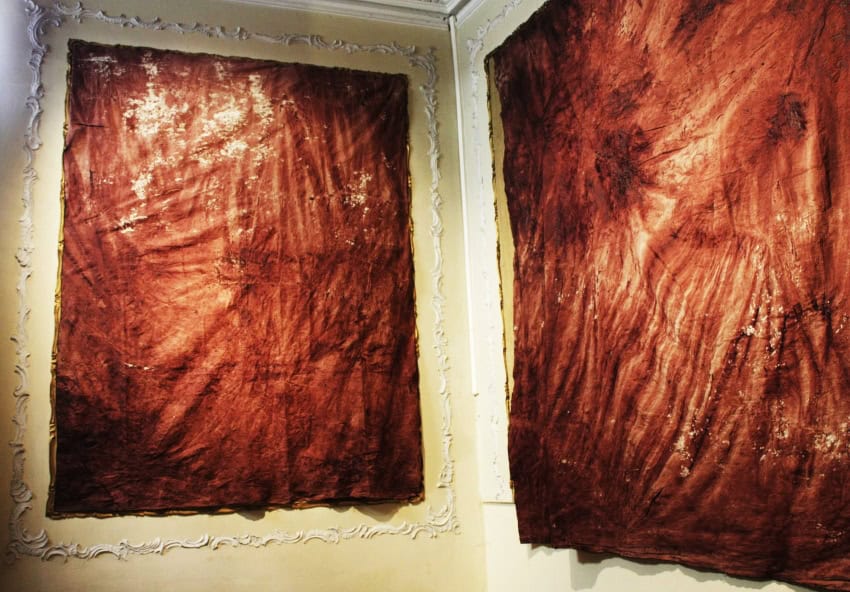
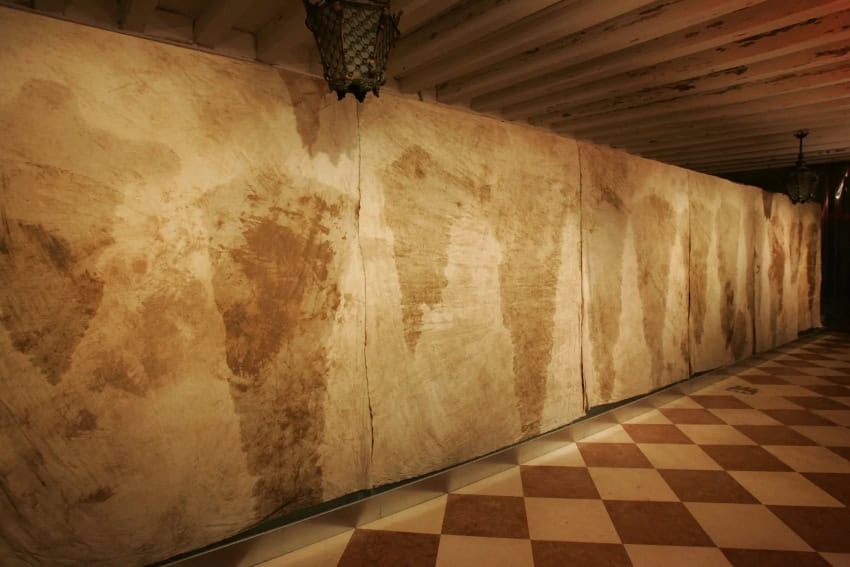
The main piece, “Cleaning,” used rags once employed to wipe blood from murder scenes
in Ciudad Juárez. Dried, shipped to Venice and rehydrated, they became the tools with
which the pavilion’s floors were mopped for six months.
Inside the palace, visitors encountered blood-soaked fabrics embroidered in gold thread
with narco messages — “See, hear and be silent” and “So they learn to respect” — and gold jewelry embedded with glass shards from shootouts, imitating diamonds.
Denunciation or repetition of violence?
Most critics see Margolles as a protest artist who gives visibility to Mexico’s invisible
victims. But others raise difficult questions: when human remains become art materials,
are we witnessing a denunciation of violence or its repetition?
In other words, when objects tied to victims enter museums and galleries, do those
individuals become mere components of an artwork, stripped again of identity and
agency?
Margolles’s defenders say her goal is clear: to expose the state’s failures, the inequality
that makes victims vulnerable and the collective numbness that turns tragedy into
routine. Her adversaries argue that she profits from the same violence she critiques.
This tension is the point. The ethical discomfort her work provokes is precisely where its
political force lies. There are no clean metaphors here, no soothing explanations. Only
one question persists: what are we willing to tolerate, in our streets and in our
museums, when it comes to murdered bodies?
Breaking the politics of denial
The value of Margolles’s art is not in its beauty but in its confrontation. It breaks what I
call Mexico’s “politics of denial.” In cities like Ciudad Juárez, officials and business elites
often minimize violence, blaming “perception” or “media exaggeration” to protect tourism
and investment.
Margolles builds the archives the state refuses to: not files or photographs, but
contaminated matter that cannot be cleaned: morgue water, bloodied cloths, fractured
glass, rubble from collapsed buildings. These are materials that document femicides,
disappearances and economic precarity. Her work aligns with the silent labor of
activists and families who have spent years recording cases ignored by the authorities.
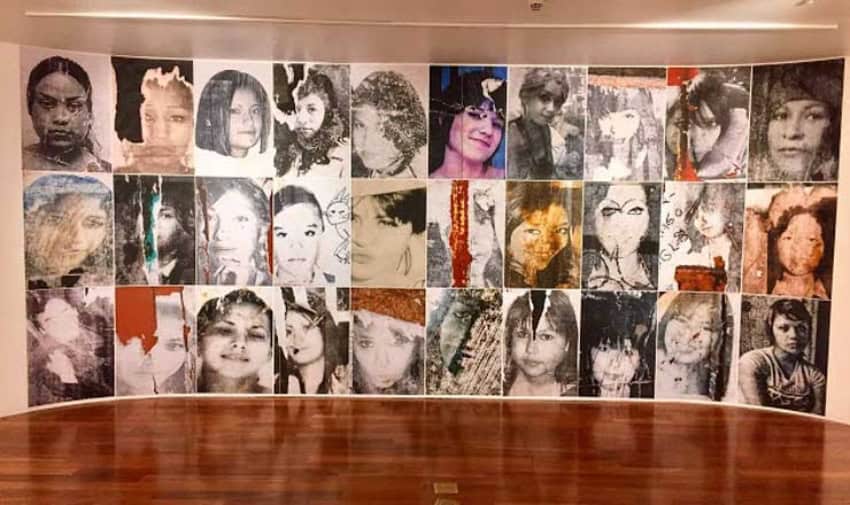
She also unsettles the privileged viewer. By transporting these residues of violence to
global art centers — Venice, Berlin, Madrid, New York — she reminds spectators that the
comfort of the wealthy world rests partly on the precarious lives of others: maquila
workers, migrants, young people drawn into the drug trade and women killed on the city’s
peripheries. The unspoken question is simple: Who can afford not to talk about
violence?
Does her art help or hurt?
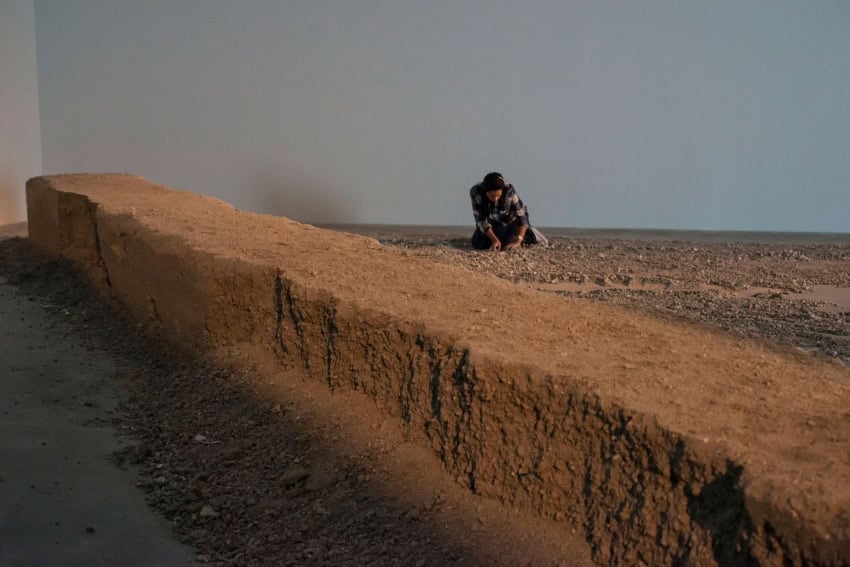
The first time I saw a Teresa Margolles piece in person was in 2012 at the University
Museum of Contemporary Art (MUAC) in Mexico City. The work, “The
Promise,” consisted of moving an abandoned public housing unit from Ciudad Juárez to
the museum, where it was slowly crushed.
Over six months, its remains collapsed gradually until rubble covered the entire gallery
floor. The piece recalled that, between 2007 and 2012, around 160,000 people fled
Juárez because of violence.
From Mexico City, Juárez can feel distant in every sense, but that installation closed the
gap. It made the crisis tangible.
Margolles’s later works were even harder to stomach — literally. Some made me ill. Yet
ever since, I cannot read a news report on violence without thinking differently about the
people behind the numbers. My empathy changed.
Margolles’s art disgusts me. It makes me dizzy. But precisely because of that, it
achieves what the artist intends. It makes me feel and think in equal measure.
Art doesn’t have to please us. It only has to move us — and sometimes, that is its most
important task.
Maria Meléndez writes for Mexico News Daily in Mexico City.