A few weeks ago, I was sitting in a cafe in Kaş, a Turkish seaside fishing town, where I’d just had a dip in turquoise water and was now eagerly awaiting my breakfast. Looking up at the trellis of bougainvillea across from the restaurant, I suddenly had a whiff of San Pancho, the beach town on Mexico’s Pacific coast: same plant life, same seafood restaurants, same handicraft shops, same charming, winding alleys, same vibrant community spirit.
Although Mexico and Türkiye differ in geography, history and religion, they also have many things in common, including strong family values, vibrant, hospitable cultures and rich food traditions.
All of this, to say nothing of the fact that Mexico City and Istanbul, two of the world’s great urban centers, are sister cities.
Having lived in Mexico part-time since 2005, I feel relatively educated about Mexican culture. Here is what I observed on a recent trip to Türkiye about the similarities between the two countries.
Family unity
In both societies, families are very close-knit, and people depend on family and neighbors for support in daily life. Just as Mexican extended families gather for Sunday comida, Turkish families meet for a large, multigenerational, leisurely meal over the weekend.
Community
Both countries enjoy a strong “third space” culture. In Mexico, almost every town has its zócalo or plaza, the social hub of the community, along with smaller squares, ample pedestrian space and abundant street life like mime artists, vendors and musicians.
In Türkiye, coffee shops and teahouses are physical and social hubs dating back to the Ottoman Empire, where men traditionally gathered to drink çay (tea) and play backgammon. For women, the public bathhouses, or hammams, function as a social hub. In both cultures, modern espresso bars attract both tourists and digital nomads.

Street food culture
Both countries elevate street food to an art form. In Mexico, not only do you have the famous “three T’s” — tacos, tortillas and tamales — but you can also enjoy donut-like churros, Oaxaca-based tlayudas, elote (grilled corn) and gorditas.
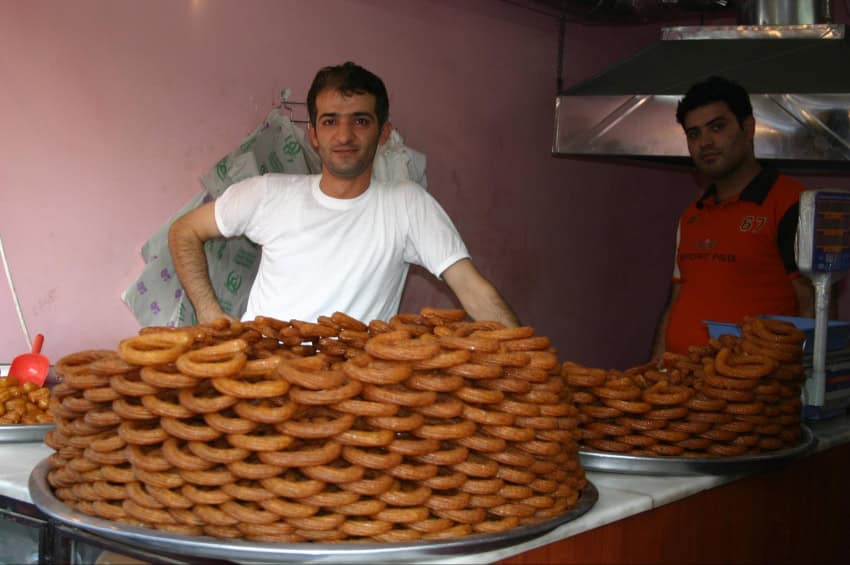
In Türkiye, a favorite street food is the phyllo-based snack börek, filled with cheese, minced meat, spinach or potatoes. Another popular snack is simit, a ring-shaped, circular bread made from two intertwined strands of dough, often covered in sesame seeds. Pide is a crispy, oven-fired flatbread with raised sides containing a variety of tasty toppings, especially cheese.
Late-night cultures
Both countries start their days late, by U.S. standards. I’ve written about my challenges as an early riser in Mexico, where many shops don’t open until sometime between 10 a.m. and noon. Similarly, during our visit to Türkiye, my husband and I found that, outside of Istanbul and other big cities, it was hard to find a cup of coffee before 9 a.m.
Cultural exchanges
Mexican telenovelas are broadcast in Türkiye, and the Turkish equivalent, dizis, are very popular in Mexico. The two countries also showcase each other’s films in different cities, such as the Guanajuato International Film Festival (GIFF) and the MIKTA Film Festival in Ankara.
Secular cultures, with deep religious roots
Despite having strong religious histories — Catholicism in Mexico and Islam in Türkiye — both countries experienced state-organized secularization periods to strip religious institutions of political power.
In Mexico, secularization began with President Benito Juárez in the 1860s and was reinforced after the Mexican Revolution. Türkiye became a secular state under the leadership of President Mustafa Kemal Atatürk in 1928, when the law declaring Islam as the state religion was revoked.
Both nations recognize the separation of church and state while maintaining a strong faith tradition. In Türkiye, the call to worship is heard several times a day, as are church bells in Mexico.
Major empires with powerful archaeological legacies
Both Mexican and Turkish histories are layered with successive, distinct civilizations that conquered, blended and built on one another over millennia.
In Mexico, the Olmecs — regarded as the “mother culture” of Mesoamerica — flourished from 1400 to 400 B.C., followed by the Mayas, the Toltecs and the Mexica.
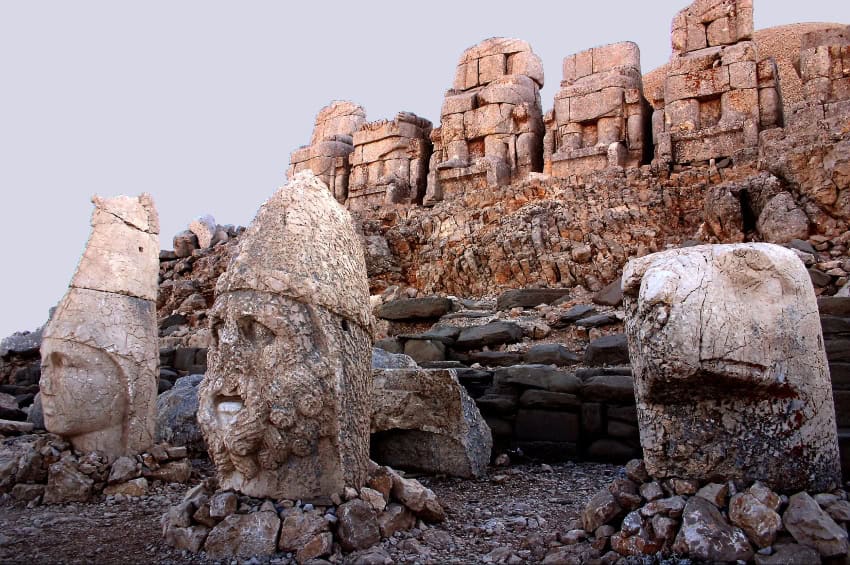
Meanwhile, in Türkiye, the Hittites flourished during the Bronze Age (1600 to 1200 B.C.), followed by the Greeks, Romans, Byzantines and Ottomans.
Both countries are also dotted with awe-inspiring ruins and temples. Mexico contains some of the most important ancient ruins in the world, representing pre-Hispanic civilizations like the Maya, Mexica and Zapotec, while Türkiye has monumental Greek and Roman ruins.
Both civilizations valued large-scale communal spectacles. Mexican ruins almost always include a ball court for ritualistic games, while Turkish ruins feature a Greek or Roman theater or stadium for drama and gladiatorial games.
Geopolitical parallels
Mexico and Türkiye established diplomatic relations in 1927 and elevated them to a strategic partnership in 2013.
The two countries are also “middle powers” — sovereign states that have significant international influence but lack the power of, for example, the U.S. or China. They rank closely in global GDP (gross domestic product), with Mexico at US $1.83 trillion and Türkiye at US $1.64 trillion.
How the Middle East has shaped Mexico for almost 2,000 years
Both countries serve as gateways to vital geographic locations — Mexico as the manufacturing gateway to the United States and Türkiye as a production bridge between Europe, Asia and the Middle East. They each rely on trade agreements with neighboring economic blocs (the USMCA for Mexico, the EU for Türkiye), and both are members of the G20, the OECD (Organization for Economic Co-operation and Development) and MIKTA (a collaborative partnership made up of Mexico, Indonesia, South Korea, Türkiye and Australia).
Mexico and Türkiye are important trade partners with a bilateral trade volume of US $1.93 billion in 2025.
How to experience Turkish culture and cuisine in Mexico
If you live in Mexico and want a taste of Türkiye, you don’t have to fly all the way there (though you can, easily: Turkish Airlines flies daily from Mexico City to Istanbul, stopping briefly in Cancún).
You can watch a dizi on Mexican TV. If you’re in Mexico City, look for Turkish snacks and sweets in restaurants and bakeries in Roma Norte, Coyoacán and Polanco.
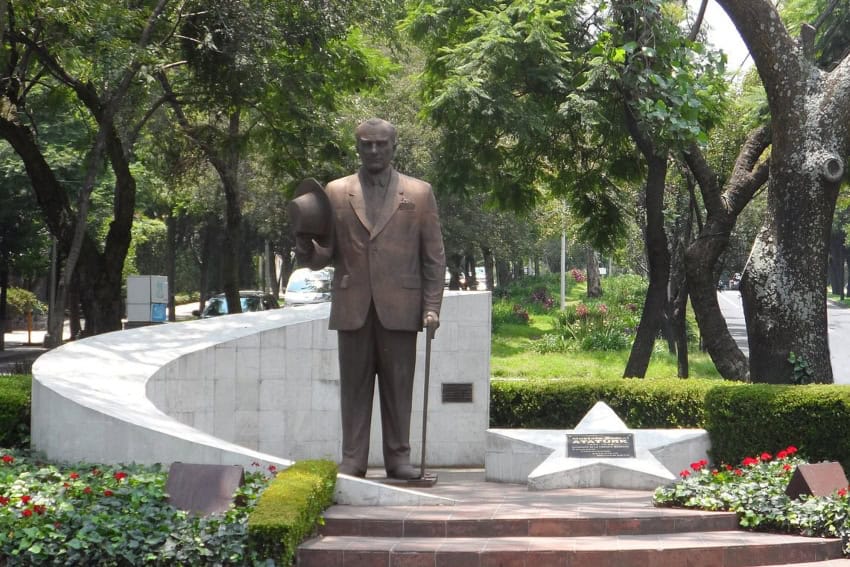
And check out the 3.2-meter bronze statue of Mustafa Kemal Atatürk, the founder of modern Türkiye, on Paseo de la Reforma. It was installed in 2003 to celebrate the 80th anniversary of the founding of the Republic of Türkiye.
Another tangible piece of Turkish history is the Reloj Otomano, an ornate clock tower decorated with Moorish tiles and mosaics, located in Mexico City’s Centro Histórico. The clock faces alternate between Roman numerals and Arabic script. It was a gift presented to Mexico in 1910 by the local Ottoman immigrant community (which included Turkish, Lebanese and Syrian migrants) to celebrate the centennial of Mexican independence.
Louisa Rogers and her husband Barry Evans divide their lives between Guanajuato and Eureka, on California’s North Coast. Louisa writes articles and essays about expat life, Mexico, travel, physical and psychological health, retirement and spirituality. Her recent articles are available on her website, authory.com/LouisaRogers.