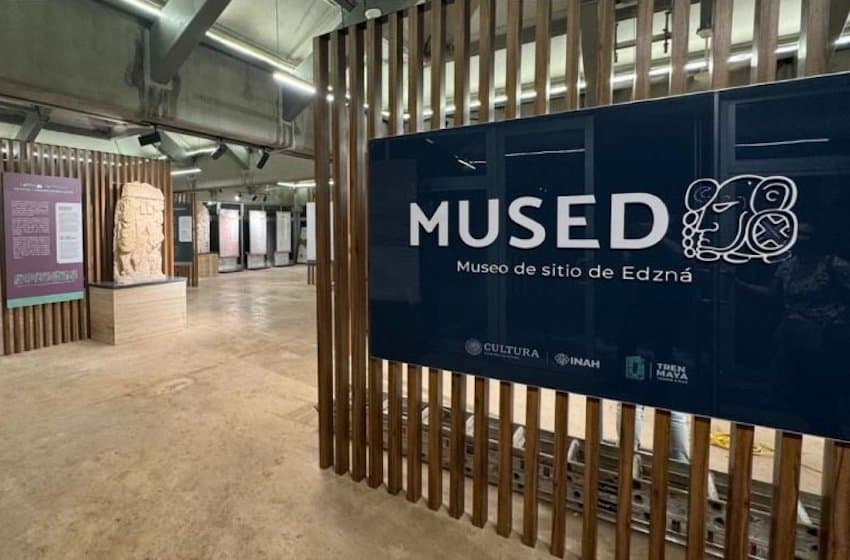
The archaeological site of Edzná, excavated over the course of the past 65 years, now features a museum housing archaeological pieces and vestiges recovered from the former regional Maya capital.
President Andrés Manuel López Obrador and President-elect Claudia Sheinbaum inaugurated the new museum on Friday, highlighting the project’s aim to provide greater context and understanding of the rich Maya cultural heritage.
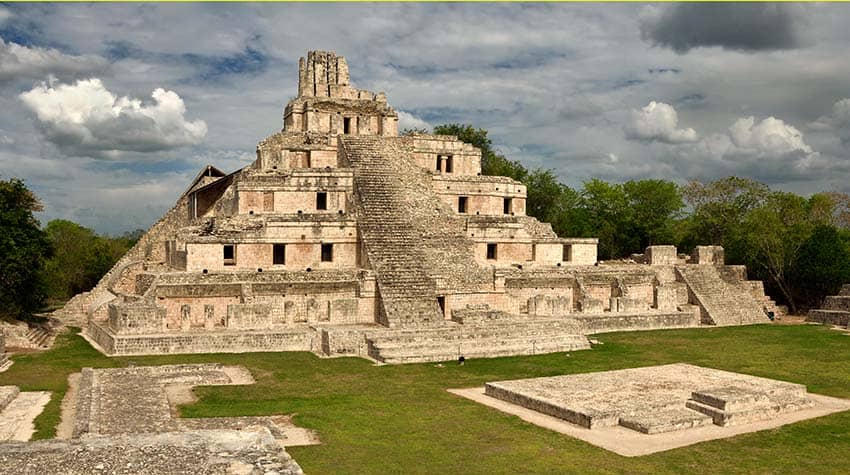
Edzná, located 55 kilometers southeast of the city of Campeche, was inhabited as early as 400 B.C., evolving into a major city by 200 A.D. The diverse architectural styles located in the area around the main plaza indicate that it was a powerful regional capital from 400 to 1000 A.D.
The most remarkable structure at Edzná is the 40-meter-high temple in the main plaza, but the site also features groupings such as the Grand Acropolis and structures including a ball court and a 31-meter-high structure known as Cinco Pisos.
Due to its low-lying location, inhabitants of Edzná built a complex hydraulic system to direct surface water into a lake. The system featured a dam and irrigation canals.
While delivering an update on INAH activities, INAH Director Diego Prieto said that the Edzná Site Museum will not only serve as a space for the exhibition of recovered artifacts, but also as a living testimony of the cultural and archaeological wealth of the Maya civilization.
Prieto said the museum and the recent restoration work at Edzná are the product of the federal Archaeological Zone Improvement Program (Promeza) that was developed to take advantage of excavations done for the Maya Train project.

Promeza provided funding for the exploration of the territory and the verification of photogrammetric and LiDAR images, as well as for the prospecting, excavation and registration of archaeological materials.
After analysis and classification, some of the recent finds will be displayed at the new Edzná museum and other museums that are part of the network of recently created sites in ancient Maya cities in southeastern Mexico, including new facilities at Palenque, Moral-Reforma, Kabah, Dzibilchaltún, Tulum and Calakmul.
With reports from La Jornada and El Sol de México