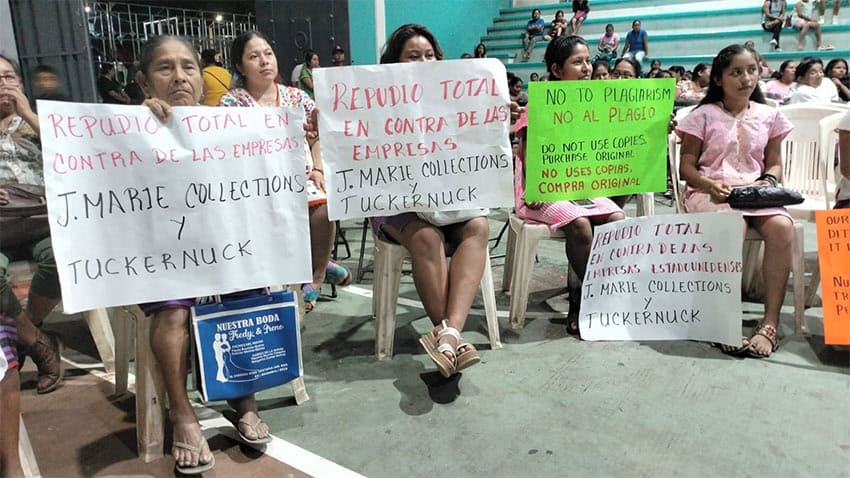
A group of 300 Oaxaca artisans have accused U.S. fashion brands J. Marie Collections and Tuckernuck of cultural appropriation for using traditional huipil patterns in their clothes, prompting Mexico’s Culture Ministry to threaten legal action against the brands.
A huipil is a loose-fitting tunic or blouse with detailed and colorful embroidery, worn by Indigenous women in parts of Mexico and Central America.
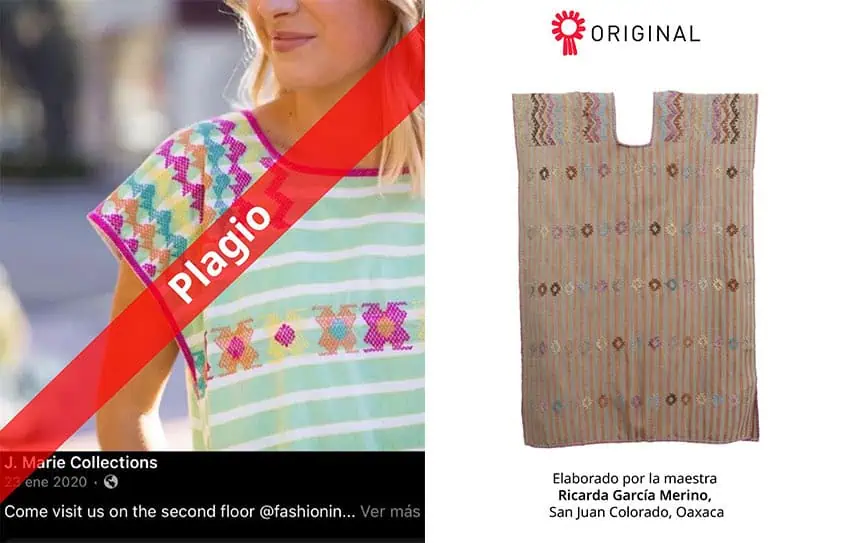
Under the slogan “Yes to the original, no to plagiarism,” artisans and residents of the Mixtec community of San Juan Colorado, in the western part of Oaxaca, claim that they have not authorized these brands to use traditional iconography.
“[The brands] are making these brocades by machine and do not recognize that they are the brocades of the original huipiles from San Juan Colorado,” Wiliam Ulises Lorenzo López, artisan and designer from San Juan Colorado, said in a statement.
Local Deputy Karla Clarissa Bornios has joined the demands and called for these actions to end.
“These companies have plagiarized the iconography of the traditional huipiles of our community, violating our collective rights and undermining our cultural identity,” Bornios said in a statement. “Such practices are unacceptable and will not be tolerated. No more cultural appropriation!”
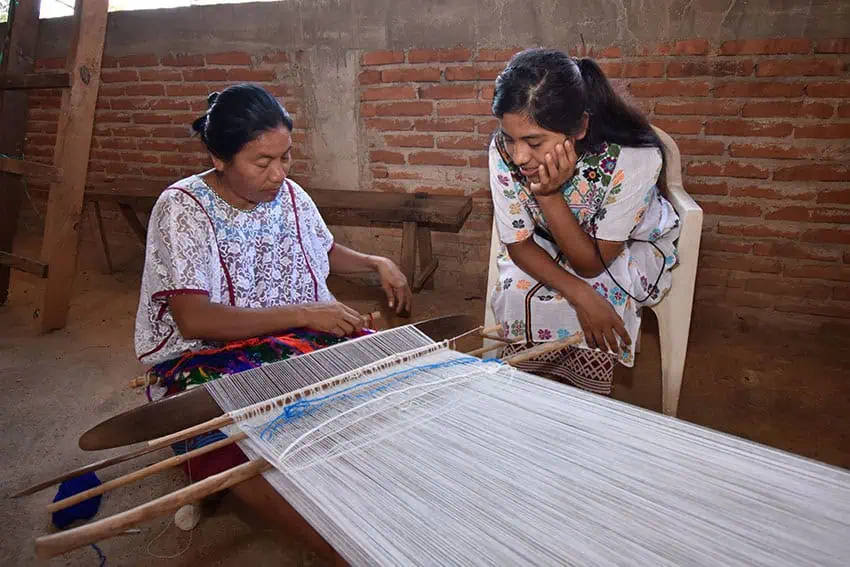
The Mixtec, also known as Ñuu Savi which means “rain town,” is an Indigenous group that occupies a large part of Oaxaca, and smaller areas of Guerrero and Puebla. Their textile work involves the telar de cintura (backstrap loom), a tool used by Mesoamerican women to make clothes.

Artisans argue that each embroidered garment is unique and unrepeatable, requiring precise skills to create complex patterns and designs that often carry cultural and symbolic meaning.
In support of the community of San Juan Colorado, Mexico’s Minster of Culture Claudia Curiel de Icaza, said that “the misappropriation of iconographies, design and simulation of techniques of a community is a crime and violates collective rights.”
Curiel added that Mexico would take legal action and urged the brands to initiate compensation dialogue and withdraw the items from the market.
Accusations of cultural appropriation
Accusations of cultural appropriation of Mexican designs and motifs by fashion brands is an issue that took international visibility in late 2020 after Mexican singer and politician Susana Harp called out French designer Isabel Marant for selling clothes with similar designs to those created by the village of Santa María Tlahuitoltepec in Oaxaca.
The following year, Mexico had accused Zara and Anthropologie for using patterns distinctive to the Indigenous Mixteca community. It also accused Australian clothing brand Zimmermann of plagiarizing the Mazatec community for its resort 2021 collection.
Zimmermann claimed the error had been unintentional but apologized “for the usage without appropriate credit.” The brand also withdrew the item from sale.
In 2022, the Mexican Congress passed a law to safeguard the cultural heritage of Indigenous and Afro-Mexican communities in Mexico. The law prohibits the use and exploitation of their heritage without legal consent of the original communities.
With reports from Excélsior and El Universal