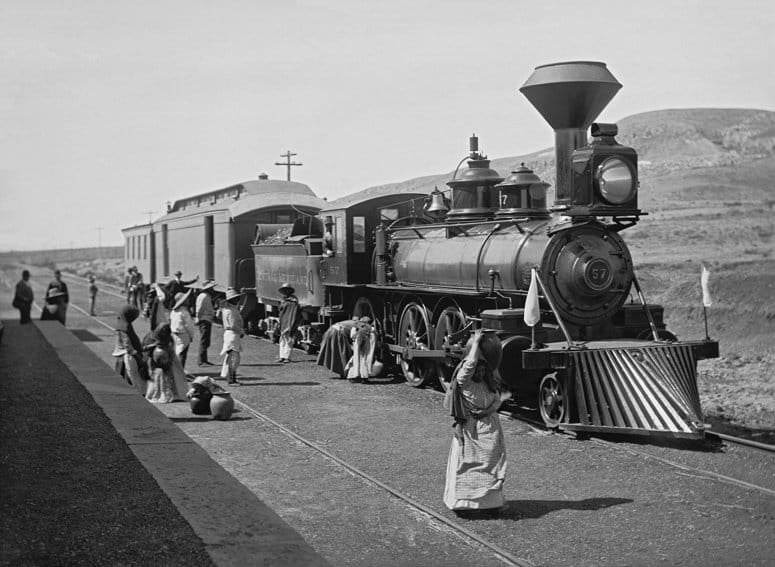
In the last decades of the 19th century, Porfirio Díaz dominated public life in Mexico, sometimes as the power behind the throne but usually as the country’s president. Díaz’s rule, remembered as the Porfiriato, began with the Plan of Tuxtepec, launched 150 years ago on this day in 1876.
It was during Díaz’s rule that capitalism became firmly rooted in Mexico, with railroads unfurling across the country, national products making millionaires out of Mexican businessmen on the world market and native elites fervently embracing European trends, leaving marks like the Palacio de Bellas Artes and Teatro Macedonio Alcalá on national cityscapes. But it was also the dizzying speed and unevenness of this development — which stripped rural communities of their communally-held lands and enslaved Indigenous people on henequen plantations in Yucatán — that planted the seeds of the cataclysmic Revolution of 1910.
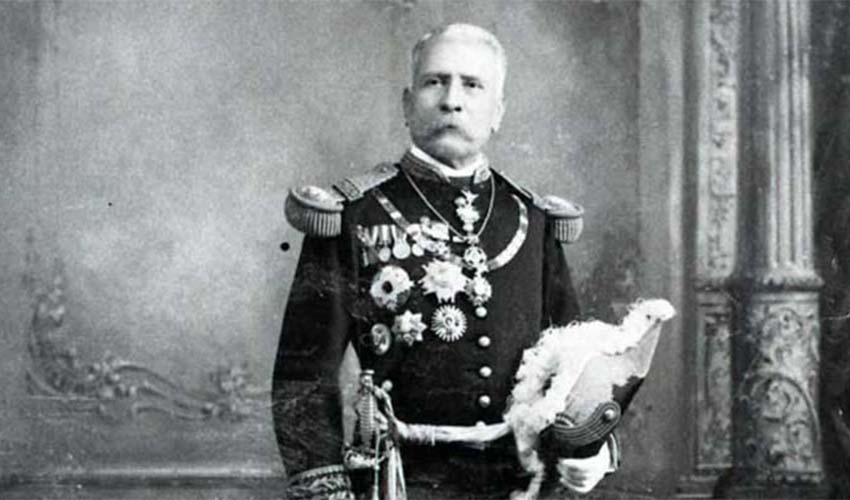
The Tuxtepec Revolution ended what is remembered as the Restored Republic, or the nine years of republican rule following the end of the French Intervention. To make sense of Díaz’s revolt, we need to understand the politics of the Restored Republic itself. After the civil war of the 1860s, the Conservative Party was discredited for its collaboration with the French, and liberalism was in practice the only game in town, which meant that politics broke along factional lines within the Liberal Party.
Díaz had made his name fighting against the Santa Anna dictatorship and later the conservatives and their French allies, and during the Restored Republic — as the period between 1867 and 1876 is called — he was the figure most associated with the populist, mass-politics wing of the liberals. On the other side of the political spectrum was Díaz’s fellow Oaxacan and old mentor, Benito Juárez.
How do you solve a problem like Benito?
In 1867, Juárez had already served two terms as President of Mexico. Chief Justice of the Supreme Court following the Ayutla Revolution, Juárez first rose to the presidency in 1858 not by election but as constitutionally-designated successor to President Ignacio Comonfort, whose self-coup in January 1858 marked the start of the Reform War, a three-year civil war between liberals and conservatives.
Juárez led the liberals to victory and won reelection in June 1861, just in time to see the Conservatives play the ace up their sleeve, reopening the civil war by bringing in Archduke Maximilian of Austria to rule Mexico as emperor, supported by French bayonets. With Juárez and his government-in-exile — the “Nomad Republic” — leading the war effort as they wandered across the country, the liberals again beat the Conservatives and their European allies in 1867.
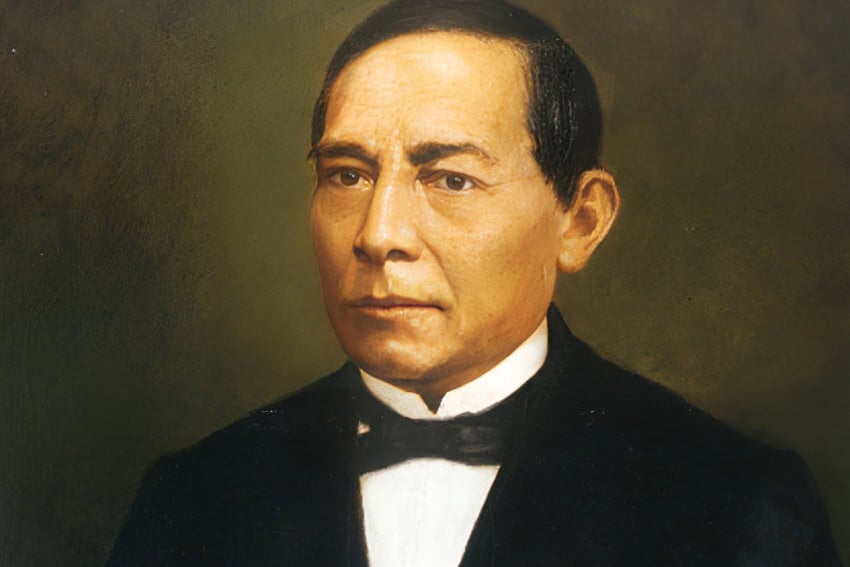
By the time he entered Mexico City in triumph in July of that year, Juárez had already been in power for nearly a decade, and he announced his intention to run for the presidency again in October. Already, he faced opposition from fellow liberals who felt that with the civil war over and the French expelled, a third term was unjustifiable.

Particularly concerning for the anti-reelectionists were Juárez’s stated plans for governing. The Constitution of 1857, which had lit the fuse of civil war years earlier and which Juárez himself had an important part in writing, established a notably weak executive branch and placed virtually all power with the national legislature.
Juárez understood that the Constitution would need to be reformed if the country was to advance according to his vision. That meant giving the executive the veto it lacked and dividing the unicameral legislature into a senate and chamber of deputies, and there was little chance Congress would vote to limit its own power. So Juárez circumvented it, calling a national plebiscite to ratify his proposed changes.
Porfirio Díaz, unable to accept this kind of change to the Constitution he had fought to establish and defend, decided to run against the man he had fought under. He gathered around himself some of the country’s leading lights, intellectuals like Ignacio Ramírez, Guillermo Prieto and Vicente Riva Palacio, not to mention broad support from the masses.
Díaz was a popular and respected war hero, but Juárez swept the election anyway, winning 72% of the vote, although the Senate ratified his victory at the price of not passing his constitutional reforms. Díaz resigned from the Army and returned home to Oaxaca, where he dedicated himself to business and to cultivating his prestige.
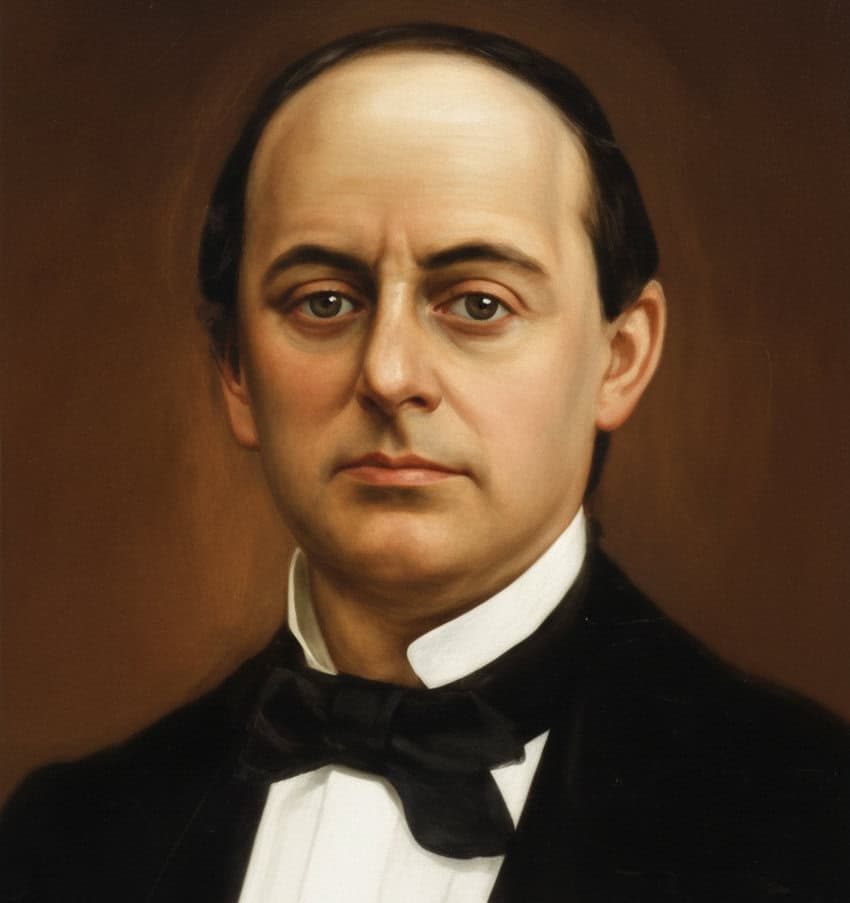
In 1871, Juárez decided to stand for a fourth term as president, a decision so controversial that not only Díaz but Juárez’s close ally Sebastián Lerdo de Tejada decided to run against him. In the elections that summer, Díaz came in second. Juárez won 48% of the vote; the most of the three candidates, but short of the 51% needed to win. It was up to Congress to choose a winner, and they chose Benito Juárez.
In 1871, Juárez and Díaz ran against each other once again, and again Juárez won; this time, though, a third candidate had been in the mix, and no one had a majority of the votes. It was up to Congress to choose a winner, and they chose Juárez. Díaz and others who believed that Juárez was becoming an autocrat responded by rebelling against his government under the Plan of Noria.
The rebellion went on for half a year before Juárez’s sudden death by heart attack took the wind out of Díaz’s movement. His successor, Sebastián Lerdo de Tejada, pardoned the rebels and politically neutralized Díaz, who eventually settled across the border in Texas. Lerdo de Tejada pursued the same centralizing policies that the former president’s enemies had called autocratic. This undermined Lerdo de Tejada’s own government.
The straw that broke the camel’s back was the president’s September 1875 announcement of his intention to stand for reelection the next year. In March 1876, a group of pro-Díaz military officers and intellectuals proclaimed the Plan of Tuxtepec in the Oaxaca town of Villa de Ojitlán, declaring Lerdo de Tejada’s government illegitimate and calling for the end of reelection for the presidency and governorships. It invited Díaz to lead the rebellion.
The meaning of the Tuxtepec Revolution
Looking back a century and a half and through the lens of all the classroom days, novels and popular songs that help shape a country’s memory, it’s easy to see history as a clash of giant individuals fighting for reasons of personal ambition. We miss a great deal, however, if we read the Tuxtepec Revolution as a grasping, ambitious Díaz versus the noble Juárez — or vice-versa, as power-hungry Juárez against champion-of-the-masses Díaz. Indeed, much of the tragedy of Díaz’s struggle against Juárez, and later Lerdo de Tejada, is that the commanders on both sides had an outstanding history of patriotic service, fighting against French occupiers and the old feudal order to make Mexico a more democratic country.
In some ways, their positions even intermingled: In 1867, it was Díaz who stood for respecting the tedious mechanisms for reforming the Constitution; Juárez wanted to submit the document to the will of the whole country. Who here was the populist? And when Díaz — the anti-reelectionist, the federalist — finally won power, he did just as Juárez and Lerdo de Tejada had done: He centralized power and perpetuated himself in it.
It would be an easy cliché to explain this turn by saying that power corrupts. Harder to wrestle with, but maybe more illuminating, would be to consider whether it was something about Mexico itself — about the reality of the country — that made these two men, with their democratic bona fides, govern as they did.
It may be more fruitful to read the Tuxtepec Revolution as a continuation of the struggle between centralism and federalism that had characterized Mexican politics since the country’s earliest days of independence. Díaz’s partisans were largely regional leaders who stayed in power by remaining closely attuned to the concerns of the communities and areas they represented.
Despite the fact that these men were military commanders, imagining them as the kind of professional military men who overturned governments in 20th-century Latin America — or indeed, who would later keep Díaz in power as his dictatorship stretched on — is a misstep too, given that they rose as the elected leaders of their hometown militias.
Diego Levin is a historian and researcher.