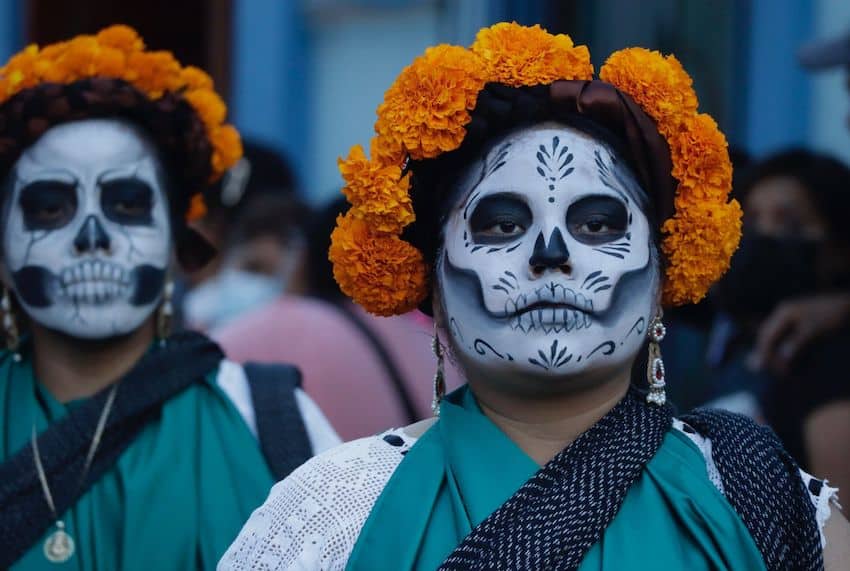
The government of Oaxaca has announced “La Fiesta Más Viva de Todas” (The Liveliest Party of All), its cultural program to accompany its upcoming Day of the Dead celebrations.
The cultural activities will run from Oct. 29 through Nov. 4 and aim to share Oaxaca’s customs and traditions with the world.
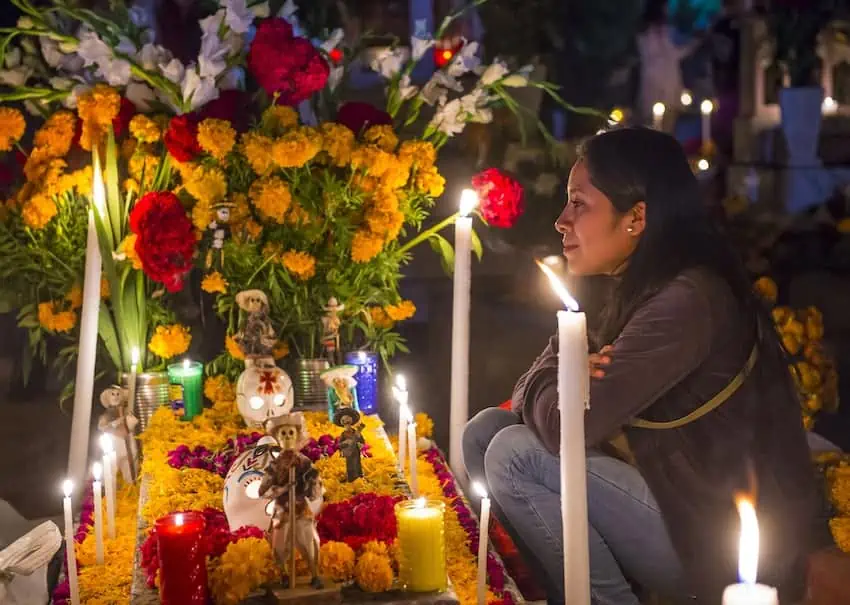
The festival was announced at a press conference given by Oaxaca Tourism Minister Saymi Pineda Velasco and other Oaxaca officials in Mexico City’s Chapultepec Park.
“We want to share with Mexico and the whole world the color, devotion, and profound respect that our people express for their ancestors, life and death,” Pineda said.
The festival will kick off with a parade on Oct. 27, with over 40 delegations from Oaxaca City’s 13 traditional neighborhoods marching. Traditional altars and monumental tapetes de arena will be installed the same day in the arcades of the Government Palace and on Calle Macedonio Alcalá, the city’s main pedestrian street.
Other activities include exhibitions of monumental tapetes de arena and altars from the state’s 16 Indigenous cultures and Afro-Mexican community and art workshops for making catrinas — Mexico’s iconic image of death — and skulls.
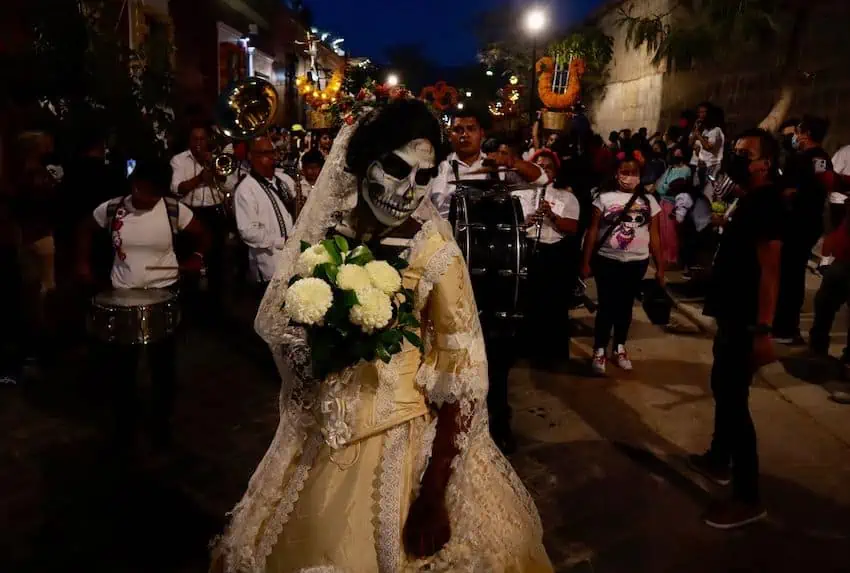
“We are a government with an intercultural approach,” Oaxaca Social Communication Coordinator Elizabeth Álvarez Acosta said at the press conference. “We do so by exalting our identity and traditions, where the presence and interaction of diverse cultures develop in an environment of deep respect, enrichment and mutual recognition.”

Oaxaca will also host storytellers who will share traditional myths and legends, as well as concerts of Indigenous music by groups from the region.
Theater will also play its part – the main square of Oaxaca will be the stage for “La Llorona” and “Xhunca,” a play that honors Oaxacan roots.
For children, Oct. 29 will see DivertiMuerte, a program with recreational activities that will include a parade from the Fountain of the Eight Regions to Paseo Juárez El Llano.
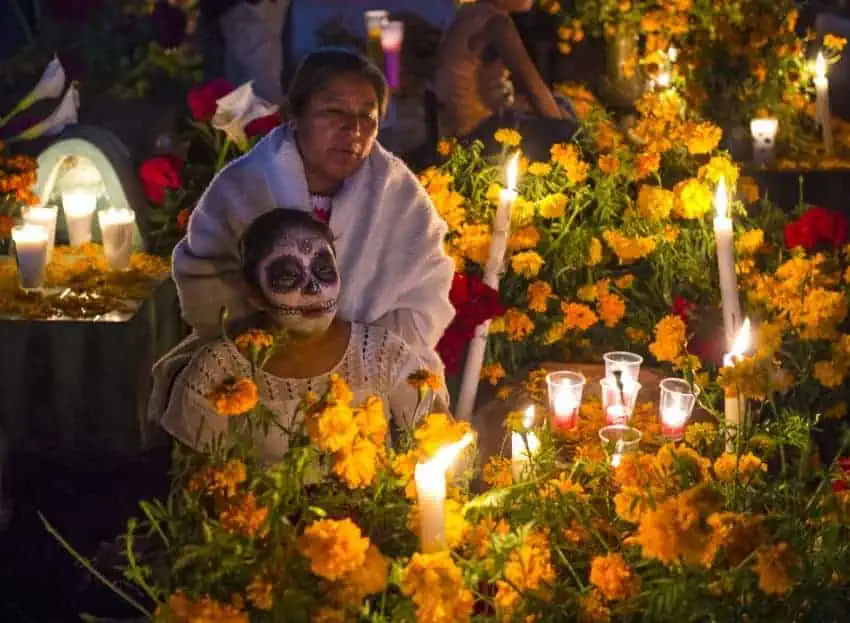
A video mapping projection celebrating Day of the Dead will take place in the Oaxaca Cathedral at 8 p.m. from Oct. 31 to Nov. 2, and samples of artisanal baked goods, tamales and sweets will accompany different events.
Minister Pineda announced that Oaxaca expects to welcome more than 50,000 Mexican and international visitors, bringing revenue of over 140 million pesos (US $7.7 million) for the state.
Oaxaca City is widely considered one of Mexico’s cultural capitals. Famous for its mole sauces and mezcal, and many ancient traditions, it has been named the world’s best city for two years in a row by “Travel + Leisure” magazine.
With reports from La Razon, El Universal and El Financiero