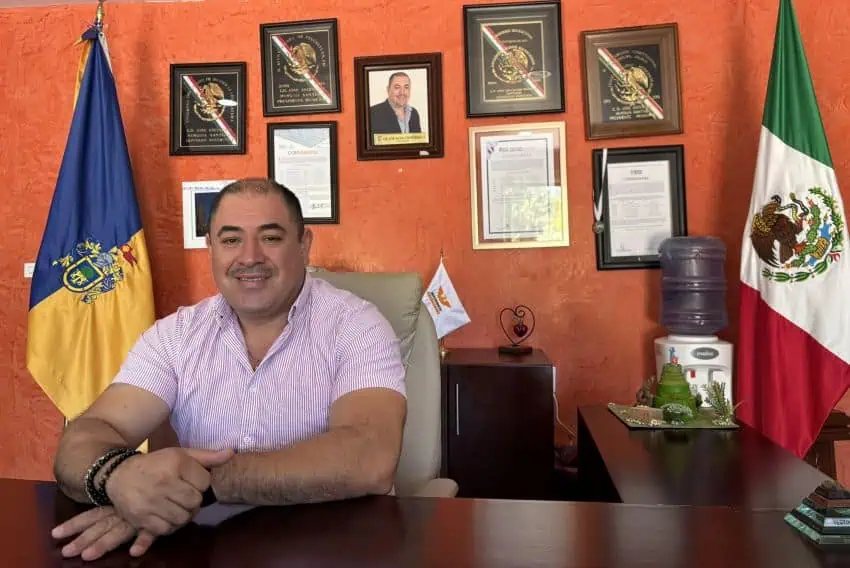
Federal prosecutors arrested the mayor of Teuchitlán, Jalisco, on Saturday, accusing him of colluding with the Jalisco New Generation Cartel (CJNG), among other charges.
Teuchitlán, population 9,000, is the site of what had been thought to be a CJNG extermination camp, although the Federal Attorney General’s Office (FGR) cast doubt on that description, saying there is no evidence that cremation occurred at the Izaguirre Ranch.
José Asunción Murguía was apprehended near his home by federal troops wearing hoods, who stopped his pick-up truck and forced him into a police vehicle. Murguía was taken to FGR headquarters in Guadalajara, the state capital, about 60 kilometers east.
On Sunday, Murguía was transported under heavy guard to the maximum-security Puente Grande Prison. After processing, he appeared before a judge, where he was formally accused of organized crime activities and forced disappearances.
Evidence was presented suggesting Murguía received 70,000 pesos (US $3,560) per month from the CJNG and was seen on multiple occasions at the Izaguirre Ranch. Prosecutors also linked Murguía to José Gregorio Hermida, alias “El Lastra,” a CJNG “recruiter” currently in prison, as well as another top CJNG lieutenant referred to as “El Rojo.”
Murguía declined to make a statement and his lawyers formally asked for a recess to study the evidence. Prosecutors then requested that the proceedings be made private to protect witnesses and victims.
Controversy over ranch investigation
Attorney General Alejandro Gertz doubled down on his statement last week that there was no evidence of cremation pits at the Izaguirre Ranch.

Last Tuesday, Gertz insisted that studies indicated the bones found had not been cremated, reiterating the FGR’s initial conclusion that the Izaguirre Ranch was only a cartel training camp and not an extermination site.
The Guerreros Buscadores de Jalisco search collective responded by claiming that “they” killed a member of the search collective and now the FGR is “killing the truth.”
The group appeared to be referring to the murder in April of Guerreros Buscadores activist María del Carmen Morales and her 26-year-old son in Jalisco.
Indira Navarro, the leader of the Guerreros Buscadores, criticized Gertz, saying he does not have the complete case files compiled by state prosecutors who first investigated the case last year.
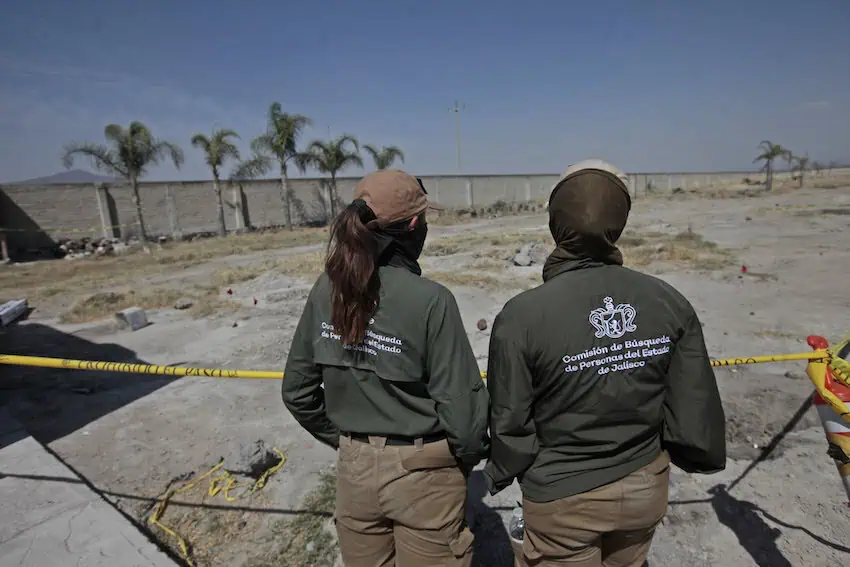
On March 5, the search collective entered the Izaguirre Ranch, which state authorities had raided in September 2024. There, they reported finding hundreds of shoes, discarded clothing and backpacks, ID cards and human remains.
Federal officials took over the case and, on March 17, President Claudia Sheinbaum announced a plan to strengthen the government’s fight against forced disappearances. The Guerreros Buscadores quickly denounced Sheinbaum’s plan.
The search collective’s frustration with federal authorities has grown as government officials insisted there was no evidence the ranch was used as an extermination site.
Gertz’s recent declaration contrasts with an analysis carried out by the Science, Humanities, Technology and Innovation Ministry (Conahcyt), which found high concentrations of ash and smoke activated by hydrocarbons such as gas and tires. Satellite imagery also confirmed the presence of ditches containing remnants of fire, as well as items that appeared to have been burned.
During her May 5 morning press conference, President Sheinbaum said she arranged for Gertz to contact the Guerreros Buscadores after the search collective sent her a letter.
“I instructed [Interior Minister Rosa Icela Rodríguez] to facilitate at the very least a call between the attorney general and the search collective,” she said, adding that Irene Herrerías, head of the FGR’s Human Rights Division, was looped in on the chat.
Sheinbaum said she expected ongoing communication between the FGR and the search collective.
“[The collective] must be allowed to freely present the evidence they found and the FGR should respond to them and hold meetings going forward,” she said.
In response to a reporter’s question, Sheinbaum said she would meet with the Guerreros Buscadores “if necessary.”
With reports from El Financiero, Informador, El Universal and La Jornada