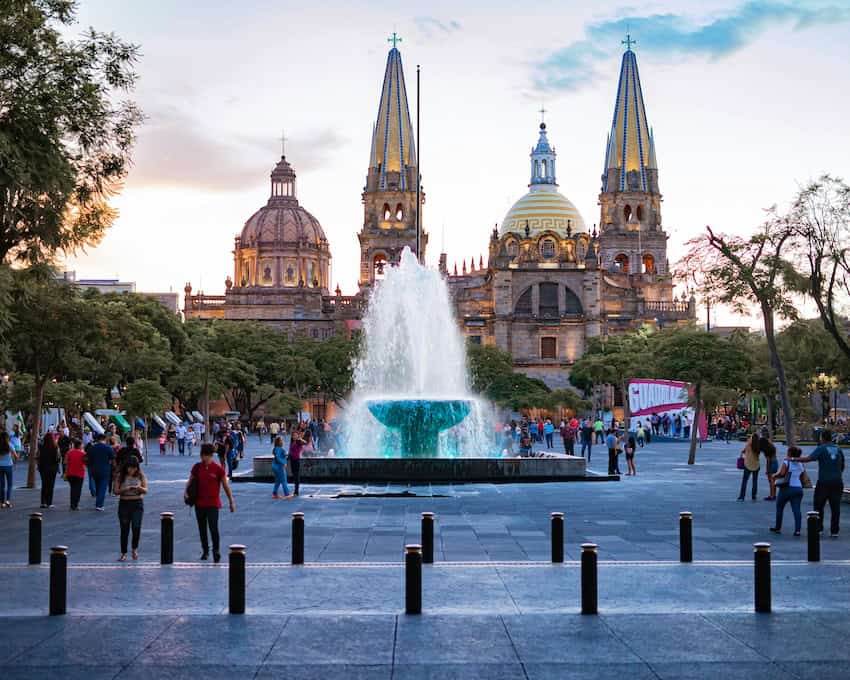
This week we look at where and how Jalisco’s competitiveness ranking has fallen in 2026 in relation to other states, what the new SIAPA director has been up to in lieu of briefing the state Congress, and long-awaited new rules for electric scooter riders.
Jalisco falls to 6th place in state competitiveness rankings
Jalisco is losing competitiveness in its ability to generate, attract and retain investment and talent, according to the recently released 2026 Urban Competitiveness Index (ICE).
Prepared by the Mexican Institute for Competitiveness (IMCO), the ICE study ranks all 32 Mexican states for competitiveness, based on 53 indicators across six categories.
In 2026, Jalisco fell two spots to 6th place, down from 4th in the 2025 study. The state’s worst performance came in Political System and Government, at 16th out of 32 states (falling from 9th last year). Jalisco also did poorly in Law, ranking 15th, and Society and Environment, at 13th.
Mexico’s first solar panel recycling plant coming to Jalisco
Weakness in the political system and government ranking this year is attributable to the public’s declining confidence in the public sector, with 86% of state residents believing that corruption is “frequent” or “very frequent” in Jalisco.

Another factor negatively impacting Jalisco’s competitiveness ranking this year is its poor performance in the Legal category — ranking 29th out of 32. Relative to other states, Jalisco’s notarial services are very limited, with only 1.3 notaries per 100,000 inhabitants.
Finally, Jalisco also underperformed in the Perception of Security indicator, ranking 18th. In 2026, the study found that only 21.5% of state residents over the age of 18 feel safe living here.
Jalisco shines its culinary credentials as host of the Michelin Mexico Guide opening ceremony
Offsetting these shortcomings, Jalisco performed well in its ability to develop and attract skilled labor, improving to 3rd place from 8th last year, and in economic innovation, where it ranked 3rd in 2026.
Commenting on Jalisco’s performance, Israel Macías López, an economics professor at the Pan-American University, told El Mural that the state cannot rely solely on its economic strengths any longer, adding, “This ultimately serves as a wake-up call for the state government.”
The top five states in the 2026 ICE rankings are Mexico City, Querétaro, Nuevo León, Coahuila and Baja California Sur, in that order. A year ago, the top five were Mexico City, Baja California Sur, Nuevo León, Jalisco and Aguascalientes.
With reporting from El Mural.
New regulations approved for e-scooter riders in Guadalajara
In recent years, walking or biking around the metropolitan area can sometimes feel like a death-defying maneuver, as scooter riders zoom every which way without warning. New regulations just passed by the Jalisco Congress seek to bring some order to the chaos.
A motion sponsored by two legislators of the Movimiento Ciudadano party, Alejandra Giadans and Mónica Magaña, passed with 20 votes in favor, 14 against, and one abstention.
The new law bans scooters from sidewalks as well as main avenues, tunnels, bridges and overpasses across the city, where traffic speeds exceed 50 km per hour. Scooter usage will now be limited to bike paths at speeds not to exceed 25 km per hour. In pedestrian zones, scooter users will be required to walk with the device instead of riding it.
According to Magaña, “This initiative incorporates elements to promote a cultural transformation towards a more humane and inclusive city, where the protection and safety of all people is a priority, considering pedestrians as the most vulnerable users.”
Each municipality covered by the new law will be responsible for defining penalties for the misuse of scooters in their jurisdiction. They now have a six-month window to adapt their local transit rules to the new law, with full enforcement expected to begin sometime next year.
With reporting from El Informador.
SIAPA’s new director yet to address Congress after 6 months on the job
Miguel de la Rosa Figueroa, leader of the Morena caucus, and deputy Mariana Casillas Guerrero, who oversees the Planning, Territorial Organization and Water Management Commission of the Congress, late last month called on State Water Ministry (SIAPA) Director Ismael Jáuregui Castañeda to attend a hearing before the Congress of Jalisco to talk about water quality issues and the agency’s plans to address them.
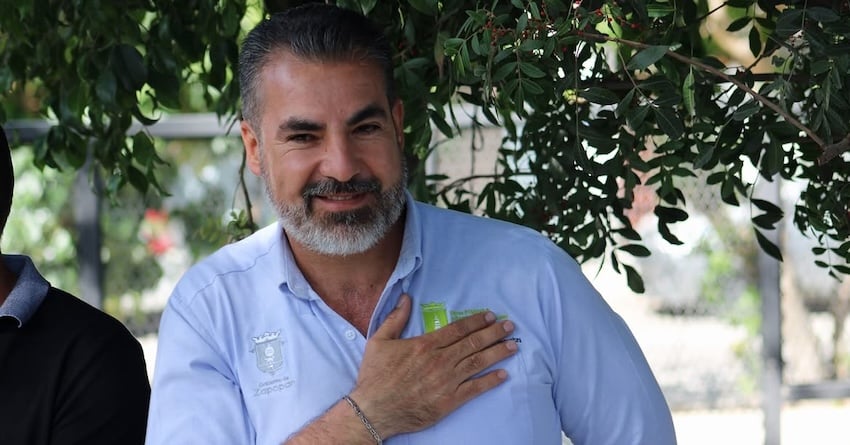
Jáuregui has been at the helm of the embattled water agency for almost six months and has yet to appear, despite numerous invitations from state legislators.
For his part, in a letter to Congress, Jáuregui cited the need to prioritize pressing hydraulic projects — such as work to overhaul the La Calera system and Miravalle Water Treatment Plant — over attending meetings with state officials. He has also indicated he would appear before the legislature only after Governor Pablo Lemus submitted a formal request for SIAPA’s new budget.
While Jáuregui clearly has his hands full, lawmakers’ frustrations are beginning to mount. Opposition groups have characterized his failure to appear as an act of disrespect and defiance in the face of the water quality crisis affecting Guadalajara.
With reporting from the University of Guadalajara press.
MND writer Dawn Stoner is reporting from Guadalajara.