Based on a new strategy unveiled by the Intermunicipal System of Drinking Water and Sewerage Services (SIAPA) last week, the road to better water quality in the Guadalajara Metro Area (GMA) will be long and expensive. But with receipts now in, local authorities are highlighting some positive (if surprising) economic impacts from tourism tied to the 2026 FIFA World Cup.
Jalisco’s strategic plan to improve water quality and access in the Guadalajara Metro
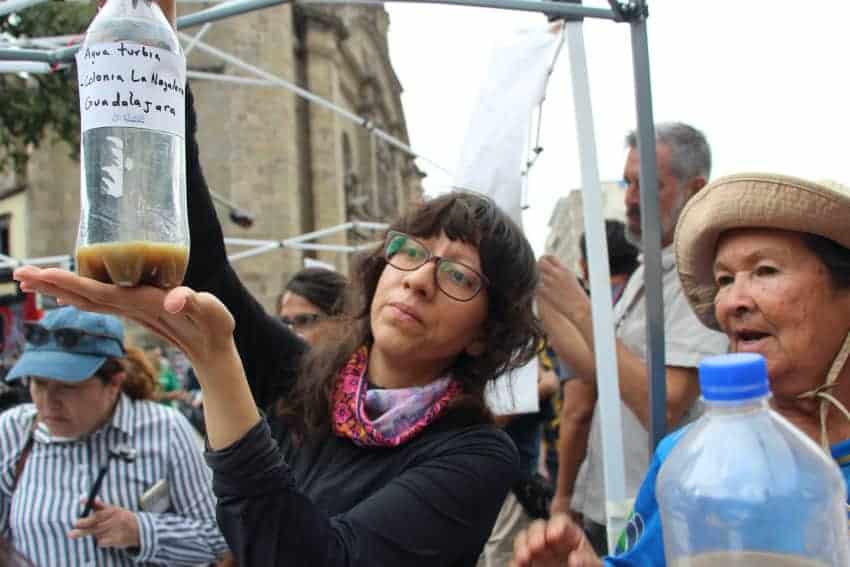
With one in 10 neighborhoods in the GMA experiencing dirty water from water taps and others suffering from service outages, Jalisco state officials announced last week that solving these problems will require infrastructure investment of more than 20 billion pesos (US $1.1 billion), with projects spanning years.
Protestan en Casa Jalisco: exigen a Pablo Lemus alerta sanitaria por agua contaminada con plomo y mercurio pic.twitter.com/kuZ1m0Fg3r
— SIAPA CORRUPTO (@SiapaCorrupto) July 4, 2026
The high cost reflects the need to replace and expand significant parts of the city’s hydraulic system operated by SIAPA, as much of it is obsolete following decades of use and chronic underinvestment.
The strategic plan unveiled last week includes more than 30 short, medium and long-term projects intended to address water quality, supply, distribution and sanitation issues across approximately 200 neighborhoods.

As part of this strategy, Jalisco Governor Pablo Lemus Navarro ordered the creation of a permanent executive committee comprised of different state agencies, for the purpose of coordinating and monitoring the projects’ progress.
Financing is needed, but water system privatization is ruled out
Although the state government confirmed it would seek a financing scheme to pay for the work, there are no details yet on how it would be structured or whether private funding would be sought.
The estimated 20 billion pesos in funding needed for these projects equates to more than three times SIAPA’s annual budget of 6.35 billion pesos. In addition, the public agency is already saddled with a substantial debt, which accounts for 15% of its annual spending.
Chief of Staff of the Government of Jalisco, Alberto Esquer, called on both the federal government and the state congress to contribute funding in support of these essential water projects.
View this post on Instagram
“So far, everything has been done with the state’s own resources, and in less than a year, these actions will allow us to see results in the city’s water quality. To resolve this issue once and for all, at least four additional long-term projects with sufficient resources will be required to guarantee the distribution and supply of quality water for our city,” he told the local press.
This substantial funding gap has given rise to speculation that the public water system might be handed over to private companies. In response, Esquer emphatically denied that privatization was under consideration, insisting that management of SIAPA would remain in government hands. That said, the private sector will be invited to bid on the myriad infrastructure projects the state intends to carry out.
Initial projects are already underway with public funds
The new head of SIAPA, Ismael Jáuregui, announced that the first stage of the program has already kicked off with more than 5 billion pesos in public funds from the state of Jalisco.
Key projects in this phase include expansion and modernization of Water Treatment Plant 1 in Miravalle, which has been operating for 70 years and supplies more than half of the water consumed by the metropolitan area.
Also among these projects is the construction of a new replacement aqueduct between Chapala and Guadalajara, which will guarantee higher quality water, reduce water extraction from Lake Chapala, lessen the environmental impact and optimize pumping costs.
The project also includes the modernization and expansion of Water Treatment Plants 3 and 5 to increase the system’s capacity and meet the growing demand of the metropolitan area.
A long road ahead
While the first phase of infrastructure projects should deliver meaningful improvements for many long-suffering residents, Esquer noted that at least four additional long-term projects will be needed to guarantee both the quantity and quality of water that the GMA now needs.
Finally, Esquer stressed that transformation of the GMA’s hydraulic system would require better coordination between the federal, state and local governments, in addition to citizen participation.
World Cup tourists spent lavishly and boosted Guadalajara’s economy
The economic impact from World Cup games in Zapopan across the state of Jalisco is now estimated at 11.5 billion pesos (US $657 million). This figure came in at the high end of projections, though the factors driving it took local officials by surprise.
According to Gustavo Staufert, Director of the Guadalajara Visitors and Conventions Bureau, “We reached the economic goal, but … the breaking point, for better and for worse, was the price of the tickets at the stadium and the way they were marketed. So the income was extraordinary, but the cost of the ticket meant that a very high-income customer came.”
A World Cup bringing fewer, more affluent tourists resulted in hotel occupancy rates 11% below expectations. However, room rates trended as much as 300% higher than normal — which drove hotel revenues of more than 2.1 billion pesos from an estimated 2.5 million visitors.
But not all businesses benefited equally
By category, luxury hotels in upscale neighborhoods such as Providencia generally did well due to solid demand from foreign tourists, with occupancy rates north of 60% on game days. At the other end of the spectrum, budget-oriented hotels in Guadalajara’s Historic Center suffered occupancy rates of 40% or less on game days, with mostly domestic guests.

The story was similar for restaurants. In a survey conducted by the Jalisco delegation of the National Chamber of the Restaurant and Seasoned Food Industry (Canirac), about 30% of restaurants in the GMA experienced increased sales from the World Cup, with the rest seeing no change.
Those that benefited did so thanks to strategic locations near fan zones in Guadalajara and Zapopan centers, or in high-traffic corridors where visitors congregated after matches, such as Avenida Chapultepec, Colonia Americana, Punto Sao Paolo and Andares.
MND Writer Dawn Stoner is reporting from Guadalajara.